Many role-playing games have a familiar, turn-based combat system. Your options are usually riffs on one of four actions: attack, defend, use magic, or use an item. Even with that very basic template, you’re usually in for a pretty fun time saving the world with a group of pals. But if it’s not snappy and satisfying, or if battles drag on too long, you’re probably bouncing off that game.
A rare few RPGs manage to elevate this simple format into an experience worth savoring over the course of dozens of hours. Below, you’ll find five such games. Some of these JRPG battle systems have stood the test of time because they’re remarkably well-balanced, while others are just a ton of fun to break. Either way, they’re keeping players coming back year after year for good reason.
5
Chrono Trigger (1995)

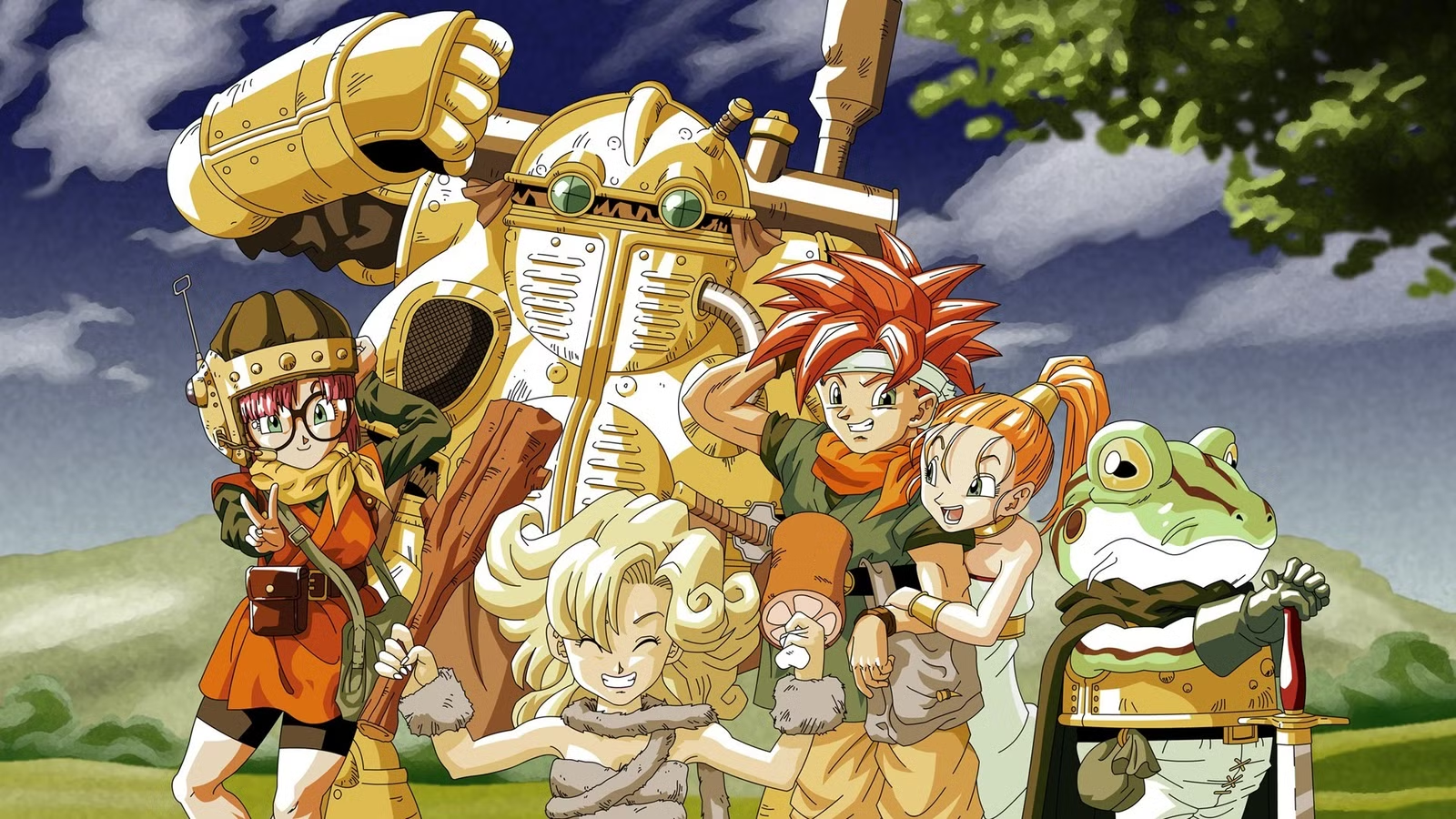
I’m sometimes disappointed when an RPG only lets me have three party members, because it doesn’t allow for much variation in team composition. Chrono Trigger is a fantastic exception to that rule, as the game’s double- and triple-tech abilities are powerful skills that are a direct reflection of your party’s composition and each individual character’s unique traits. Fighting a boss that’s weak against ice or water? Get Crono, Marle, and Frog out there. Need to focus on physical attacks instead of magic? You’ll want Robo and Ayla in the mix. Striking a satisfying balance between real-time action and turn-based strategy, Chrono Trigger was out here doing what the FF7 Remake trilogy was doing in the 2020s all the way back in 1995.
4
Final Fantasy Tactics (1997)

Getting a job has never been more fun than in Final Fantasy Tactics. There are 33 different jobs in Square Enix’s grid-based strategy RPG, and any character is free to become a master in any one of them. (Pretty much, anyway.) Want to be a white mage who’s also handy with an axe? Or a swordsman with an arsenal of spells that speed up and slow down time? You can have those kind of oddball combinations in Final Fantasy Tactics. Heck, you can do that with the same character from one battle to the next.
But with all that fluidity comes the expectation that you’ll use it to your advantage in any given situation. Fights are punishingly tough, and you’ll need to bring a precisely built squad into every plot-relevant fight, even in the slightly gentler Ivalice Chronicles remake that came out last year.
3
Persona 4 (2008)

Like FF Tactics, Atlus’s dungeon-crawlers assume you will bring the proper tools for the job. Persona 4’s turn-based combat is built around strengths and weaknesses. Some enemies are weak to elemental magic like fire or lightning. Others may be vulnerable to specific types of melee attacks, such as piercing or slashing. The same is true of your protagonist and party members.
Persona 4’s battles encourage you to pay attention instead of just spamming the attack button. Hitting an enemy’s weakness knocks them down and grants you an extra turn, while knocking down every enemy on the field — even if there’s only one — lets your entire party gang up for a high-damage All-Out-Attack. This isn’t just a fun occasional perk; you’ll absolutely need to exploit this mechanic as often as possible, even in random encounters, to stay alive in Persona 4’s hours-long dungeons. There isn’t a whole lot to improve here ahead of the launch of Persona 4 Revival, which launches Feb. 18, 2027.
2
Final Fantasy 7 (1997)
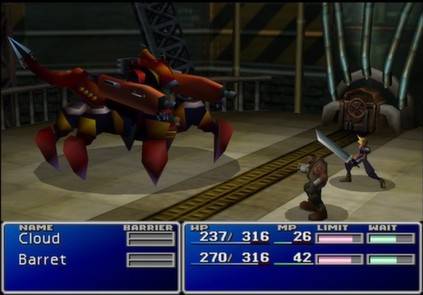
While I do enjoy the FF7 Remake trilogy’s rapid-fire blend of action and turn-based combat, I still have a soft spot in my heart for the immensely broken Materia system in the 1997 original. Rather than keeping characters locked in rigid roles — think Cloud as the swordsman, Barret as the long-range tank — Materia makes customization more open-ended and encourages experimentation.
Put Final Attack and Phoenix in a linked slot, and you’re guaranteed to revive your entire party if that character’s HP falls to zero. Combine Counter and 4X Cut, and suddenly you’re dishing out four hits in response to any measly enemy attack. Sure, some of these combinations can render even the most challenging fights in FF7 feel absolutely trivial, but what’s more fun than feeling like you’ve cracked the game wide open?
Get Polygon’s Wishlister newsletter
A weekly cheat sheet to what you’ll eventually love to play. No buying, no
commitment — just saving for later.
Free. Unsubscribe anytime.
1
EarthBound (1994)

The turn-based combat in Shigesato Itoi’s oddball masterpiece is about as basic as it gets in a JRPG, but there are three major factors that stand out. First, Earthbound lets you automatically skip fights against low-level enemies, while still earning money, items and EXP. More games should do this. Actually, all games should do this.
Second, there are plenty of games that feature consumable items that dole out damage to enemies, like bombs or one-time-use spells. These kinds of items pretty much always suck, except when it comes to Jeff’s rockets in EarthBound. He’s the only member of your quartet who can use these items, and once you get into more expensive variants like the Big Bottle Rocket and the Multi-Bottle Rocket, they absolutely whip ass. They’re expensive, but completely essential for any boss fight. Finding the hidden arms dealers, negotiating your limited inventory space, and scraping together a few thou for some heavy artillery adds another satisfying element of strategy.
Lastly, EarthBound famously features a rolling countdown HP meter. That means if a member of your party is mortally wounded, you have a precious few seconds to pull off a quick heal or restorative item. It doesn’t work often: You have to be very quick on the trigger and hope it’s not an enemy’s turn to attack. But when you can pull it off and get that teammate back from the brink, it’s exhilarating.