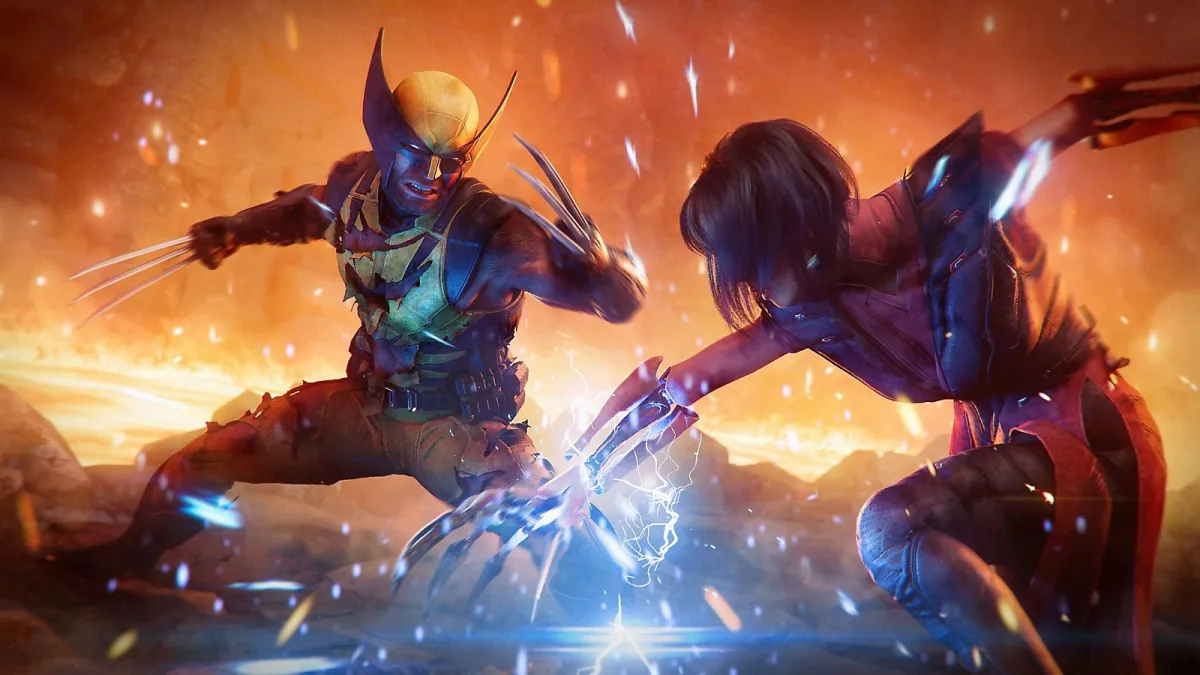
We interviewed game director Mike Daly after the launch of Insomniac’s recent Wolverine game to get his take on what makes Wolverine and Spidey different to work on, his thoughts on breadcrumb trails, and why Logan can’t ever seem to get the girl.
Insomniac had extensive experience working on well-known superhero characters before starting on Wolverine. Early on, what traits or qualities of Logan as a story character and playable avatar did you know you wanted to focus on, distinct from the Spider-Man games and character?
From a story perspective, we wanted Logan to be a man with centuries of experiences that he can’t remember, creating a mix of being worn, wizened, and cynical. His resilience makes him fearless, which comes through in his candid manner, and he can’t ignore his sense of justice, as much as he would like to.
For gameplay, it was important that players felt the difference made by his healing factor, claws, berserker rage, animalistic strength, enhanced senses, his adamantium skeleton, and corresponding weight.
In both story and gameplay, emotionally and physically, Wolverine is a hero who gets hurt and feels that pain deeply but always gets back up again and presses on. This dogged resilience was really important to us and a central theme of story and gameplay.
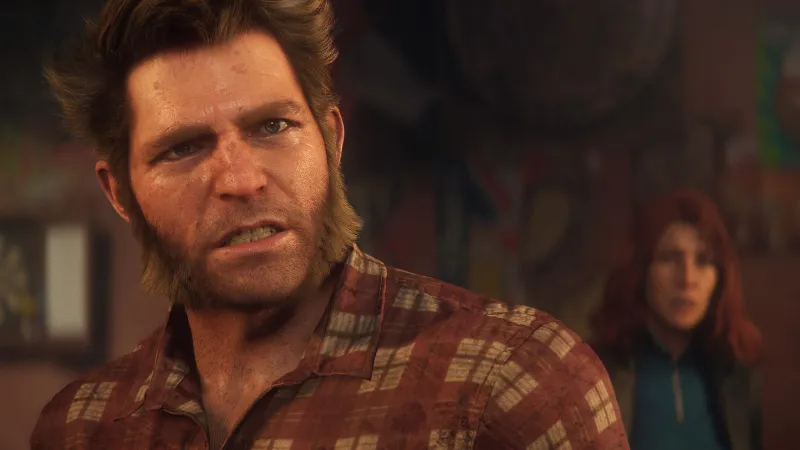
Wolverine is more of a linear adventure than the open-world exploration of a big city seen in Spidey. In my playthrough, that added to the sense of relentless pacing that characterizes Wolverine as a fictional lead. Was that part of the thinking behind why the game was built that way, or was the more linear path there for other reasons?
Ultimately, we made a game suited for a Wolverine story that had comic book pacing – action and meaningful story development on every page.
We experimented with different structures and stories, evaluating from the perspective of: “Is this the best way to do Wolverine justice?” As the various things we tried didn’t feel right, we had to challenge our assumptions and look to our favorite Wolverine stories for inspiration, which led us to where we ended up – a story with momentum in which every beat felt authentic to the character.
Scenes and gameplay sequences that might have been fine in other games but didn’t strongly evoke Wolverine undermined the consistency of the fantasy we were trying to create, so we tried to keep things very focused.
After the game’s release, there was an active online conversation about some of the breadcrumb-trail guidance the game offers to lead you to pickups, or to mark the continued golden path of progression. What was the thinking internally about that design decision, and your take on the debate after the game launched?
Our thinking was that it was essential to make the player feel like they were empowered by Logan’s enhanced senses, a canonical mutant ability, enabling players to do things they could not with other characters. We wanted to weave that power into as many parts of the game as we could, so that if Logan could smell or hear something relevant, the player could see it too.
For collectibles, we wanted players to enjoy seeking out and spotting senses cues, enabling you to find things that would have been obscure to other characters. Using the cues, players can cover a lot of ground without feeling the need to scour, maintaining story and action momentum.
After the game launched, we saw feedback from players that interpreted senses as abstract designer guidance, along with a desire for options in how they approached exploration and discovery. Fortunately, we have been able to incorporate this feedback from players in our post-launch patches. One aspect we’ve improved is the scent trail’s organic presentation, so they give a stronger impression that they belong in the world rather than being an abstraction. For players that want to do more manual exploration, we’ve added options to remove the sense cues for optional collectibles, and one to make scent trails dimmer until the player requests a hint.
Ultimately, enhanced senses are still essential to creating an authentic Wolverine, and that’s still reflected in the cinematic and environmental storytelling of the game. I think it’s great that on top of that, players now have more flexibility in how they experience them.
As a longtime comics fan, I found Logan’s combat system especially exciting, particularly for the relentless forward momentum it provided. What do you think were some of the keys to nailing that dynamic, as distinct from other high-quality third-person action games?
There were a few key elements we wanted to get right – Logan’s resilience, rage, claw feel, and overall lethality.
For resilience, Logan’s healing factor needed to feel important for survival – a prominent element of the system. A natural starting point there was to try continual regeneration so you could outlast enemies, but that quickly fell apart as it incentivized the player to slow the pace of combat or even retreat for maximum advantage. Even though it was incredibly effective at enabling survival, it was also hard to notice by the player so it didn’t feel prominent.
The key to solving this problem was making a connection between rage and healing factor. The Last Stand mechanic is a healing surge that can happen when you lose all your health, themed as using adrenaline to keep Logan’s heart beating. This incentivized aggression and made a space for an up-close look at visceral healing.
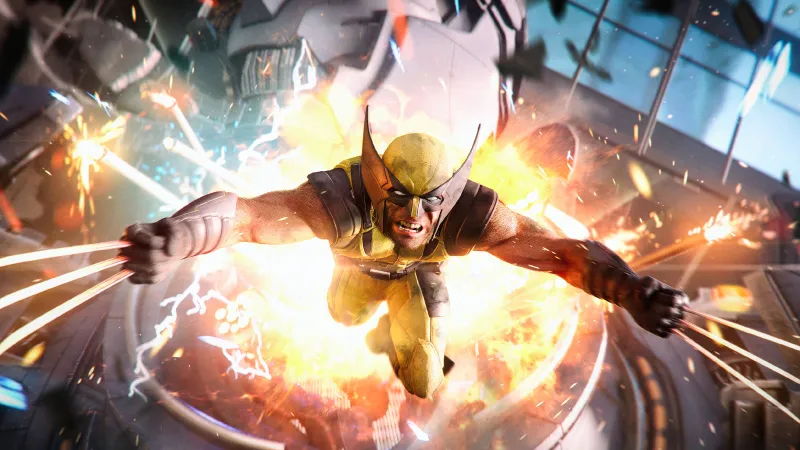
Speaking of rage, it’s the backbone of the combat system where being an indicator of momentum is key. At the low end of rage, you don’t have the safety net of Last Stand, so your decision-making naturally biases towards survival; ensuring you prioritize threat assessment and defense. As you climb into the middle tier, you have the leeway to push your luck for longer combos or barrages that let you build up rage and get kills faster. Finally, you get to rage tier 3, where the quick decay of rage makes your rate of kills the top priority, so you might prefer to attack groups over ranged stragglers just for the improved kill density. Beyond the mechanics, we change the presentation of combat, especially through Logan’s animations and exertion to reflect his state of mind. The presentation and systemic incentives drive the player into a frenzy, just like Wolverine.
We invested a lot in the details of claw feel to make sure it was distinct from general game attacks. Claws shred, so we added locational body damage to our enemies to reflect that, along with a dynamic blood system where it globs together as it is spilled, splatters on contact with characters or the environment, drips down the walls, diffuses in the water, and other details. Many kills throughout combat are punctuated with custom animations with cinematic camera work that pushes in and frames the puncturing of claws into the body for a strong impression of the connection and weight of the puncture. Severing limbs on these attacks is an occasional reminder of how sharp Logan’s adamantium claws are. Reinforcing this is top-notch sound and haptics design, so each hit registers.
The last aspect I’ll touch on is lethality, the rate at which Wolverine is able to dispatch enemies and vice versa. We found that fights where enemies were more technical and could survive a lot undermined what players expected to experience as Wolverine, which was aggressively and lethally tearing through a lot of enemies. On the other hand, combat was less exciting if the enemies didn’t feel like a serious and deadly threat, and you didn’t feel like Wolverine if a little bit of caution could enable you to defend perfectly and avoid all damage.
These aspects led us towards encounters where you confronted large groups of enemies that were highly aggressive, to the point of feeling unfair. Enemies can’t believably go toe-to-toe with Wolverine alone, even world-class mercenaries, so their strategy is in group coordination, which creates a counterweight to Wolverine’s own rage-based momentum.
Marvel’s Wolverine draws in a number of characters from across the X-Men comic mythology, but notably makes no mention of some foundational figures of that fiction – Professor Xavier and Magneto. That, in turn, leads to dramatically different lives for characters like Jean Grey or Logan. Is the narrative you crafted an intentional exploration of a world where those figures weren’t present in the early days of mutant emergence?
I would say it was more of an exploration of the character than the world. We wanted a story where Logan is pulled into conflict not because he’s a crusader, but because there’s no other option. There are no X-Men to help. His growth as a person should be a challenging journey, which could go unearned if he was surrounded by wise, supportive, heroic characters pushing him in the right direction. In contrast, his dynamic with the members of Team X evokes his struggle. The adversity to personal growth is what makes it interesting.
Jean does end up being the person that pushes him in the right direction, and that works because they can relate to each other, having had similar struggles.
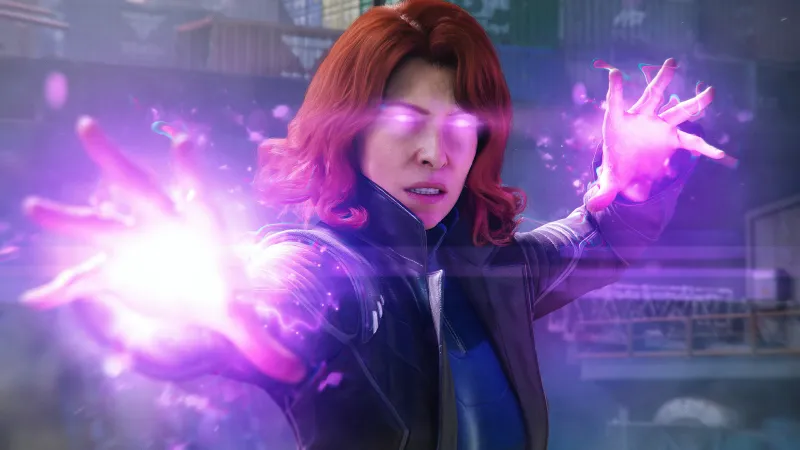
In several versions of Marvel storytelling, Jean and Logan share a special bond, but Jean ultimately chooses Scott Summers as a partner. But even without that barrier in your story, Logan still hits some roadblocks to love. Is Wolverine fundamentally a better character when he just can’t get the girl?
The way I would put it is that a Wolverine story is fundamentally better when you empathize with Logan’s pain and admire him for pressing on despite it. That goes for his emotional pain as much as physical. He’s a tragic character in this regard – all he wants is to be at peace but can never find it for long.
Wolverine gets to take on a lot of the “heavy hitters” of his comic mythology in different boss fights throughout the game. When you began development, do you recall who the very first character was that you decided he simply had to fight in your game?
Sabretooth. No character is a better foil for Logan. His inner turmoil and chaotic behavior helps illustrate Logan’s own inner beast and his struggle to resist it. Sabretooth’s strength and mutant powers also provide a mirror to Logan in combat, and his savagery creates shocking moments that leave an impression. We knew an epic confrontation with Sabretooth was going to be a thing from the start.
All images © 2026 Marvel