Little Tree Kingdom is about as instantly charming as games get. You want me to help a clan of cute little gnomes build a new town for themselves in a tree? Don’t mind if I do! And may I add: “Awwww!”
As if to lull me further into a sense of security, it’s also a bit of a deckbuilder—one of my favourite genres. Each turn, your hand of cards dictates what you can add to the colony. Some cards let you modify the tree, extending its roots or branches or adding leaves and flowers to it. Others will build little buildings for the gnomes, like houses to increase their population or mines to gather up underground resources.

The overall goal is to balance the “welfare” of the community across a number of different categories including happiness, security, and essence (whatever that is). Let any of those scores drop below zero, and you’ll literally break the gnomes’ hearts. Three broken hearts is game over.
Article continues below
At first, that threat seems pretty mild: just plonking down whatever comes into my hand each turn seems to keep my gnomes thriving. I find myself more focused on the shape of my tree than any worries about resources. The branch and root cards allow me to grow things out however I like, and then place objects on the new segments, allowing for some creative beautification of the town.
Every now and then, a festival is held and a trader comes along, allowing me to grab up some new cards. Having not worried too much about gnome capitalism thus far, I’m pretty light on gems to buy with, but scoop up a few basic cards to keep me going. I shouldn’t need any more than that, right?

Wrong. You see, the problem is, I’ve been ignoring a pretty big looming issue: my resources are not infinite. Cards can only be played a certain number of times before they’re destroyed, and outside of buying new ones, there’s no other way to replenish or expand my options. It’s not long before I’m ending up regularly drawing barely useful hands that can only give me slight bonuses rather than actually developing my town in significant ways. My whimsical little shopping trips have not really been enough to keep me stocked.
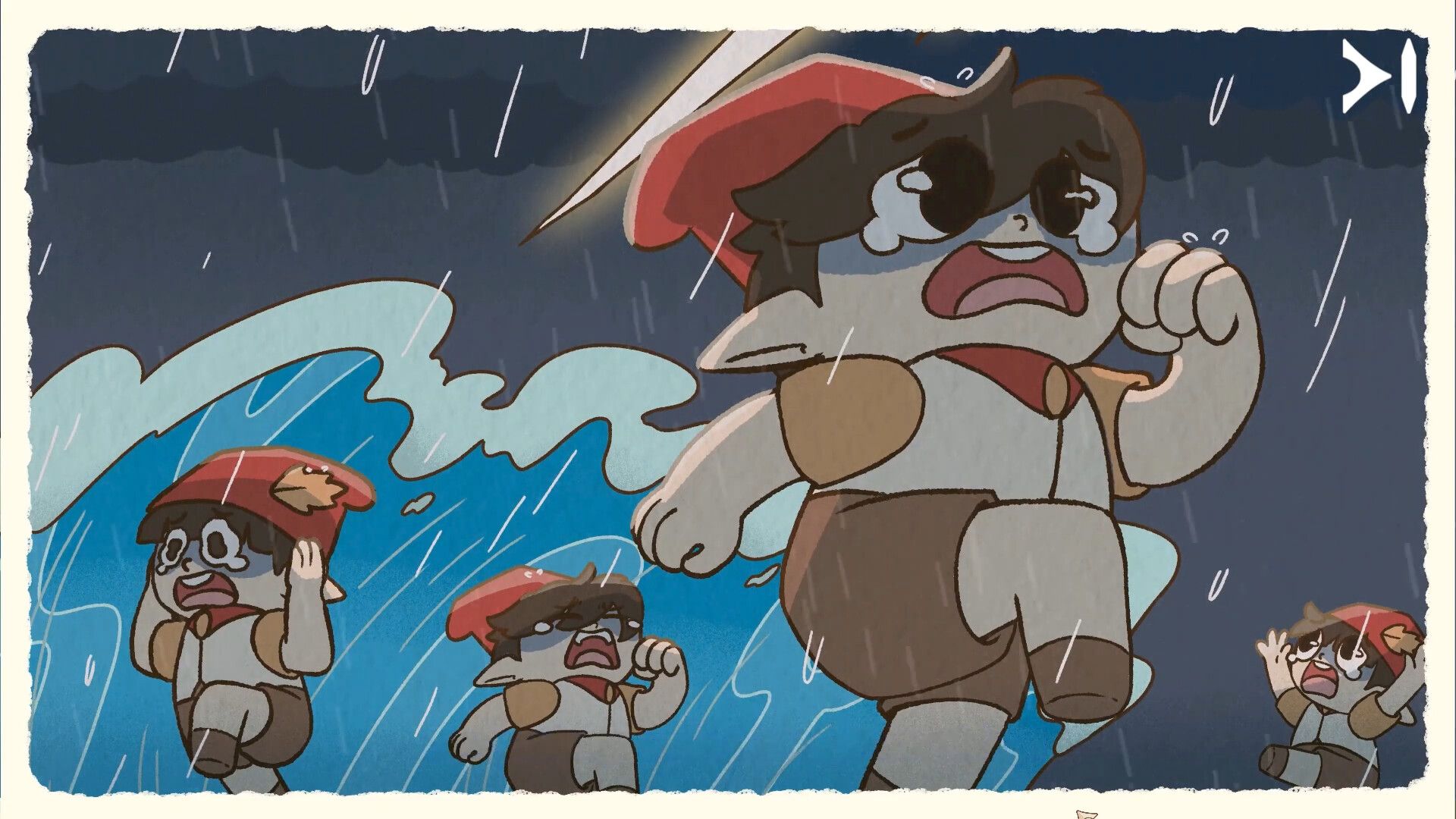
With weather events and other catastrophes always threatening to chip away at my welfare scores, that means I’ve dug myself a bit of a hole. I’m still just about scraping by, though, until all the ghosts start appearing.

It turns out this adorable forest is home to more than just cutesy gnomes—for reasons I should probably interrogate the little guys about later, it’s also full of vengeful evil spirits, who are intent on tearing down everything I’ve built. Past a certain point they’ll periodically spawn at the edges of the map, and begin their inexorable advance towards the tree.
Keeping them at bay means building up adorable little defences: spiked walls, arrow towers, even growing thorns on the tree. I guess this is also a tower defence game?
But, again, I can’t simply build those things whenever I want—I need the cards, and that means I should have planned ahead about 5 days earlier. What makes things even trickier is that defences have a very small area of effectiveness. An arrow tower, for example, will only fire at the area directly around it, making it useless against a ghost on the other side of the tree or underground. Sculpting my tree purely for aesthetics was not wise after all—now I need a more defendable shape.

As the angry dead ravage Gnomeville, I’m afforded plenty of time to ponder my mistakes. Little Tree Kingdom is not, after all, a contemplative little cosy sim. Behind its cutesy smile works a devious mind, and really the way to approach it is as a sort of puzzle roguelike rather than a city builder.
The key to success is planning for disaster and aggressively grabbing at ways to compensate for your tree’s current weaknesses. That humble little merchant is a lifeline—in later runs, I focus much more on cash generation so I can reroll his store for exactly the cards I desperately need to survive another nightmarish fairytale winter.

Relaxing it is not, but it is good fun. I’ve played a lot of roguelikes, but I don’t think I’ve ever tried one quite like Little Tree Kingdom before, and even from a city builder perspective it’s almost like the usual formula in reverse.
Normally in the genre you’re always expanding and gaining more resources. You constantly unlock more options, and you’re always equipped with the tools you need to progress. Instead, this is a game about using dwindling resources effectively, and trying to live with serious limitations on what you can do. That won’t be for everyone, but it’s a fascinating twist that I certainly didn’t expect from the premise.
And you can find out for free whether that’s your sort of thing or not—Little Tree Kingdom has a demo on Steam right now.