

Though the Tales series goes back all the way to the days of the Super Famicom, it feels like it’s always been one of the lower-budget ‘B-tier’ RPG franchises that only the most dedicated genre fans engage with regularly.
To counter this and try to bring the series to a bigger audience, the developers decided to go for a ‘soft reboot’ with Tales of Arise, which first released in 2021. The idea paid off, as Arise went on to become the bestselling game in the series and was even voted Best RPG at The Game Awards, beating out the likes of Monster Hunter Rise and Shin Megami Tensei V.
Now that the hype has died down a bit, we’re still waiting on the reveal for the next mainline game in the series, so Bandai Namco decided to port the game to the Switch 2 to tide fans over. Dubbed Tales of Arise – Beyond the Dawn Edition, it bundles in the titular Beyond the Dawn expansion, giving you around a hundred hours of RPG goodness to take on the go. I’m happy to report that Arise has made the transition to Switch 2 largely unscathed – it might not be the absolute best-looking version, but Bandai Namco cut no corners in ensuring this is a content-complete experience.

The narrative is set in the dual nations of Rena and Dahna, the former of which invaded the latter from their fancy moon base and quickly subjugated them with superior weaponry and technology. In the centuries since, the Dahnans have all been pressed into slavery and their planet divided into five sections, each ruled over by a cruel lord.
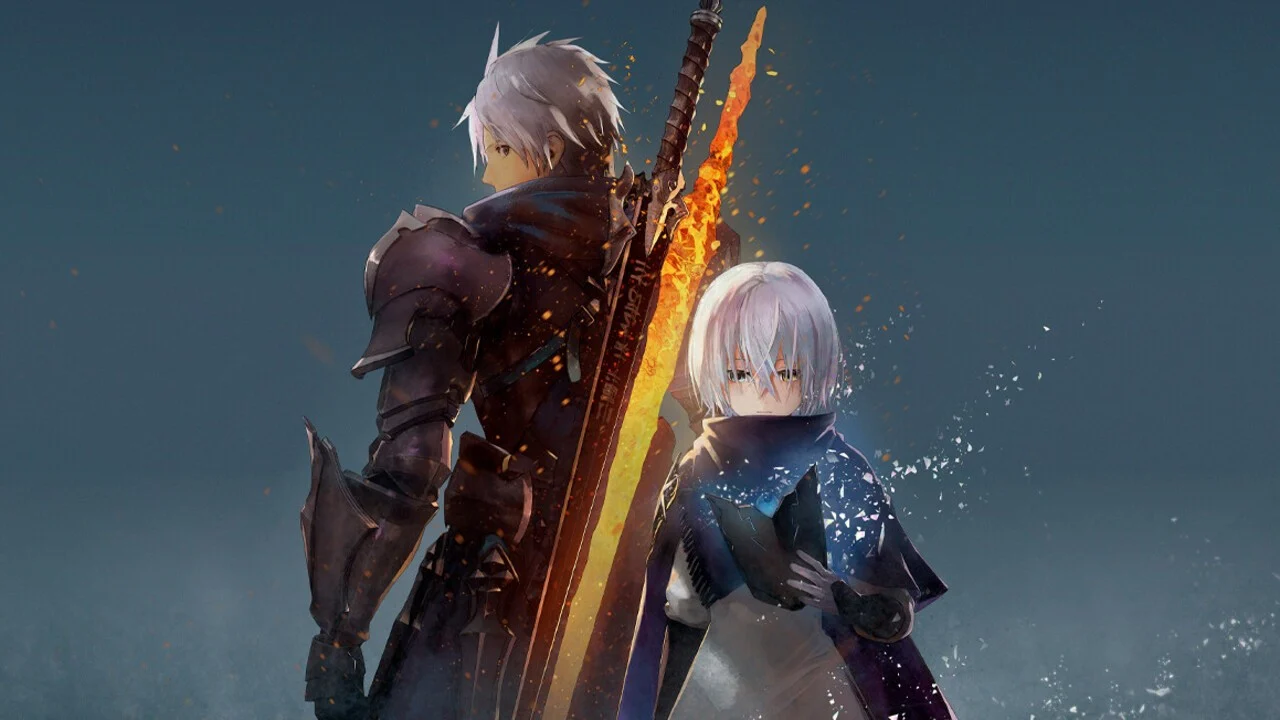
Initially, you take on the role of a slave called Iron Mask, a man who can feel no pain and does his part to make life a little better for his fellow countrymen. During a resistance-led effort to free a mysterious Renan prisoner being transported by her own people, Iron Mask accidentally discovers that he shares a unique bond with her and can summon a powerful fire sword in her presence. Despite their wariness, the two recognise that they’re stronger together than they are apart, and decide to form an uneasy alliance as they join the resistance and set out to reclaim Iron Mask’s homeland.

It’s an interesting premise, though this is the sort of game that draws out the narrative for a good 10-15 hours longer than it needs to. As you move through the five realms and grow your party and the resistance, there’s a well-trodden but well-told underdog story here as your ragtag crew warms to each other and the idea of liberation.
But just about when you feel like it’s reaching its natural conclusion… well, it just keeps going. Without spoiling anything, there are some rather eyebrow-raising twists which feel unearned, and I can’t help but wonder how much better the game would’ve been if the devs knew how to quit when they were ahead.
On the gameplay front, things unfold as a more linear take on the classic Tales formula, bouncing between towns, dungeons, and semi-open explorable zones packed with collectibles and monsters to fight. While the dungeons prove to be largely forgettable collections of winding hallways dotted with battles — no interesting puzzles to speak of — the open zones are more interesting with their varying areas to explore, resource nodes to harvest, and special monster fights to avoid or challenge when you feel ready. Bundle in the odd side quest to help motivate you to explore an area to its fullest, and there’s plenty to do regardless of where you are in the story.

Combat unfolds in a live-action hack ‘n’ slash style that focuses a lot on building and maintaining long juggle combos. Alongside your basic three-hit combo, you have a variety of limited-use ‘Artes’ that you can map to the face buttons that hit harder and often have secondary effects such as an elemental debuff or a launching effect for follow-up attacks in the air. As you string these together, you’ll build your combo and gain progressively more damage output the longer you can keep an enemy on the ropes.
While you can play as any party member you’d like, this combat system also pushes you to utilise the whole party to make use of everyone’s specialities and strengths. Shionne is great at bringing down flying enemies with her gun, while Rinwell can neutralise an enemy winding up to cast a spell, and you can easily call on any of your active members with a touch of a button.
After you build up your party further, more team-attack super moves start to get unlocked, giving combat a nice sort of progression where you start small with basic attacks and build up to ending a foe on a big showstopping spectacle where the whole crew joins in for a cutscene-worthy nuclear blast.

The only downside to this is that, after unlocking some of these deeper mechanics, enemies start to get a little too damage-spongy. Even random trash mobs in dungeons can feel like they’re overstaying their welcome by a couple of minutes, and some of the boss fights are egregious battles of attrition where the only meaningful damage seems to come from the big combo finishers that take a bit to properly set up.
It’s not game-breaking that many battles can get a bit long in the tooth, and admittedly this issue probably feels more magnified by the late-game story starting to drag, but it’s still disappointing that you can feel paradoxically less powerful as your characters’ stats and abilities expand.
Beyond the expected buffs you get from levelling up and buying or crafting better equipment, character growth is handled by the ‘Skill Panel’ system wherein you unlock bundles of new artes and passive buffs for doing anything from hitting certain story milestones to things like triggering an ally’s boost attack enough times. Once a panel is unlocked, you can then invest SP earned from battles into the artes or buffs that you want, giving you some agency to direct the build you want for each character and the party role they play.

While I wasn’t exactly wowed by this skill panel system alone, I really liked how it paired with the AI control of party members who fight alongside whoever you’re controlling. There’s a Final Fantasy XII-like ‘Gambit’ system you can mess around with here, and it can be really satisfying to get a character’s exact abilities and timings dialled in to the point that the team can largely handle most enemy encounters all on their own. Obviously, this game is meant to be played in a more active way, but there’s something rewarding about building a party that functions more as a multi-dimensional single unit than a series of lone actors who happen to be acting alongside each other.
Despite the game’s producer literally confirming that Tales of Arise would receive no DLC after its debut, the game’s unexpectedly large success led to the eventual development and release of a significant post-game epilogue, rather like the Future Redeemed expansion for Xenoblade 3 or the Yuffie episode for Final Fantasy 7 Remake.
Clocking in at around 20 hours, Beyond the Dawn largely proves to be more of the same. There are no significant new game mechanics, no new Artes or party members, and it’s set in the same place, though it’s interesting enough in how it portrays the world after the ending and how the grand finale has affected the inhabitants of both Rena and Dahna.

Overall, I’d say it’s pretty weak as far as DLC expansions go, but fans who really connect with the core game will find plenty to love. There are some interesting side quests to explore, and while it can feel weird having to do things like relearning Artes that you already unlocked in the base game, it’s pretty easy to get pulled back into the loop and just take the journey for what it is.
At any rate, I don’t think Beyond the Dawn is bad by any stretch, but it is a bit disappointing in the squandered potential that it leaves on the table. In many ways, I could see how Beyond the Dawn could’ve been the basis for a much more interesting and fleshed-out sequel, but we’re instead left with this somewhat awkward extra chapter that’s simply bolted on.
Though the visual presentation isn’t nearly as stunning as recent standout AAA ports like Indiana Jones and the Great Circle, this is still an impressive game to see running on a Switch 2 screen. The overtly anime art style of the previous games has been toned down in favour of a slightly more realistic look, and the combination of fantasy and science fiction themes in the environments is pulled off to great effect. Whether you’re traipsing through a dry mining quarry rimmed with red rock or trudging up the snowy slopes of a frozen mountain beneath a beautiful starry sky, there’s a tremendous sense of scale and spectacle that keeps egging you on to discover the next major set piece.

In cutscenes, this all runs at what appears to be an unbroken 1080p and 60fps, while the exploration and battles cut this down to 30fps. Though there may be a drop here or there, it seems to stick to the target for most encounters, and I wonder if this would be another game that would benefit from splitting the difference and offering players the option to set it at 40fps. I wasn’t too bothered by 30, but players who primarily prefer to use their Switch 2 in docked mode may disagree, given the numbers that the other major platforms can hit.
Conclusion
Tales of Arise – Beyond the Dawn Edition is a strong port of one of the better entries in the Tales series. Flashy combat, gorgeous graphics, and a meaty epilogue all combine to make this one a worthwhile purchase, even if lingering issues like an overlong story, spongy enemies, and underwhelming DLC can drag things out too much.
If you’re looking for a solid action RPG or want a good entry point to see what the Tales games are about, I’d suggest you pick this one up when you get the chance. Some issues aside, Arise has got it where it counts and provides a good foundation for future series entries to build upon.