
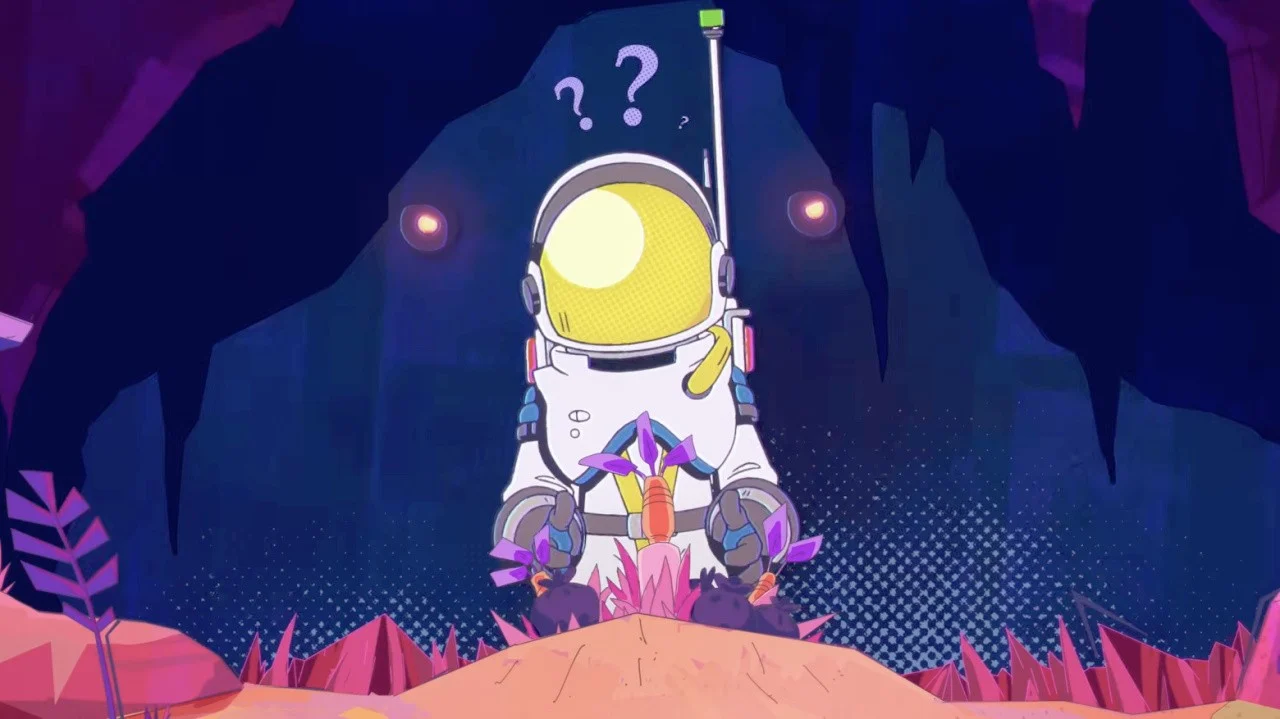

System Era Softworks’ Astroneer launched nearly 10 years ago, and its charming galactic sandbox remains a gem of the survival genre. With its accessible, cartoony spin on freeform adventure, Astroneer invited you to explore colourful worlds, uncover secrets, and hoover up resources while reshaping the environment around you. Starseeker: Astroneer Expeditions on Switch 2, however, takes the series in a mechanically different direction, pivoting away from open-ended survival toward extraction-style cooperative play.
Right off the bat, it’s worth managing expectations of the game’s current state. Starseeker is in early access and, during my time with it, I experienced some bugs and progress-blocking hiccups that required me to restart and lose some progress. Patches were regular and the community will only grow due to the built-in fanbase, so stability should come sooner rather than later.
Additionally, this is very much a live-service game designed to be played with others. Expeditions can be undertaken solo, but it’s clear the experience is built around multiple players. This is very much a spin-off rather than a fully fledged sequel.
That said, the opening tutorial is deceptively close to the rhythm and vibe of Astroneer. You explore a brightly coloured planetoid, brandishing a multi-tool and deforming the environment around you. Finding resource nodes and hoovering up the materials, you’ll then deposit them and craft further tools and tech. So far, so Astroneer.
The game shifts gears when you enter the titular station, which is populated by NPCs offering quests and real players waiting to deploy to a planet for the next expedition. From the ESS Starseeker, you craft and upgrade gear, chat with other explorers, and put together a crew. When ready, you head for the dropships and descend to a planet, completing research tasks and collecting resources to take back to base and craft more gear.
There’s an O2 meter that acts as a timer for the excursions, so when the 30-minute deadline is up, you’ll have to down tools and head back to base. This timeboxed format will ultimately separate those who enjoyed the chilled-out persistent experience of the previous game.
Overall, the expeditions offer a fine gameplay loop. The compulsion to complete missions and hunt down resources to expand your repertoire of gear will keep players heading back to the dropships. There’s a decent variety to the field ops that make up the more proactive aspects of expeditions, but most of the fun comes from exploring these meticulously crafted biomes.
The randomly generated planets of Astroneer have been replaced by bespoke environments with purposeful design quirks that feel tailor-made for social experiences. Huge mountain ranges, brightly coloured forests, and scattered remnants of lore give these planets a nice sense of variety, and it’s satisfying to utterly destroy them with your terrain-deforming abilities.
Another way Starseeker differs from Astroneer is the element of danger scattered across the maps. Alongside environmental hazards is a menagerie of alien creatures to battle and run from. Using your tools and terrain deformation against enemies of all sizes, these encounters are what will ultimately decide whether playing alone is a viable option.
The server population was sparse during my time with it, so most of my expeditions were undertaken solo. One of my lonesome visits to harvest resin disturbed a huge beast that killed me in a couple of claw swipes before I could figure out how to fight it. This is where friends can come to the rescue.
The game looks and plays smoothly on Switch 2. The cartoonish aesthetic and vivid colours pop in both docked and undocked modes, and the server connection was stable throughout. The main hub chugs a bit when populated with players, at one point tanking to low frames with barely anyone online.
The hub is also the place to buy cosmetic items, which can be purchased with in-game currency gained from completing missions. Unfortunately, there are microtransactions, a feature the developer had previously stated would not be present. There’s plenty of cool stuff to buy just by playing the game, though.
So, worth investigating in Early Access, then?
Starseeker takes the look and feel of Astroneer and retools it for a co-op experience, swapping out a persistent sandbox for bite-sized adventures with added hostile fauna to liven things up. Whether that will have as enduring an impact as its predecessor remains to be seen.
System Era Softworks has promised a live service that accommodates casual players, reducing the FOMO of most online experiences. That notion is just enticing enough for me to assemble a regular expedition crew.

Starseeker: Astroneer Expeditions is available in Early Access on the Switch 2 eShop now for $29.99 / £26.99. Have you played it yet? Let us know below.