
Lauren spends most of her time dead in League of Legends, or equally as dead in Valorant. Don’t ask her about Vampire: The Masquerade.

Published:
My first memory of Soulframe is being insulted by what I can only describe as a magical string bean. Technically he’s a Sproutfolk, but to my mind, he’s a magical string bean with a particularly nasty cold. I’d awoken in Alca with not much context and nought but a single quest to keep me busy: locate the so-called “secrety glade,” and the key required to open it. It was a relatively basic introduction; fetch x, do y, fight boss. It was interesting enough to keep me intrigued initially, but as time went on, I found my mind wandering.
That was many years ago now – how time flies. I’d expected the Soulframe release date to have rolled around by now; even news on early access, or 1.0. But Digital Extremes’ upcoming fantasy RPG has simply continued to trundle along in pre-alpha, slowly inviting new players to the game, while the developer listens to community feedback. To some, that may not sound great: why is the game not ready to release yet? Will Soulframe ever be released? I’d be a liar if the same thoughts hadn’t crossed my mind. But, in the wake of TennoCon 2026 and the absolutely stellar Warsongs demo, I packed up my bags and headed back to Alca, excited to be berated by a sneezing string bean all over again.

When I first played Soulframe, my primary issue was its combat. While the game’s classes – or ‘Pacts’ – were split into the traditional mage (Oscelda), warrior (Tethren), and rogue (Sirin) archetypes, they all played relatively similarly, especially the latter two. Playing as a rogue quickly became frustrating – I didn’t feel like a stealthy assassin; instead, I was just hacking and slashing away, hoping for the best. That was amplified by the almost soulslike-esque combat – the initial Torment Stag encounter wiped the floor with me, and while I’ll actively admit that I’m not a soulslike master, it felt particularly vicious for an early-level boss.
Returning to that exact same questline in 2026, everything feels completely different. My rogue is crouched and her movements are fluid and quick, while my mage feels more dynamic than just ‘wave staff, cast spell.’ The Torment Stag, while still challenging in its own ways, performs like an entry-level boss, and the slow, methodical soulslike feel from my first playthrough has been replaced with faster-paced, more action-game-esque movement. Pacts finally feel like they have their own unique identities, and I haven’t tried out any of the new special subclasses yet.

It’s helped along by a more cohesive narrative. Initially, Preludes – and even some TennoCon demos – felt like disparate parts put together purely for the sake of giving the player things to do. While I instantly fell in love with Verminia, the gameplay itself felt like more of a check box to unlock her elixir skills than a fully rounded story experience. While DE’s keeping the narrative beats close to its chest – CEO Steve Sinclair confirmed that even TennoCon’s Warsongs demo is a spliced-together version of a much longer quest – the improved introduction and enhanced storytelling make Alca feel like a videogame versus an ongoing tech demo.
This is equally enhanced by Soulfame’s unique storybook-esque narrative style, which has blossomed over the years into something truly unique. Everything reads poetically – “relieve a chest of its contents,” one quest bids me. I know exactly what it means, but the writing almost beckons and dares me to do so – I’m a child stealing a candy; a trickster in the night looking for their next victim. The modern iteration of Soulframe has a well-realized identity and style; it’s clear to me that, in terms of worldbuilding, DE has learned the right lessons from Warframe.
Perhaps the most important thing, however, is that Alca now feels alive. Soulframe has some MMO-like qualities, much like Warframe. You load into an instance, and sometimes you see other players wandering around. The Drippin’ Flagon – a forgotten alehouse nestled beneath the ground – is home to a merry bunch of revellers, and is filled to the brim with Envoys completing quests and hanging out, akin to one of Warframe’s relays. Perhaps that feeling of liveliness exists simply because there are more players than when I first started out, but where Soulframe initially felt like a solo experience – not always helped by how grindy combat felt and the game’s somewhat muted color palette – now it feels like a thriving, living world.
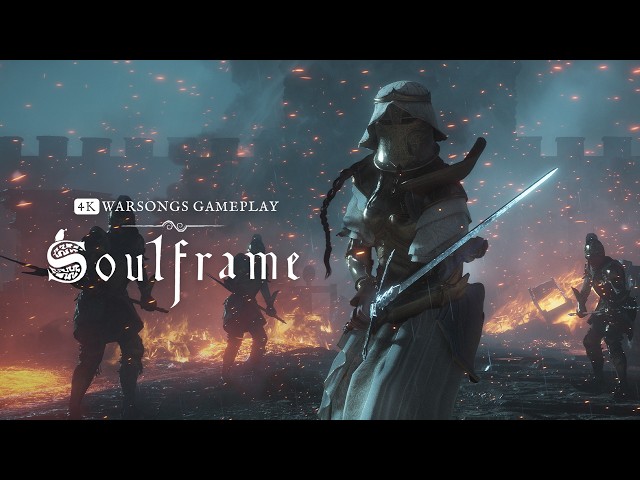
While I initially felt like keeping Soulframe in pre-alpha state was a curse, I now see the logic. DE did the same with Warframe back in the day, but I was unsure if a slow, community-driven development model could work in a world where videogames come and go at such a rapid pace. If genre-defining heavy-hitters like Hollow Knight Silksong were only ‘trendy’ for a couple of weeks, how can a relatively niche game exist in pre-alpha for literal years? How does that make money in a world where cash is king, yet simultaneously non-existent?
I’m glad the Preludes model is working. Through the developer’s own good decision-making and community feedback, Soulframe is slowly becoming the fantasy RPG I believe it can be. I’m glad that we’re still making games with the community at their core; games for people, and not games for games’ sake.
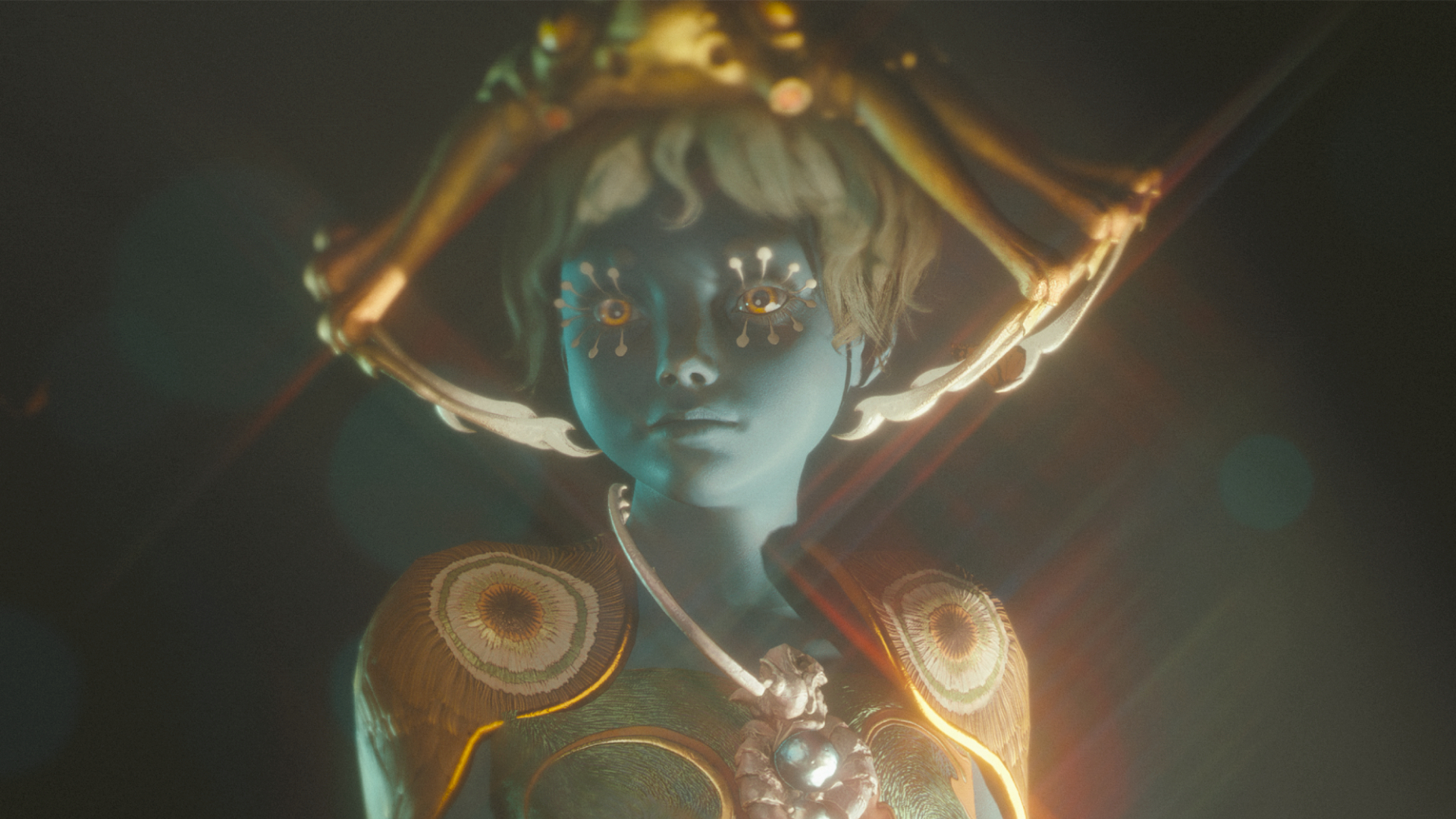
Digital Extremes knows what it’s doing – it’s cultivated a bespoke shooter in Warframe; one that’s distinct visually and in terms of gameplay. Soulframe is the same; its storytelling, color palette, and general aesthetics are unlike anything else on the market. The cinematic feel of its boss fights, coupled with a stellar soundtrack and clever implementation of song as a storytelling device is absolutely magnificent; it’s music I want to listen to; a story I want to hear.
I’ve long defended Soulframe, even when I wasn’t bowled over with my first experience. With Warsongs on the horizon, I’m genuinely excited to see what comes next. I’ve been looking for a new fantasy adventure that absorbs me the same way that Baldur’s Gate 3 did; I wanted Soulframe to be that game. Now, I finally believe it can be.