
Paul’s an expert in Videogames, Star Trek, flannel shirts – in that order.

Published:
There are some videogame worlds I could see myself living in; those with beautiful environments, friendly people, and a real sense of adventure. Metro 2039 is not one of those games. A real hellhole, where the smallest of victories require the largest of efforts – it’s a dour place that reeks of death. I quite enjoyed it.
The Metro series has been going since 2010, telling the story of humanity after catastrophe and how they found shelter underground from the now-uninhabitable surface. It’s cramped, it looks like it smells, and not everyone is a ray of sunshine (fair enough, to be honest). Venturing out from this relative safety to explore would be a death sentence for most, with the ambient radiation and packs of monsters a constant threat.
While Metro Exodus was more of a sandbox-y type of deal, with the aim being to leave the dank tunnels, 2039 is a return to the more classic Metro environment. I got to play a chunk of 2039, starting partway through the story, with most of the narrative bits shaved off. I’m back in the tunnels; I’m looking for someone, and a new threat has emerged in my absence.

I started my brief playthrough in one of the biggest surviving human colonies, Sevastopolskaya, which I’m told is an iconic location in the books and something we’ve never seen before. The place hummed with activity; people going about their day, scrounging a living, as I waltzed through, preparing for my eventual trip outside.
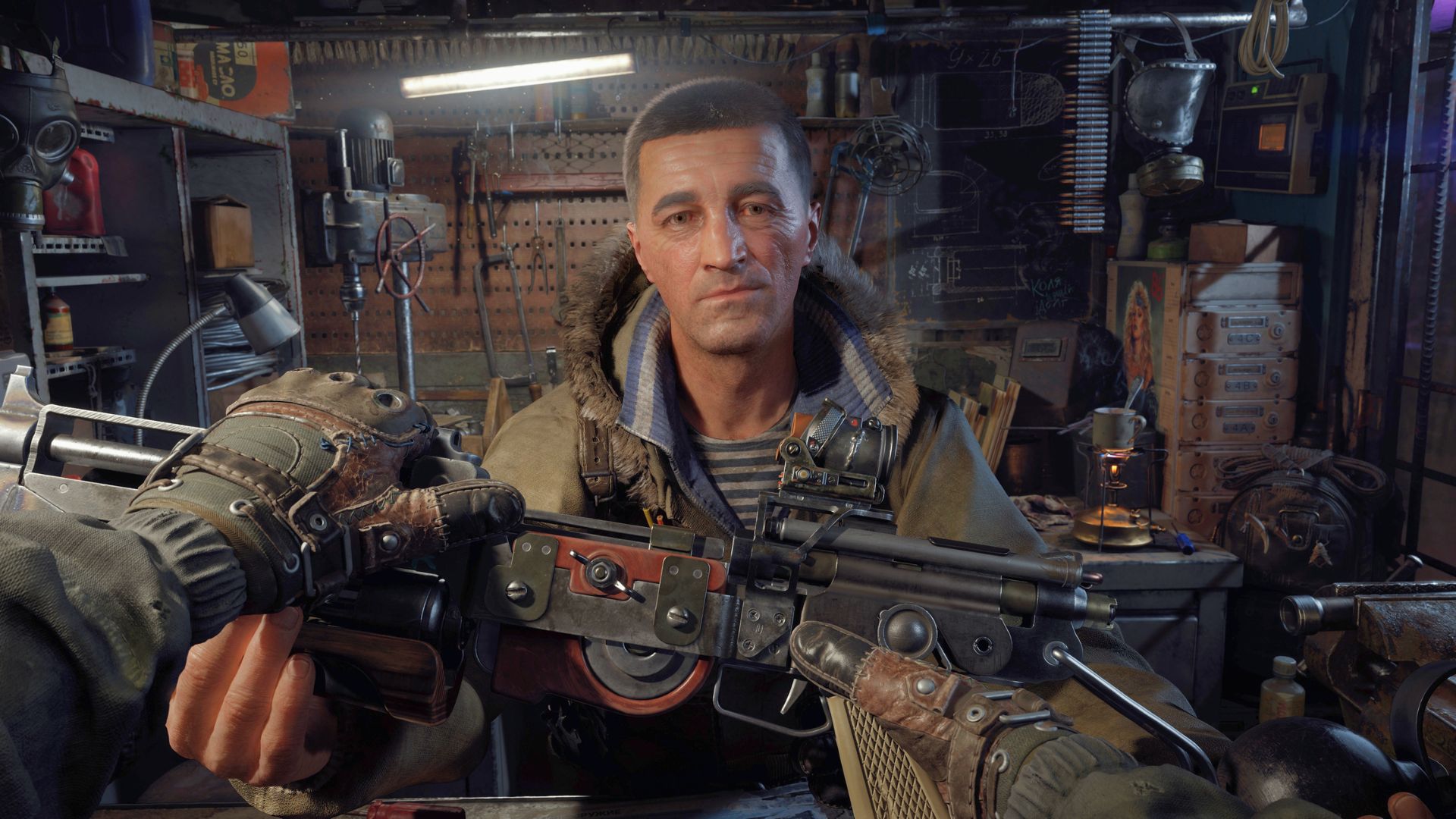
It didn’t feel like these were NPCs waiting for an interaction. The station feels like it was there before I turned up, and will continue after I leave. I visited a man who had been cleaning my equipment, which is where I was introduced to the new customizable Metro 2039 weapons.
I’m always fascinated with how these post-apocalyptic worlds handle technology – yeah, it’s in the future, but also, you know, mankind has seen better days. Metro has a very distinct, advanced ramshackle quality to it, in that most of my equipment looks homemade, so being able to change that on the fly is a very enticing prospect.

Changing bits of my guns, improving their effectiveness – being able to change parts so they shoot different types of ammo. This gives me options whilst out in the wild, and options usually prolong my life, so I’m all for it. It’s an upgrade system with fancy animations, but it’s something that makes me feel like I’m making my mark on my survival tools.
Once I’ve had a chat with some of the locals and sorted my gear, it was time to pass through the airlock and venture outside. I’m met with a mix of admiration and a couple of jeers – venturing beyond the relative safety of the metro walls isn’t something people do, and after approximately 30 seconds, I can see why.
The atmosphere in Metro 2039 is toxic, and anything that moves is likely something that wants to rip me in two. I have to wear a gas mask at all times – my vision is slightly obscured, my breathing is occasionally labored, and I have to keep a constant eye on my filters lest I choke. It’s claustrophobic, and that’s before I take into account the literal tunnels I’m walking through.

Metro 2039 is heavy. It’s heavy in every sense of the word. Movement is slow and purposeful; anything held in hand has a heft; I labor to live. Pushing forward means burning webs with my lighter, and it means scouting ahead so I don’t get jumped. I can’t afford to mess up when simply existing here comes with a huge baseline effort.
Scaling back from Exodus’ sandbox-like world doesn’t make 2039 small – far from it, actually. I got to explore a large chunk of dilapidated Moscow, searching nooks and crannies for anything remotely useful for the task ahead. It felt like a happy medium between the openness of the Exodus and the more linear, traditional parts of Metro 2033.
The creatures I encountered while topside behaved like animals in that they attacked with a single purpose, without any real concern for their personal safety. Combatting humans, however, was a different story. They used a bit more tactical nous to hunt me down, which made these skirmishes a lot more dangerous – I didn’t have to just shoot what was in front of me; I instead had to predict and move, lest I be cornered.
As I said earlier, a lot of the narrative detail was stripped from the version of Metro 2039 I got to play, giving me a taste of what it has to offer without spoiling anything major. It’s got real jeopardy and weight, with an atmosphere you could cut with a knife. I enjoyed my time with 2039 – if 4A Games can add a bit of emotional weight to the proceedings with a decent story, then we could be looking at the best game in the series so far.