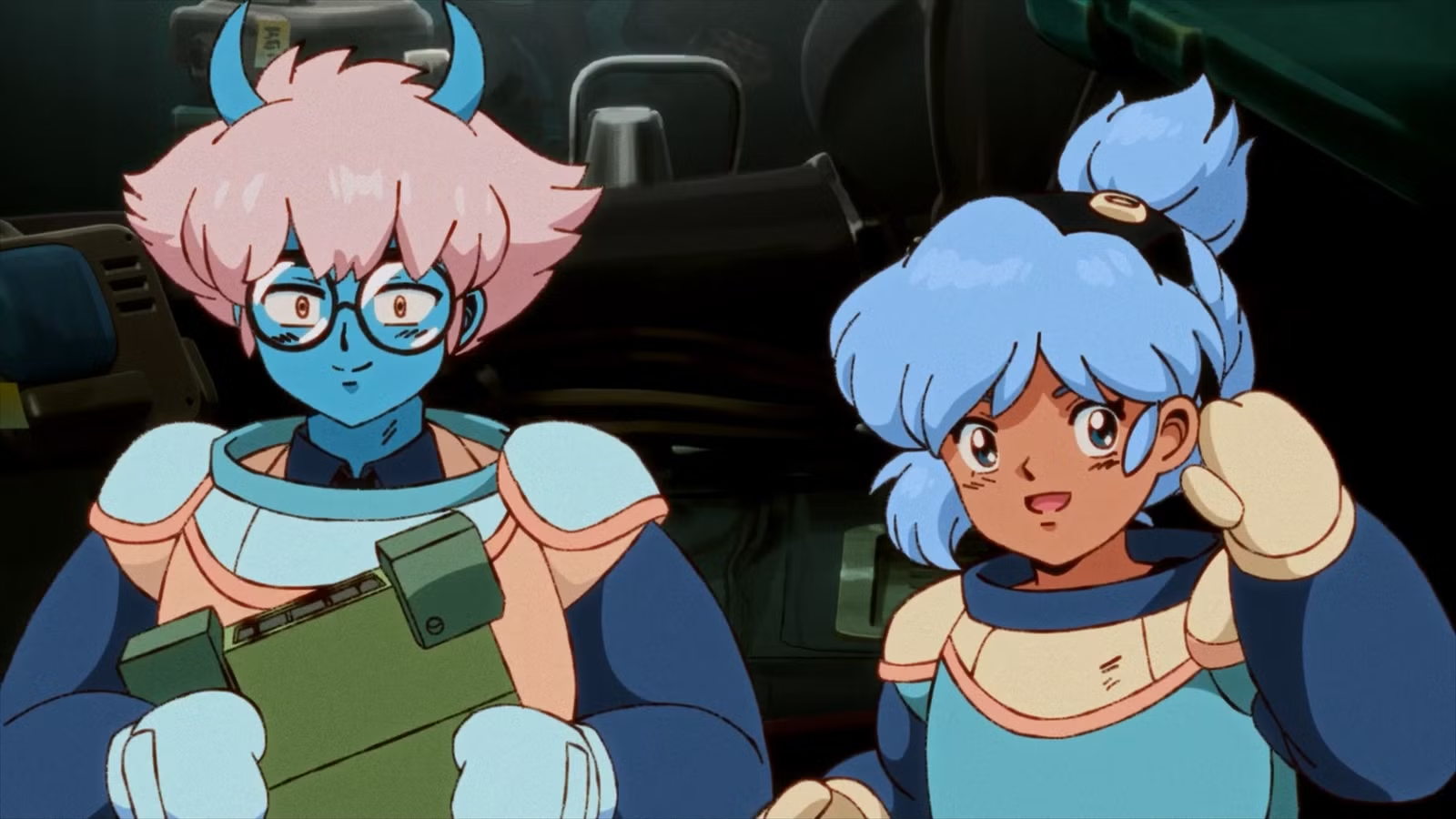
Pure co-operative games like Orbitals — which is to say, games that can only be played collaboratively with a friend, and that have no single-player option — are rare. Which is odd, because they’re also popular. Swedish studio Hazelight has created a profitable, almost unchallenged niche for itself making action-adventure games for two players. Hazelight’s games are medium-sized productions but massive hits — It Takes Two, from 2021, has sold an astonishing 30 million copies — something the studio attributes (among other things) to the extremely high demand for, and low supply of, this kind of co-op game.
Hazelight — whatever you think of creative director Josef Fares’ unsubtle storytelling ambition — is pretty good at making these games. But no field of game design can move forward without competition. Enter Orbitals developer Shapefarm, a Tokyo-based studio co-founded by Marcos Ramos and Jakob Lundgren, a former Hazelight designer.
Shapefarm isn’t out to revolutionize this breed of co-op puzzle-platformer, and Lundgren freely admits he’s working in the same tradition with the same design philosophy as his former studio. What Orbitals does is it raises the bar. The Nintendo Switch 2 exclusive is sharper, better-looking, more focused, and it’s delivering more good ideas per minute. It’s a blast.

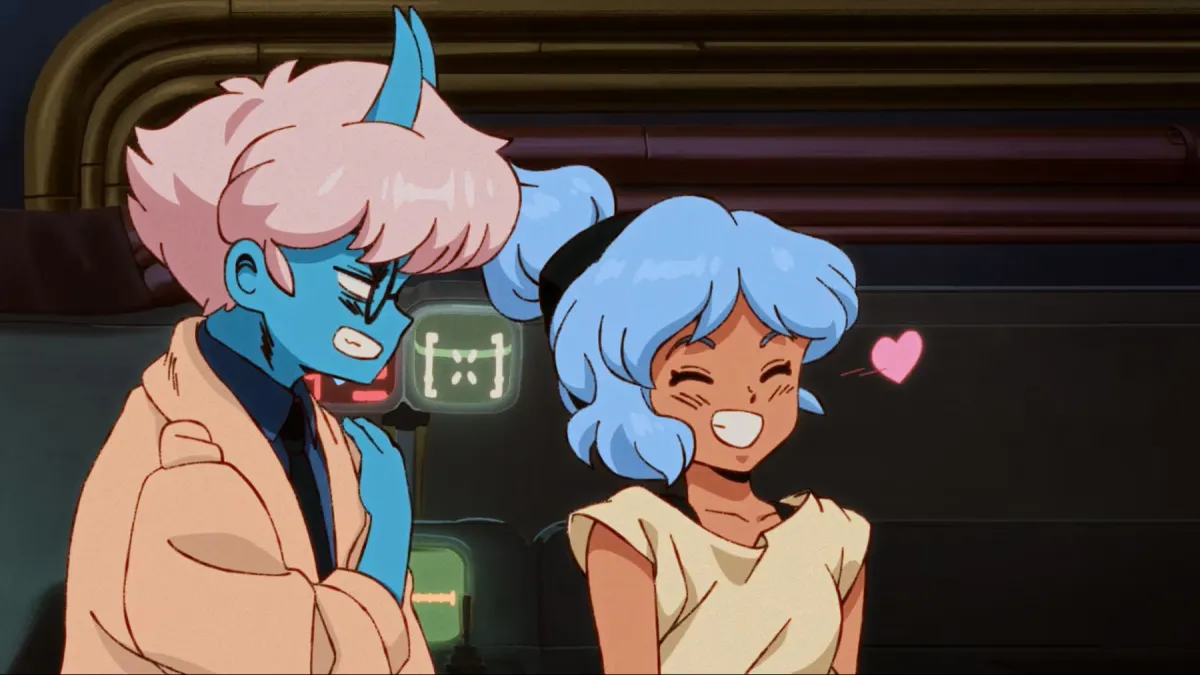
Orbitals grabs your attention immediately with its aesthetic. It’s a tribute to 1980s anime, resplendent in faded pastel colors and a gorgeously soft presentation, as if every frame had been hand-scanned from an animation gel onto 16mm film and then displayed on an old cathode-ray TV. Shapefarm namechecks titles like Neon Genesis Evangelion and Cowboy Bebop; Orbitals made me think of classic French-Japanese coproductions like Ulysses 31 and The Mysterious Cities of Gold, perhaps because of Shapefarm’s combination of Euro direction and Japanese artistry. Or perhaps because that’s just my own nostalgic frame of reference (there wasn’t a lot of anime on U.K. TV in the 1980s, but we did get those shows).
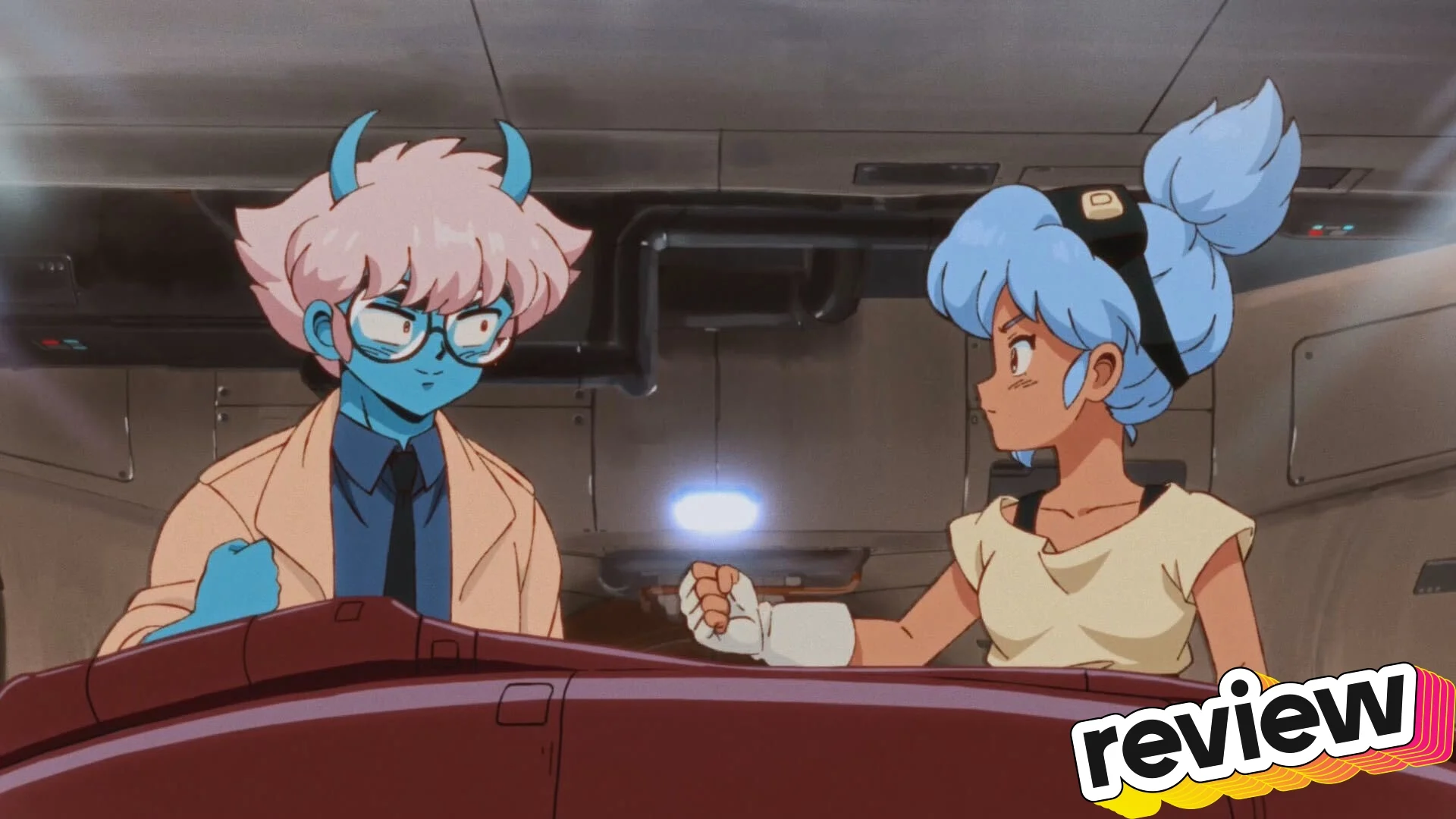
Like jumping into an anime episode halfway through a series’ run, Orbitals starts in the middle of a story and leaves you to pick up the details. Maki and Omura are young members of a space-station society that is threatened by a cosmic storm. As kids, they were saved from a similar space-time collapse when their consciousnesses were uploaded into instantly regenerating artificial bodies — Shapefarm’s explanation for the pair’s ability to pop back to life immediately when they fail a fatal challenge.
Enthusiastic and inexperienced, Maki and Omura set out to save the station by venturing into unstable space ruins and scavenging or reactivating a bunch of old gear. Honestly, Orbitals‘ overarching plot is just a series of expedient video game MacGuffin hunts, and that’s fine. Pleasure in the game’s storytelling comes not from the heavily telegraphed themes of a Hazelight game, but from the gradual shading in of its charming cast of characters.

Maki and Omura are appealingly upbeat and insouciant about their adventure — Orbitals does not take itself particularly seriously, and the characters’ vocal performances (in English, Japanese, and other languages) are effervescent. It’s visually that the pair really hit home, though. The way their 3D models are animated to look like jerky 2D cels, and imbued with a kind of joyous ungainliness, is some kind of witchcraft. It’s a cool effect because it’s technically sophisticated and nostalgic, but over and above that because it’s so expressive of their characters and the game’s buoyant mood.
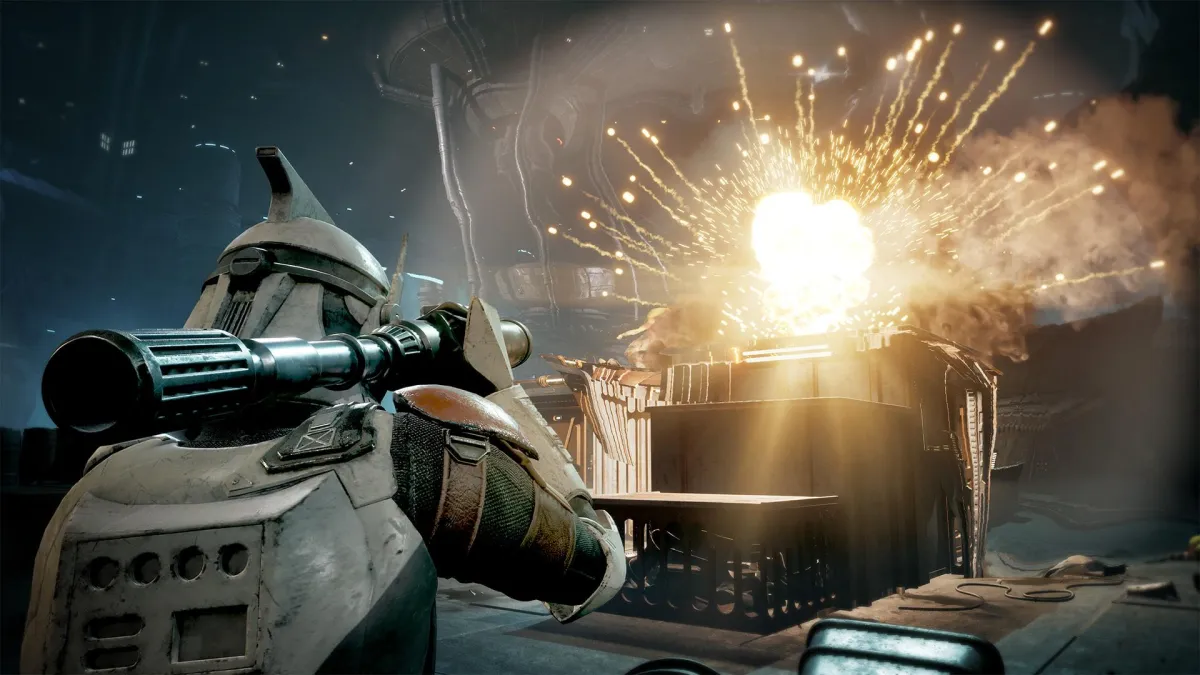
The gameplay consists of the pair flying their retrofuturistic ship (one player in the pilot’s seat, one in the gunner’s) to bizarre space junkyards, then using a handful of tools — a grappling hook, a laser, a water hose — to solve puzzles and propel each other forward. Every section finds fun new ways to put a pairing of these tools together: using the hose and laser to freeze and unfreeze platforms or to shrink and grow snowballs, perhaps, or using the laser to keep a self-destructing robot charged while it chaperones your partner through a grapple-hook obstacle course on the other side of a pane of glass. The tools are chunky and satisfying; Shapefarm has paid attention to the physical tactility of the game’s world because it’s fun, and because it helps you understand its rules and intuit solutions.
Lundgren has said that, out of respect for co-op players’ scarce time, Shapefarm has avoided making Orbitals too long or too difficult — hence the instantaneous respawns. But that doesn’t mean it’s not challenging. Far from it. Shapefarm knows that constant friction will keep the magic happening between players, and is unafraid to throw platforming gauntlets with tricky timing at you, or puzzles without immediately apparent solutions. Most of the game is about finding and re-finding a groove between the two of you; Orbitals constantly pulls you apart just enough that you can feel the joy of slotting back into place alongside each other.

It’s such a beautiful feeling, and it’s clear from It Takes Two‘s success that many people want to feel it. Why aren’t more studios trying to fulfil this appetite? There’s a natural barrier to enjoying co-op games: You need someone to play with, which can be a scheduling challenge (even in a busy household full of video game enthusiasts like mine). It feels safer to design for one player, I get it. But I wonder if there’s another reason. Designing a co-op game is specialized work, and it’s hard. Or, to put it another way, it’s unforgiving.
Players’ enjoyment of co-op games rests on the spontaneous interactions the game elicits from them; the conversation, the collaborative problem-solving, the coordinated tests of skill. The joy comes from the moment the two players, wordlessly or otherwise, fall into lockstep on a new challenge. The repetition and modulation that form the beating heart of so much single-player design simply won’t fly here. Co-op game designers need to be throwing their players a genuinely new way to play together every few minutes. They need a lot of ideas.
Orbitals has more than enough. It’s a masterpiece of pacing that uses every trick in the game designer’s handbook to bring two players together and keep them there. Despite its deeply nostalgic presentation, it offers a sense of constant newness; there hasn’t been as inventive and delightful a family action-adventure since Astro Bot. And Shapefarm does it all with such charm and lightness of touch. Now we have two studios pushing forward this much-loved yet unsung mode of play. Who else is game?
Orbitals is released exclusively for Nintendo Switch 2 on Sep. 3rd.