Creating a horror game is no small feat. Creating one built around the concept of co-op play is even harder. How do you balance that crucial sense of isolation and fear when you’ve constantly got someone along for the ride with you?
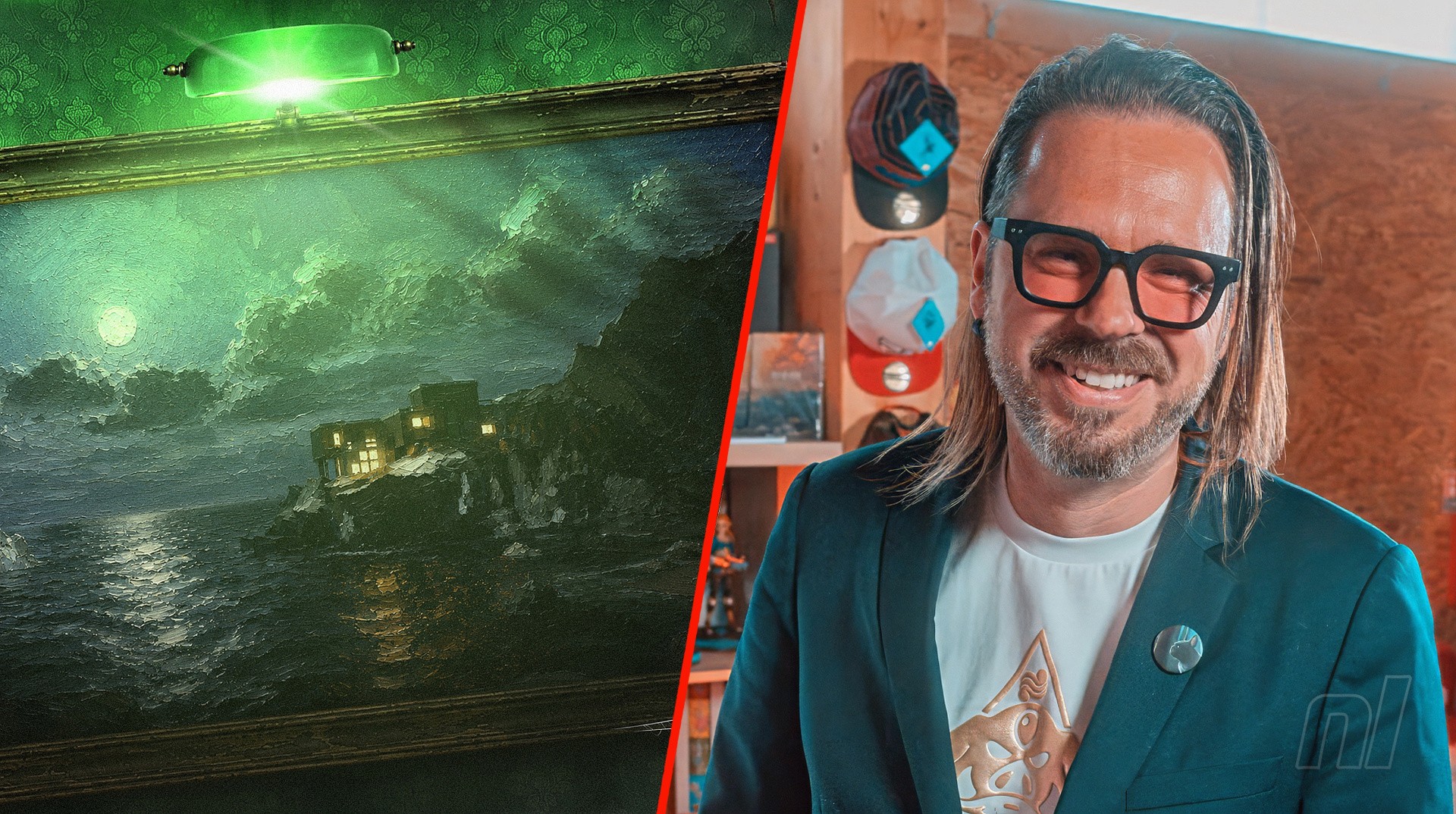
For new development team Atlantis Studio and creative director Nico Augusto, this is a challenge worth pursuing. Beyond the Dark: Nightwatch is a new, exclusive Switch 2 title in development now that focuses entirely on co-op, asymmetrical play. One player faces their fears in a spooky house inhabited by a mysterious creature, while the other provides support via surveillance.
Sounds promising indeed, but Augusto also has much to prove after his previous game, Seasons of Heaven, never came to fruition on the original Switch. We dive into this and much more in our chat, so read on for more information on what could be one of the Switch 2’s most unique horror titles so far.
Nintendo Life: For those unfamiliar, can you introduce Beyond the Dark: Nightwatch?
Nico Augusto: Beyond the Dark: Nightwatch is an asymmetric two-player cooperative mystery game with a strong sense of tension, designed exclusively for Nintendo Switch 2. It’s not simply a cooperative game. It’s an experience where two players are playing two completely different perspectives while sharing the same adventure.
One player physically explores the “House” in first person, searching for clues while trying to escape a mysterious creature lurking inside. The second player becomes their eyes from a distance through the WB-86, a portable surveillance device inspired by 1980s technology. They monitor security cameras, identify dangers, guide their partner and uncover information that the explorer can never see alone.
Both players have different gameplay, different responsibilities and different information. Neither player can complete the adventure without constantly communicating with the other.
One of the features we’re most excited about is GameShare. Only one player needs to own the game. A second player can simply join using another compatible Switch or Switch 2 system and immediately become part of the experience with their own dedicated screen.
For us, that’s what makes Beyond the Dark: Nightwatch special. It’s not about playing side by side—it’s about experiencing the same story through two completely different perspectives.

Why did you decide to create a Switch 2 exclusive for your first project?
Because Beyond the Dark: Nightwatch simply wouldn’t exist in this form anywhere else.
From the very beginning, we wanted to design the gameplay around Nintendo Switch 2 instead of adapting an existing concept to new hardware. As soon as we discovered GameShare, everything suddenly made sense. It perfectly matched the philosophy behind Atlantis Studio: creating cooperative experiences that are accessible, intuitive and designed to be shared.
We’d also like to sincerely thank Nintendo for their support throughout the development of Beyond the Dark: Nightwatch. Being able to build the game around Nintendo Switch 2 from an early stage allowed us to fully embrace its unique features and refine every aspect of the experience around them. Nintendo has always encouraged developers to innovate through gameplay, and that’s exactly the philosophy we wanted to embrace with Beyond the Dark: Nightwatch.
Beyond the Dark: Nightwatch simply wouldn’t exist in this form anywhere else.
As your first project for Switch 2, what kind of challenges have you faced so far?
Working on a new platform is always exciting because it encourages experimentation. One of our biggest challenges wasn’t simply technical. It was making sure that both players constantly feel equally important despite experiencing completely different gameplay. Designing an asymmetric game is incredibly rewarding, but also very demanding. Every mechanic has to create meaningful communication. Every puzzle has to make both players feel useful. Every decision has to reinforce the idea that neither player could succeed alone.
Another major challenge was implementing GameShare “Individual” within Unreal Engine 5. Because Beyond the Dark: Nightwatch was designed around two completely different gameplay experiences running simultaneously, we spent a great deal of time experimenting with Unreal Engine to make the experience feel completely seamless. It required a lot of engineering, optimisation and collaboration, but seeing two players instantly connected on separate Nintendo Switch systems made every challenge worthwhile.
Finding the right balance between gameplay, communication and technology has probably been our biggest challenge, but it’s also what makes Beyond the Dark: Nightwatch so unique.

What made you go for a horror game? What do you think it will offer players that hasn’t been done before?
Ironically, I’m not actually good at horror games. I love mystery, supernatural stories and the feeling of exploring places filled with secrets, but I’ve always found horror games too stressful to play alone.
When I was younger, my sister and I used to play them together with just one controller. She wasn’t simply watching—she was constantly helping me, warning me, solving puzzles with me, screaming before I even realized something was behind me. Even though only one of us was holding the controller, it genuinely felt like we were both playing. That memory never left me.
Years later, I started asking myself a simple question: what if a game was designed from the ground up around that exact feeling? That’s how Beyond the Dark: Nightwatch was born. It’s not about making the scariest game possible. It’s about creating an experience where fear becomes something you overcome together. Communication, trust and collaboration are the real mechanics of the game.
We hope that couples, friends, siblings and even parents and children will finish the adventure with stories they’ll still be talking about years later.
Seasons of Heaven was probably the greatest lesson of my career. When you’re young, you believe that passion and good ideas are enough to build a game. They aren’t.
Which horror media, if any, did you look to for inspiration for Beyond the Dark?
Our inspirations go far beyond horror games. It came from novels, Murakami stories, Hayao Miyazaki-san, Lovecraft and French horror film-makers like Pascal Laugier (Martyrs).
We admire the environmental storytelling of games also like Resident Evil 7, and the atmosphere of classic supernatural cinema, but we were just as inspired by escape rooms, mystery novels and cooperative games that naturally encourage players to communicate.
The “House” itself became one of our biggest inspirations. We wanted it to feel alive, almost like another character. Every room reveals part of a mystery that spans centuries, and every object invites players to ask another question. Ultimately, we don’t want players to remember BTD because of a single jump scare. We want them to remember the conversations they had together while trying to understand what was really happening inside the House.

Your Seasons of Heaven game sadly never made it to fruition. What lessons did you take from that experience that you hope to apply to your new studio?
Seasons of Heaven was probably the greatest lesson of my career. When you’re young, you believe that passion and good ideas are enough to build a game. They aren’t. That experience taught me that discipline, production, communication and surrounding yourself with the right people are just as important as creativity. It also taught me something I’ll never forget: a great idea only matters if you’re able to finish it. Atlantis Studio was built on those lessons.
Today, we deliberately keep our productions focused, our teams agile and our ambitions realistic without ever compromising our creative vision. Looking back, I don’t see Seasons of Heaven as a failure anymore. I see it as the experience that made Atlantis Studio possible.
And for those who have followed my journey over the years… if you take the time to explore every corner of the House, you might come across a few subtle nods from the past. It’s our way of saying thank you to everyone who has believed in us since the very beginning.
What’s the rough timescale for development at the moment? Do you have a target release window?
Development is progressing very well. The team is currently focused on polishing the gameplay, refining the asymmetric cooperative mechanics and continuing to expand the mystery surrounding the “House”.
We already know when players will finally step inside the “House”, but we’ll have to keep that secret just a little longer. We promise the wait won’t be too long. We can’t wait to show more of the game over the coming months.

Finally, is there anything else you’d like our readers to know at this stage?
First of all, I’d simply like to thank everyone who has supported Atlantis Studio since the announcement. The response from Nintendo fans has been incredibly encouraging for such a young independent studio.
Beyond the Dark: Nightwatch is only the first step for Atlantis Studio. Our dream is to continue creating original cooperative experiences for Nintendo players for many years to come.
If, years from now, people remember Beyond the Dark not because they completed it alone, but because they experienced it with someone they care about, then we’ll feel we’ve accomplished exactly what we set out to do.