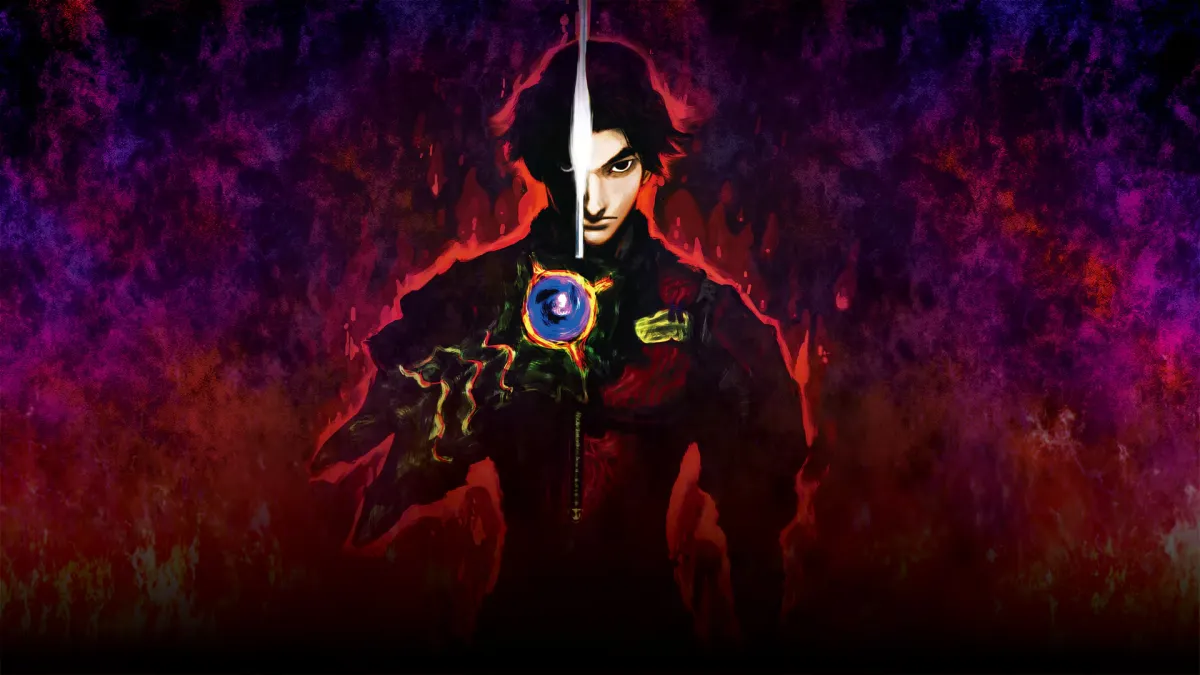
Onimusha: Way of the Sword is Capcom’s return to its samurai action series after a 20-year hiatus, and it’s also the latest game to grace the cover of Game Informer. I traveled to Capcom’s Osaka HQ to play the game for hours, interview its various developer leads, and explore neighboring Kyoto to learn how it inspired the game. I was also able to speak to Motohide Eshiro, the director of Onimusha 2: Samurai’s Destiny and its recent remaster.
Though he’s not directly involved with Onimusha: Way of the Sword, Eshiro tells me he serves as a producer these days. But rather than being a head producer on a project himself, he supports up-and-coming producers on a variety of projects. Before directing Onimusha 2: Samurai’s Destiny, which launched in 2002, he worked as a planner on Onimusha: Warlords, which Capcom released in 2001.

Game Informer
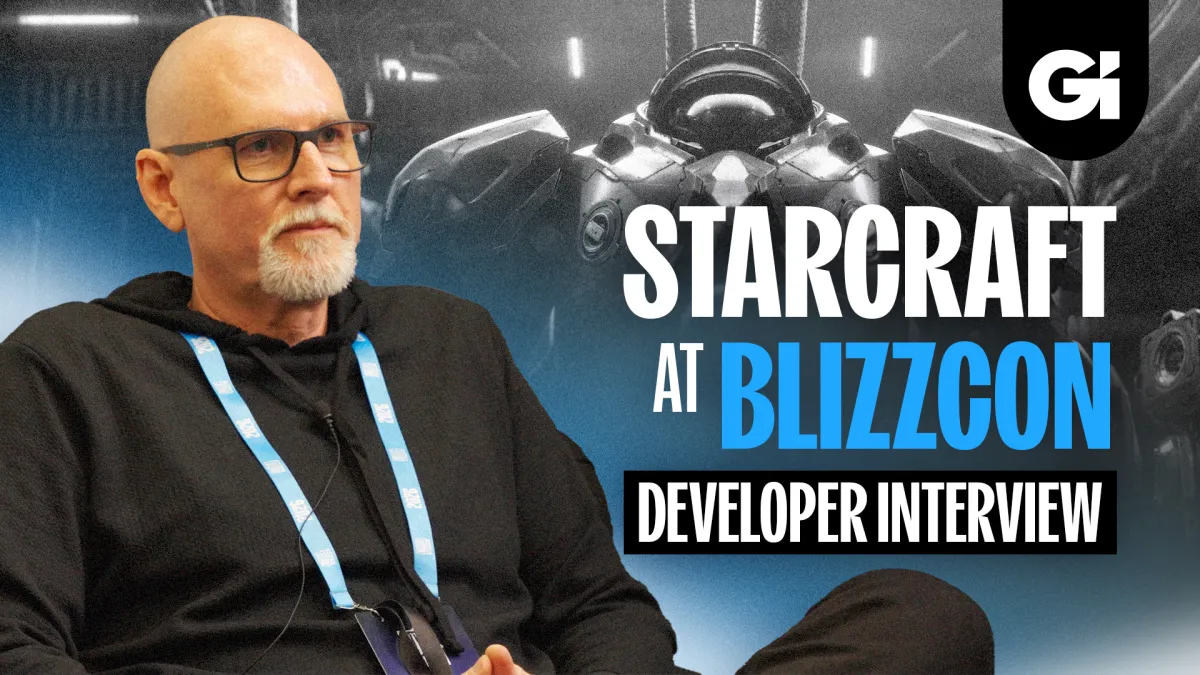
Capcom producer Motohide Eshiro
Eshiro tells me he’s been “very surprised and impressed” with the way video game graphics, particularly across the Onimusha series, have evolved alongside the action genre over the past two decades since Onimusha’s start.
Having just finished the remasters of Onimusha: Warlords and its sequel prior to this June trip, I was curious to discuss the series’ “Sengoku Biohazard” origins because Warlords, especially, is so clearly a Resident Evil game with a samurai skin (and it still rules today).
“One of the producers at the time behind the Resident Evil series was looking at what they were able to achieve with the pre-rendered graphics for Resident Evil, which has a focus on gunplay and long-distance combat, but felt that it would be quite interesting to see what they could do in the vein of a close-range action-based game, and that’s where that idea was born from,” Eshiro tells me. “Setting it during the Sengoku period, the Warring States period, would provide them a good setting to essentially have this close-range combat system with swords, so that’s where that [setting] and code name originated from.”
Eshiro says he joined the development of Onimusha: Warlords after it had already begun, so much of the game was set in stone already. But he was promoted from planner to director for the sequel, Onimusha 2, and says his main goal was to expand the scale.
“The first game was a very complete package, but it was also quite simple,” Eshiro tells me. “So, in approaching the next project, the sequel, we wanted to expand on the scale and really make players feel that the world was more alive and more liveable. [That’s why we] introduced elements such as the friendship system and having allies, so you get a bit of human drama there to get closer to the characters and understand them better. But we also wanted to improve the visuals as well.”
I still adore pre-rendered backgrounds, and though the indie space in 2026 is still using them, triple-A has abandoned the practice. Eshiro tells me it was a case of limitations back in the day, but says full camera control gives players additional layers of immersion. The tradeoff, however, is “with pre-rendered, you can have these really curated and crafted settings and scenes, so there’s definitely space for both beliefs.” Onimusha: Way of the Sword director Satoru Nihei adds, “the camera does allow for more freedom but there’s the downside that you can have these perfectly crafted scenes where you have this historic building, like Kiyomizu-dera Temple, that you want people to focus on, but because people can control the camera, they’re not really going to necessarily do that.
“There are definitely some downsides to having cameras, but in terms of pre-rendered, yeah, there’s the same kind of strengths.”
At the end of Onimusha: Warlords, Samanosuke takes on an Oni Form in a cutscene. But in Onimusha 2, Jubei can transform into his Oni Form at will. Eshiro says the team knew players thought the Oni Form was “cool,” and really wanted to double down on the cool factor in the sequel. Capcom reached out to Japanese film director, screenwriter, and character designer Keita Amemiya to create Jubei’s form. His rendition of Jubei’s Oni Form was cool, and that was that.

At this point in the interview, it was time to ask Eshiro the most important question of this entire cover story trip: Did the Resident Evil 4 team steal the jetski idea from the Onimusha 2 team?
“I really doubt it,” Eshiro says, probably practicing some professionalism instead of saying, “Of course they did,” like he probably wants to.
Similarly, I then ask Eshiro about robots and TVs appearing in Onimusha 2. He says the designs came from Amemiya and were put in the game to further push the dark fantasy aspect of the game and push for modernism or realism – I guess TVs and robots were all the hotness in 2002. Of note, Nihei tells me we won’t see TVs, robots, “or anything like that” in Way of the Sword.
I close out my interview with Eshiro by asking him why he thinks Onimusha was a success back in the early 2000s. He points to the use of real-world stars in the games.
“There are quite a few elements, but one of them is that at the time, in particular, it was quite rare to use real-life movie stars and actors as main characters in a game, and that was one of the big selling points for [Onimusha: Warlords] at the time,” Eshiro says. “But as well as that, the gameplay was also quite unique at the time. There weren’t really many other games out there doing the same things, necessarily. So, for instance, the soul absorption mechanics, or the Issen with Onimusha 2 – we introduced the Chain Issen and Charge Issen to kind of really flesh out that system. And even with pre-rendered background, which you know were features in Resident Evil, a lot of people maybe saw those pre-rendered backgrounds in Onimusha and thought, ‘Oh, it’s just like Resident Evil,’ but then saw our unique spin with the swordplay and the setting. So, all of those elements combined contributed to the success of the original games.”

You can read about how Capcom landed on using the late Toshirō Mifune’s likeness for Musashi’s appearance in Way of the Sword here.
Since the release of Onimusha: Warlords in 2001, the series has gone on to sell more than 9 million copies, and Onimusha: Way of the Sword is set to push that number further when it launches this September.
I’ll be diving deeper into Capcom’s return to Onimusha as part of Game Informer’s month of Way of the Sword coverage. We’ll be publishing exclusive gameplay and behind-the-scenes videos (including a Rapid-Fire Interview) on the Game Informer YouTube channel as well. Keep an eye on the Onimusha: Way of the Sword coverage hub so you don’t miss any of it.
In the meantime, here’s some additional Onimusha: Way of the Sword reading for you:
Have you played Onimusha 1 and 2? Let us know which one you think is better in the comments below!