Battlefield 6 Season 3 will bring major “targeted improvements” to improve vehicle gameplay, DICE Game Designer Chris Matte has revealed in a new developer deep dive. After studying player feedback and statistics from the past months of the multiplayer game, Matte acknowledges that “the moment to moment experience hasn’t always felt as satisfying as it should, particularly when it comes to how vehicle strengths and drawbacks play out in combat.” In particular, the team is focusing on making them “more consistent, readable, and responsive” with the BF6 Season 3 update.
“We’ve seen consistent feedback around predictability, survivability, and responsiveness,” the Battlefield 6 developer writes, “both when fighting in vehicles and against them.” He explains that oftentimes combat involving vehicles “can feel difficult to read,” varying wildly from seeming too fragile in certain situations to overly powerful in others, particularly when supported by a coordinated squad. “It’s not always clear why an engagement plays out the way it does,” he admits.
The result is that “the most effective vehicle playstyles often lean toward low-risk, long-range engagements.” Matte and the team at Battlefield Studios aren’t looking to remove this approach, but do “want to make front-line vehicle strategies more viable,” such as helping squads to push onto and capture objectives, or defend them, through “more deliberate and tactical use.”

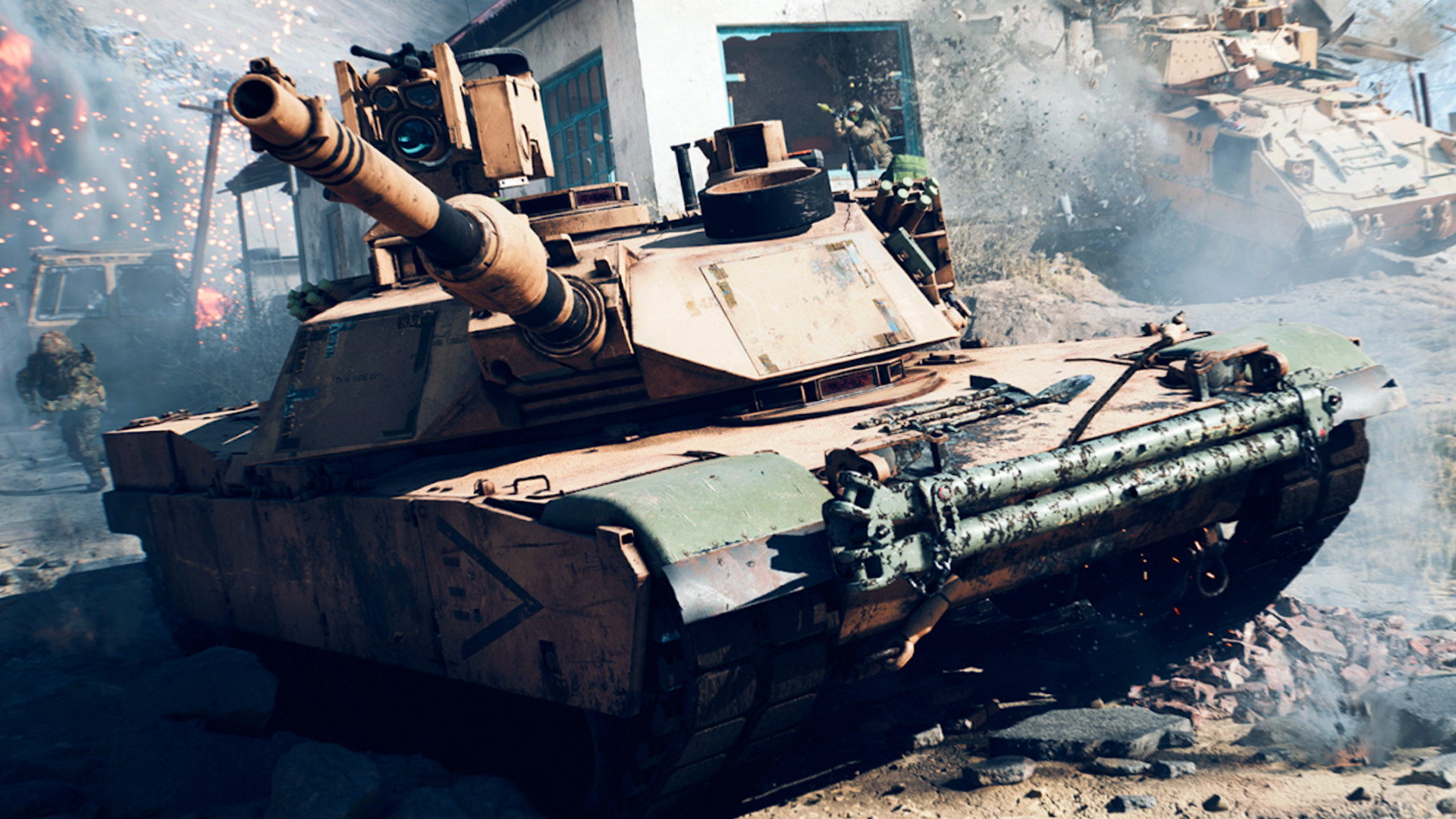
To start with, fights with and against vehicles are being made simpler by utilizing more consistent damage calculations. Most anti-tank solutions will now require three hits rather than two to eliminate a tank, “with the exception of some specialized tools.” Flanking vehicles will still be the most effective option, but that allows for more potential counterplay.
In addition to this, there will now be less variance in the damage dealt based on minor adjustments to impact location and angle. This turns what’s currently “a wide range of damage depending on subtle differences” into just “one of a small number of predictable damage values depending on the quality of the hit.” Smart positioning will still be rewarded, but you’ll have a more reliable idea of exactly how effective your attack should be. Guided weapons, however, will now always deal a consistent value regardless of where they land.
Rebalanced health pools and a reduction to vehicle-specific modifiers will reduce inconsistencies between the various options, making overall health differences a simpler and more clear indicator of how durable a given vehicle is. On the defensive side, repairs are changing. They’ll now start strong, but get weaker over time as a vehicle remains in combat, and there will be diminishing returns if multiple Engineers are working on the same target.

Vehicle health regeneration will no longer use ‘health brackets.’ Instead, they’ll start regenerating after a longer gap (12 seconds, rather than six) but will do so at approximately double the rate they do in Season 2 (up to 10% per second). Even critical damage won’t completely prevent regeneration; it now places a heavy penalty, meaning you’ll recover “roughly 80% slower” while in a critical state.
To improve the feel of driving, tanks are being made more responsive with improved acceleration and turning, and turret rotation speeds are being increased as well. Mobility will no longer be lost as a result of simply taking damage, but tied to specific tools such as anti-vehicle mines. Aircraft are being given additional UI indicators to help with threat awareness, making it easier to identify the likes of incoming missiles and other enemy fire.
Loadouts are also on the redesign table, both for vehicles and for Engineers. Customization options “that contributed to unclear gameplay outcomes” are being either reworked or removed. As one example, Reinforced Plating will be going, “as it made it harder to judge incoming damage and overshadowed other choices.” To compensate for its loss, baseline durability will be increased, and a new passive is being introduced that speeds up the recharge time of countermeasures while your vehicle is at low health.

On the Engineer side, expect “a full balance pass on launchers, including improvements to underused options like the 9K38 IGLA and MBT-LAW.” This will result in “adjustments to damage and projectile behavior, helping each launcher feel more reliable and distinct in its role.” This ethos is also being applied to anti-vehicle mines, ensuring that each possible option has “a clearer purpose” to make them all feel worthwhile. Matte hopes the result is “a healthier balance across the Engineer loadout, reducing reliance on a small number of dominant loadouts.”
Matte says, “Taken together, these changes are designed to support more active and engaging vehicle gameplay.” He hopes that you’ll feel “better equipped to make more meaningful decisions,” with “more opportunities to engage, reposition and influence the flow of battle.” He concludes, “Our goal is to give players the tools and confidence to take calculated risks, push objectives, and play a more active role on the battlefield when the situation calls for it, whether you’re on foot or pushing a control point in a tank.”
Battlefield 6 Season 3 launches in May. You can expect a full rundown of all the changes, including even more adjustments for the likes of vehicle survivability, handling, and UI, in the full patch notes that will arrive close to the release of Season 3. Matte notes that Battlefield Studios will continue to build on this for the future, along with “further improvements to air vehicle gameplay” and additional Redsec-specific adjustments. He thanks players “for your continued feedback and for being part of the community.”