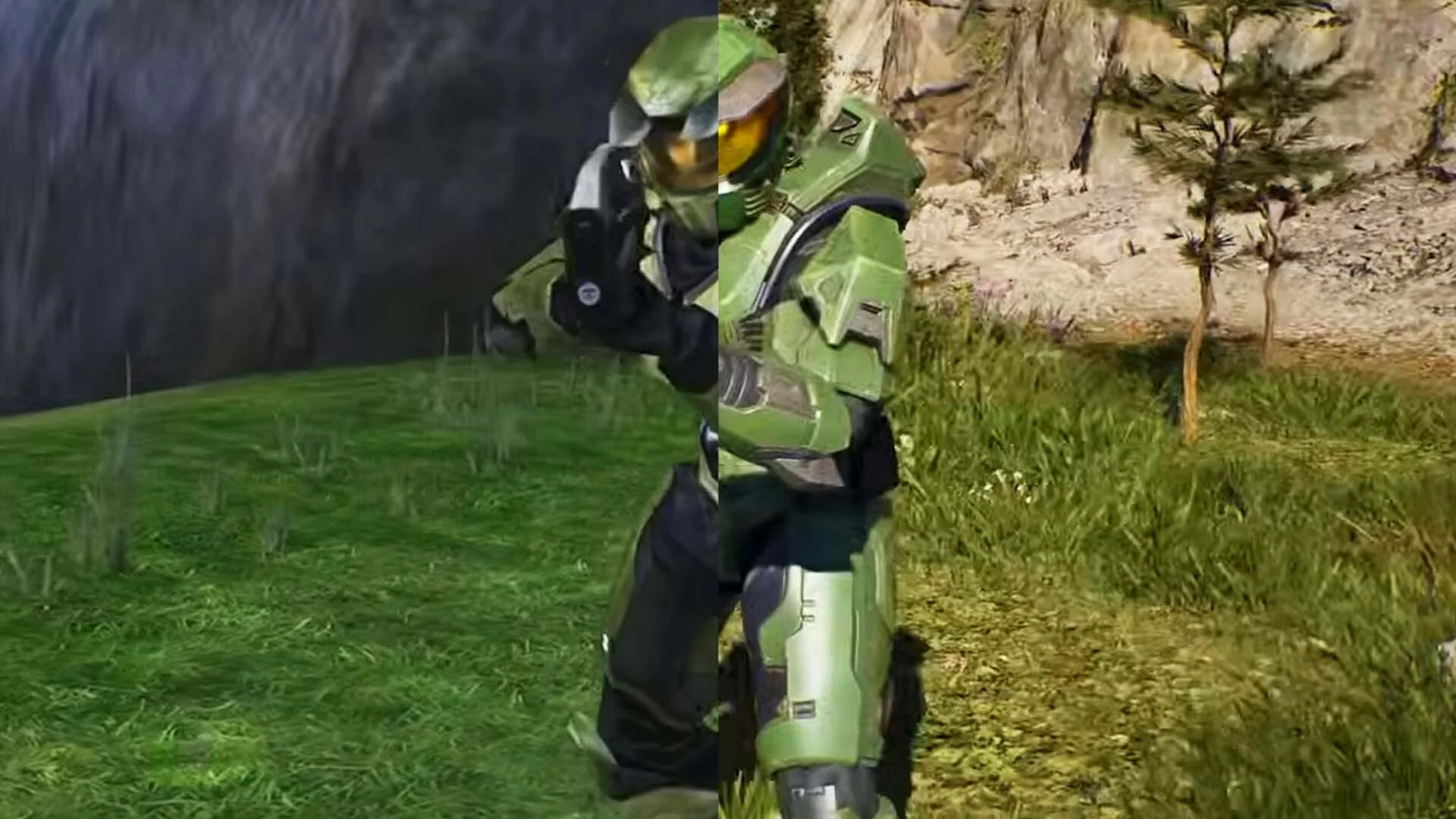
This week, Microsoft announced that it would pare down Halo Studios and move the Halo series under the stewardship of Activision. Whatever the future holds for Master Chief, this news clearly signals the end of an era for the venerated Halo franchise just months after it celebrated its 25th anniversary. For two people in particular, this era and this game came to symbolize something larger than simply gaming or friendship, and its sudden conclusion finds them sad and more than a bit contemplative.
Clay Purdom and Eric Sams are lifelong friends and sworn enemies who have played every Halo game together, sometimes hundreds of times, with the obsessive rigor of underachieving roommates in the pre-forever-game era. In fact, the idea that they have been playing Halo together forever was the angle of a collaborative Halo 5 review that they once wrote. Now, over a decade later, they’ve decided to play and write about what looks like Halo Studios’ swan song, and an inflection point for the franchise as a whole.
Let us observe as these two geriatric uncs dust off their headsets and lubricate their arthritic joints in order to play Halo Studios’ new remaster, Halo: Campaign Evolved.
Clayton: I have played every Halo game with my friend Eric since the first one came out in November 2001. We played it on futons listening to Saves The Day and on dorm-room floors listening to OutKast and in the basement of our first truly disgusting off-campus house listening to our roommates throw kegs at each other upstairs. We played competitively with strangers who wandered through our midst; we played each new installment feverishly when it came out; but mostly, and forever, we played the first Halo’s campaign, entering meditative flow-states alongside each other as we picked through the Library for the millionth time on Legendary.
Thousands of years have passed. Well, 25 years have passed, which is roughly equivalent. We live on opposite sides of the country. We spoke at each other’s weddings, and I believe Halo was mentioned in at least one speech. Careers have transpired to various ends. I have two kids, neither of whom care about Halo or my sleep schedule. I am permanently exhausted and eking out scant evenings of leisure time, while Eric lives, from what I can surmise, a life of unbounded leisure in L.A., vaping and 100-percenting terrible open-world games for days at a time. He eats expensive salads at weird hours.
When he texted me to suggest that we should write something about the remade campaign, I thought: should we? I spent several weeks emailing him encyclicals to argue that we should instead do literally anything else at all with our time. I would kill a man with my bare hands for four hours of free time. Where was I going to get the 20 hours to play a game I had already beaten—with him—hundreds of times?
Ultimately, I relented. There was something about the very tension I was feeling that felt dangerous, worth exploring, worth insisting upon. I emailed Ethan at Kotaku asking if he would be interested in such a review. Something unwieldy, tortured, messy, untimely, and combative. When he said yes, I sighed and began parceling time out of my Google calendar.
Eric: Arriving as it did at the very weird moment of November 2001, when the world was still debating whether or not it could ever laugh again, Clay and I must not have discovered Halo together. Like it would do many times over the next 25 years, Halo slammed into our separate lives like an errant escape pod and extended a light bridge between us just as the process of aging and the unrelenting march of time were doing their best to lever us apart. Clay was a senior in high school and I was enrolled at a ruthlessly fundamentalist Quaker college a half hour up the road. Both of us confronted the dim and ominous understanding that the “life” part of our lives was hoving into view. I can’t speak for Clay but I remember feeling terrifyingly unprepared. Then the Lord sent Halo to distract me.
In reality, my first memory of setting foot on the Ring was playing co-op in the room of a dormmate, a jovial little fellow who—and this is true—was known for issuing temporary bans from the game for players who let a cuss word slip in the heat of battle. Overnight, Halo’s arrival introduced our dorm full of console-gaming normies to the fetishistic joys of the LAN party, with people hopping from room to room to relay the details of what Clay and I would later come to term “Halo moments.”
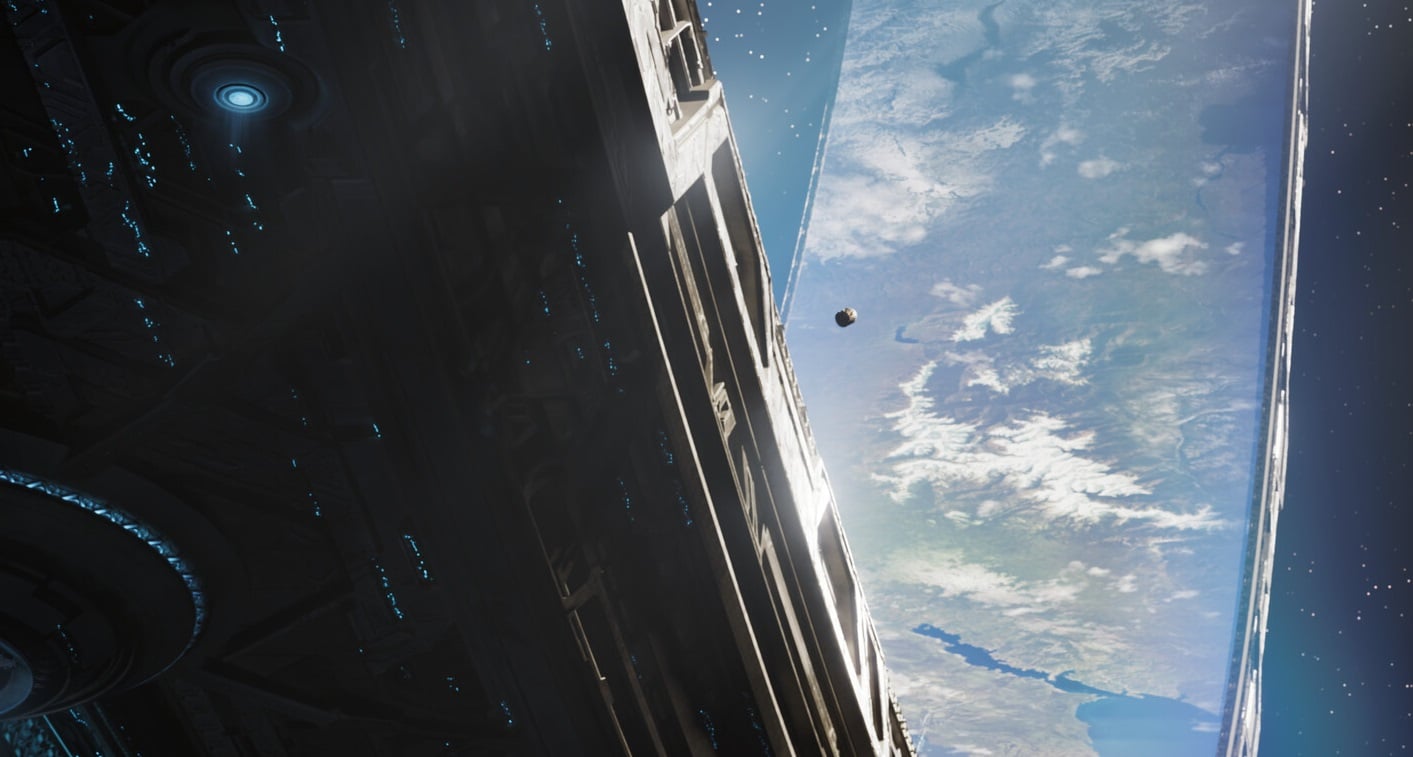
That we didn’t discover the game together is a fact. That we each must have experienced our first Halo moments separately is a fact. But these are the kind of facts that 25 years of life have rendered totally meaningless, like the color or brand of your first toothbrush. Eventually we found ourselves in the same place playing it and we never stopped. I have no idea what any of the guys I discovered Halo with are up to now. I don’t even follow most of them on social media. But I have kept up with Clay, whose life has veered from mine in meaningful ways I may not have expected when he was a frankly loathsome adolescent. He has a handsome suburban house, a seemingly successful business, two impossibly charming kids. The whole bit.
Now, I would rather have a Needler enema than say any of this to him because he’s a big enough prick about it already, with his vaudevillian “sleepy Dad” horseshit. Meanwhile, I’ve squandered two entire careers, one in law and a second in social media management. Now I’m caught in a malaise so enveloping and evident that a friend recently told me I was “sizzling with burnout.” That’s not the kind of sizzle you want. “Squandered” may not even be the right word. I’ve never been fired. I’ve subjected my colleagues to no Jerry Maguire crashouts. Hell, I worked the last decade in media without even being laid off (although more times than not I desperately wished to be on that blessed list of the liberated). But staring down the barrel of my mid-40s, “squandered” is most certainly how it feels. I wander my apartment like a hungry ghost, trying and failing not to perseverate on all the things I haven’t done, all the possibilities that seem lethally foreclosed, and all the things I feel I have lost.
Clay and I try to visit at least once a year. We talk shit on the phone in the intervals. We occasionally fit in the odd gaming session. But we aren’t—we can’t be—the inseparable bronemies we once were. Midlife crisis notwithstanding, the voice in my head is right when it tells me that something has been lost. Something that I have often relied on as a stabilizing and sustaining force.
So when Microsoft announced Halo: Campaign Evolved, I looked past its tedious cash-grab aspect and imagined another providential light bridge stretching from Los Angeles to Cleveland. I had to maneuver around some of his stock excuses to persuade him to write this (e.g. “I’m so busy,” “the kids aren’t in school right now,” “I have a job.” blah blah blah) but he caved, as I knew he would, and we strapped on the headsets one more time.
Clayton: I am noticing several things as we play now, among them that I cannot stand the way Eric plays video games. There is something wrong with him at a cognitive level that either has gone undiagnosed over the years or has gotten worse. That he is dying so frequently is only part of the problem—Halo has always been generous with respawns, and Eric has always been bad at video games.
But he is sort of just running right into the fray, over and over again, in a manner that I find frankly disturbing. When he dies, he doesn’t say anything; when he respawns, he doesn’t say anything. Sometimes he’ll just respawn right in the Warthog behind me as I hot-ass it over the hills. At one point he asserts—this feels important to put in print—that he does not like the Halo 1 assault rifle, perhaps the purest-ever expression of Bungie’s tactile weapon design. Its perfect blend of mid-range spray-and-pray Starship Troopers cosplay (practically demanding that you mutter “get some” under your breath) and its job-finishing lethality are understood to me with a kinship approaching proprioception. Eric prefers an SMG. Okay.
The game doesn’t keep score, no matter how much I wish it did, but Eric doesn’t even argue against my own ad hoc power-rankings, bravely admitting that at this point in his life he has just accepted that he is bad at video games. This easygoing approach to defeating the Covenant threat extends, as well, to such out-of-game activities as “scheduling time to play.” After I badger him via text and email to commit to any of several time-slots, we quickly develop a special tradition of troubleshooting his audio for 20 minutes each time we play. Imagine embedded here several screenshots of me explaining to him how Discord works. I do not want to put him on blast like this. But it’s like finding out your friend can no longer tie his own shoes.
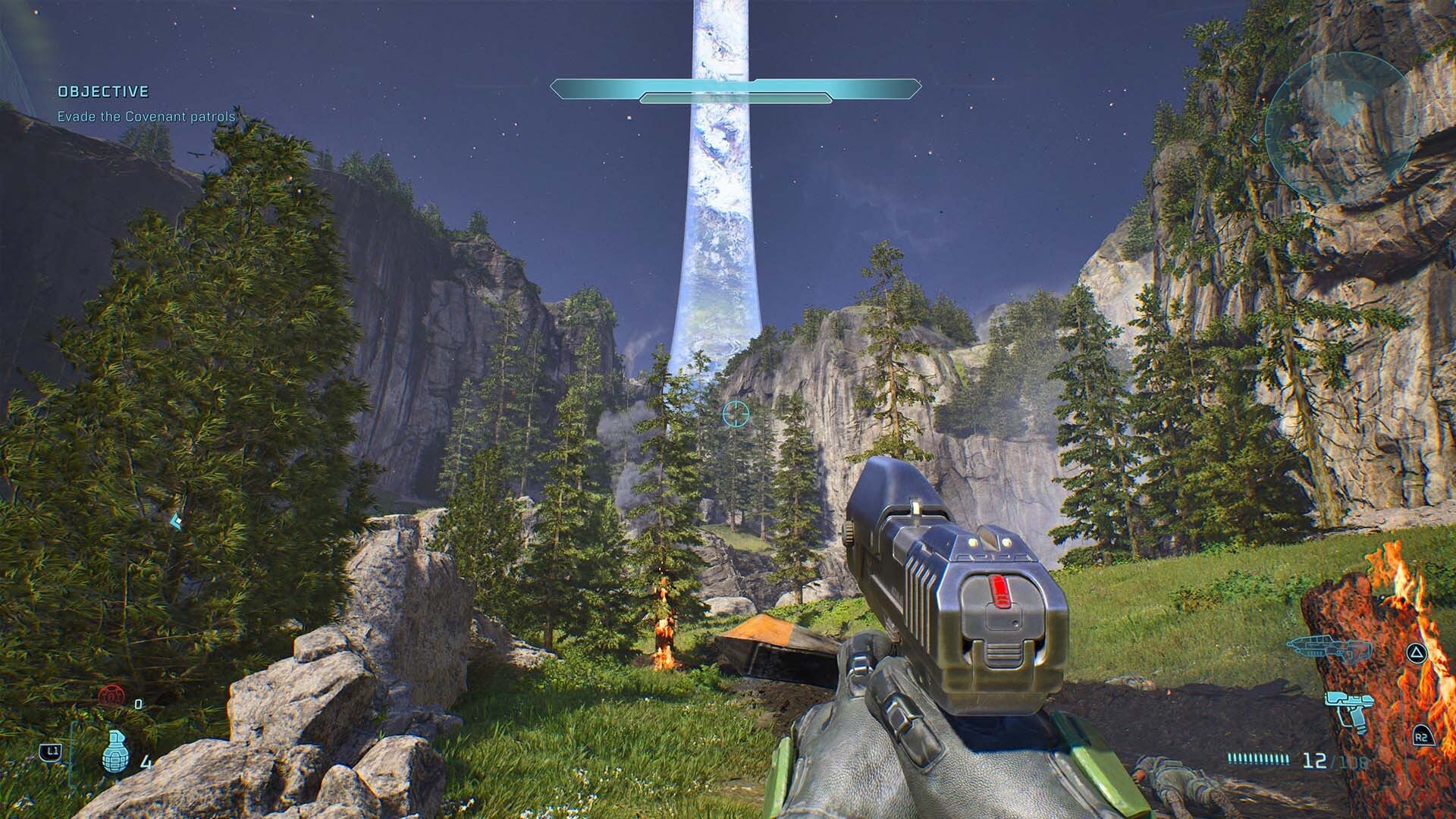
But here is the thing: Halo still feels incredible. Its physicality, enemy AI, and level design are just alchemical, and tuned as hard as possible (Legendary or else), the game creates bespoke moments on every run. A grunt holding two plasma grenades yells “surprise!” as it bum-rushes us in a hallway after a gunfight. I start to notice the subtle ways the game tees up these moments. Flood enemies leap at you, floating just enough that you can shotgun them out of the air. Banshees—one-person alien attack ships that sometimes come dive-bombing through battlefields—will briefly line up directly in front of you, insisting upon a rocket in the nose. I fire one and it explodes spectacularly, sending a single piece of shrapnel careening across the battlefield and killing me instantly.
We guffaw, together, at this death. The AI teed up a joke that the physics, in its infinite randomness and wisdom, completed. Eric and I have always called these “Halo moments,” and in the 25 years since, I still don’t think a shooter has been released—excepting Halo 3 and Reach—that creates them as consistently.
Eric: We blow the bolts off Chief’s standing cryo-coffin, Admiral Keyes hands us what appears to be an unassuming sidearm but turns out to be the Mjolnir of the Halo franchise, and now we’re in it. It’s beyond hack to say that returning to a level like The Pillar of Autumn transports us back to the drab, frigid dorm room we shared at Ohio University after I bailed on the Quaker college, but there’s no denying that a muscle memory kicks in. No, two muscle memories, feeling out a rhythm that we’ve picked up and put down in varying intervals over decades, familiar but not immediately accessible, something we have to ease ourselves into.
Once we get comfortable I remember that one part of this rhythm is the wheedling hi-hat hisses of Clay chastising me for dying too many times. Yes, we have played this level perhaps 150 times, and yes, that repetition has revealed to us optimal methods to clear the mess hall unscathed, but if we’re just going to play it the way we’ve always played it then what’s the fucking point?
Clay has become what I call a “modern gamer.” It’s not a compliment. A modern gamer is a player who lets stats and optimization strategies overwhelm the experience of playing a video game until you might as well be manipulating an Excel spreadsheet. They talk about game performance with the same affected monotone as business bros talk about ROI or EBITDA. They say things like “strat” and “the meta” and whine about their monitor’s refresh rates, and take to Reddit to brag about how they use nerd-ass math to essentially break the games they claim to love at an experiential level. This bean-counting jerkoff attempt to “optimize” a fundamentally narrative artform is inimical to the very concept of play. It’s the same logic that urges the “fidelity” of AI as a reason to jettison the spontaneous human element of, well, everything.
But Clay is pressed. He’s a drowsy lil’ daddy who needs to streamline our playtime, so I make a peace offering. “I’ve come to a point in my life where I’m fine with admitting that I’m bad at video games,” I say. And it’s true. If being good at a game obliges me to place myself on a spectrum that includes, at the high end, freaks of reflex and situational awareness like Ogre 2, then I am bad at video games. And so are you. And that’s OK.

In fact, it’s a huge part of what makes Halo one of my all-time favorite games. Halo rewards precision but it does not require it. When this game’s engine is at its best it creates an enveloping fog of chaos that renders all rote operator tactics moot. That’s why I’ve always believed that the spontaneity of loose-cannon play is the surest—though admittedly not the only—method of creating a “Halo moment.” That you can play this way successfully even on the game’s hardest setting, without descending into the terse choreography of strategic optimization, is evidence of its brilliance.
Clayton: The other kind of “Halo moment” I keep thinking about is much, much stupider, and less frequently marveled at. Halo inspires dicking around. Eric and I once spent a leisurely afternoon pistol-whipping each other and respawning on the field, littering the ground with invisible gravesites of dead Masters Chief.
Maybe it’s because I don’t dick around quite as much these days that I feel so delighted when this sort of play emerges as Eric and I work through Campaign Evolved. In the same way that the game facilitates action-movie choreography and Black Hawk Down style setpieces—back against the wall, marshalling grenades, retrying the same pincer maneuver repeatedly—it also gently suggests that, afterward, you test how many plasma grenades you can stick to your co-op partner’s Warthog at once. Friendly fire—which was always “on” in the original Halo, but defaults to “off” in the new remake—isn’t so punishing when your partner respawns immediately next to you. It’s more of a comedic prompt.
Today, there are lots of open-ended “hangout” games engineered toward banter and Discord play—friendslop, Fall Guys, presumably half of whatever the children are playing on Roblox. But Halo stands alone in its freewheeling generativity. Within our first session or two of Campaign Evolved, we note the way that every cutscene and character in the game insists that there is only one Master Chief despite the fact that when we play we can see another one right there, and after briefly wondering if it is the NPCs or Master Chief who is experiencing a dissociative event, we devolve into a sort of glossolalia about how if there is a big boy there can only be one big boy and if big boy meets big boy one big boy isn’t big boy, big boy. We begin pistol-whipping each other. This is horseplay. Time passes.
But any time I feel the old magic returning, Eric goes and says something that reminds me of the gulf that has emerged between us over the years. I experience this quite keenly, for example, when he admits that he watched both seasons of the Halo TV show.
Eric: The Halo show was bad. Not least because it ran two entire seasons before actually placing Master Chief on the Halo in a show called Halo adapting a video game called Halo that takes place almost entirely on a halo-shaped planetoid structure called “the Halo.” But one scene sticks with me. Master Chief, who for most of the show is just an impossibly yoked Pablo Schreiber in an extra-medium tee shirt with no armor to signify that he’s Master Chief at all, explains to a young ensign the feeling of going into battle from inside the helmet of the Spartan of all Spartans. “Every time I go into battle I know I could lose somebody,” he says. “But I know it’s not gonna be me.”
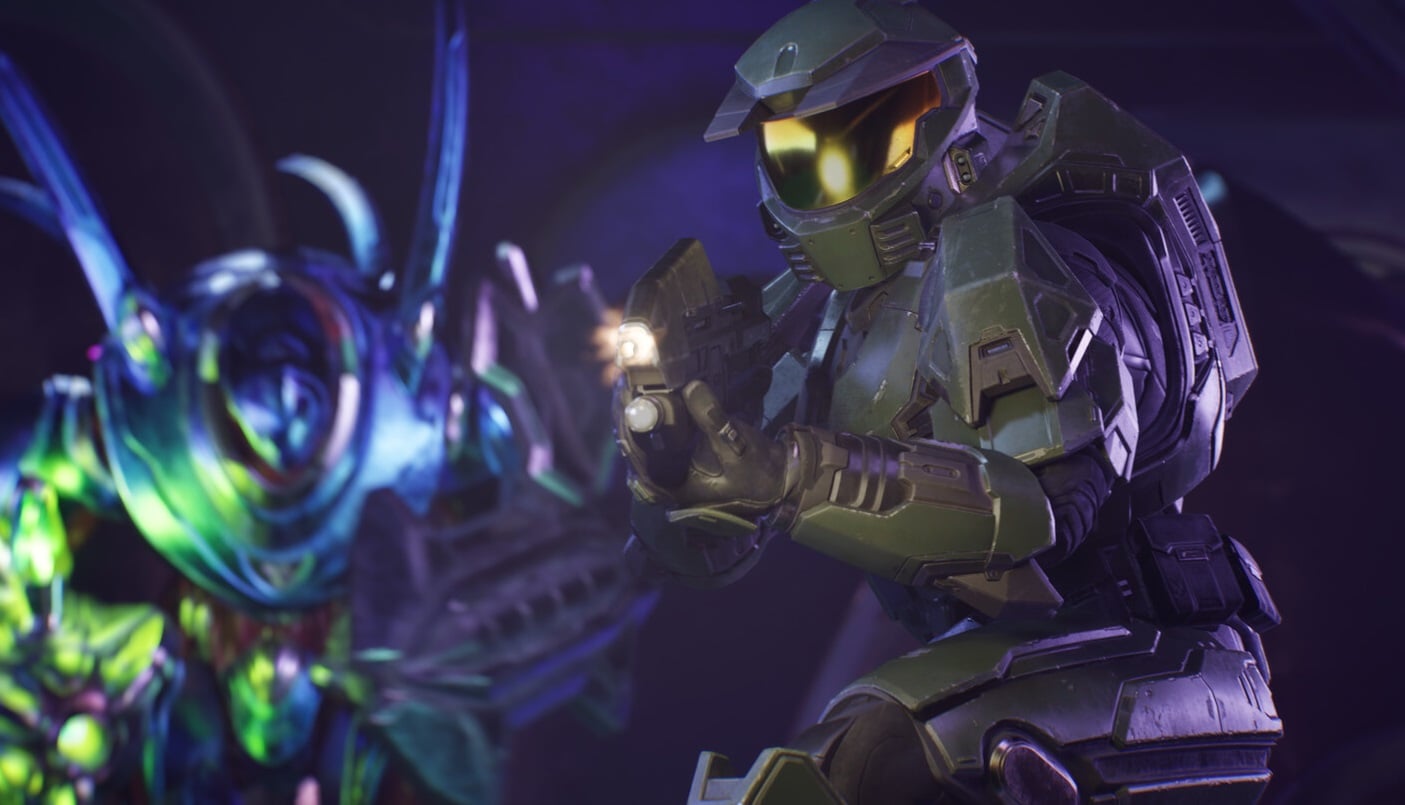
A superficial interpretation of that quote is to hear the Chief lament the loss of fellow soldiers and Spartans in the show’s many poorly edited battle sequences, a kind of hardass survivor’s remorse. In a more subtextual (but, to me, just as real) interpretation we can hear the Chief, an idea, point to the inevitability of death for us, the flesh-and-bone players. When the glide path of a hulking Wraith crumples him to roadkill, when a Hunter accordions his spine with the great arc of a downward haymaker, when the blast wave of a plasma grenade sends him ragdolling off a bridge into oblivion, the Chief doesn’t die. We do. He remains battle-ready in the ether, gun in hand, waiting to respawn and rejoin a fight that rages forever. It’s sobering to realize that the Chief hasn’t aged a minute in the 25 years since he crash-landed onto the Halo ring. For Clay and I that same span represents a discomfitingly large portion of our lives.
To contemplate 25 years of anything is something you can’t do until about 40. In some ways that’s what a midlife crisis is: looking back on an expanse of time that feels at once vast and brief, and having that thought immediately interrupted by another, more obtrusive one, always in the hissing, regretful tone of the past tense: “That was your life.” Then, because the hiss has made you too scared to contemplate 25 years all at once, you surrender your efforts to figure out who you are and settle for the consolation prize of trying to figure out who you’ve been. To put some distance between you and the black horizon of your own mortality, you’ll start to look for ways to quantify and segment that time. A measuring tape that stretches almost as far back as your memory to delineate the wholly distinct versions of you that have lived your life so far and bless you with a comforting distraction from eternity. If you’ve shared that measuring tape with a friend, it may show that a few of your chapters align closely to theirs. Then that friend becomes a comfort, too.
Clayton: I am trying to fight my way into and then out of a Covenant ship that has become a pustule of Flood enemies and Eric is getting increasingly emo about, like Pablo Schreiber, the passage of time, et al—sentiments toward which I am sympathetic but also not exactly feeling like pausing the game to discuss when I have roughly five hours until I will be woken up by a 4-year-old in a gymnastics outfit asking me for chocolate milk.
We end up not playing for a few days. Eric goes on a family trip, then I go on a family trip. Maybe the break’s good, too many hangouts in a row. But I’m still thinking about Halo. I’m out there camping and swimming and find myself pondering, the way I only do when I’m in the middle of playing a game I really like, the physical spaces of the levels—the way we wind up hunkered down behind pulsing silver pillars in a neverending, recursive facility, or getting chased back miles as endless waves of Flood enemies force us to retreat through battlefields we’d already cleared.
In this distance my opinion of the game solidifies. I’d always liked the shape of Halo’s original campaign, but in its Evolved state it may truly be perfect, each level providing a new set of spatial contexts and weapons to play with, and then, halfway through, sending a new set of enemies barreling through it that force you to completely reevaluate those contexts and weapons. When you’re finally given the keys to massive vehicles in the second act they still feel of a piece, physically and kinetically, with all of the weapons and enemies you’ve encountered thus far. Warthogs don’t just pancake Hunters; you’ve still gotta spin behind them, pick out their weak spot, evade the Flood monsters who can smash you in a hit.
I don’t love games for being hard, but I love when games benefit from being hard. Halo is one such game. Halo is at its best at its most difficult (Legendary or else) because that simply makes it more interesting in a way other shooters aren’t: Longer lives and greater spatial possibilities mean more interesting things can happen. The genre has moved in a twitchy direction in the time since, not to mention a grindy one. Bungie’s as complicit as anyone, of course. I put hundreds of hours into Destiny and Destiny 2 and even Marathon. I did all of this without Eric, grinding joylessly with more devoted gamers. These games all devolved into an endless spiral of content, of dissatisfaction, of being funneled into pools against better players that I always believed I was one good round, one god-tier pull, away from besting. That’s not a fun game; that’s the same endless grind mutilating my wellbeing outside of video games dressed up as a hobby.
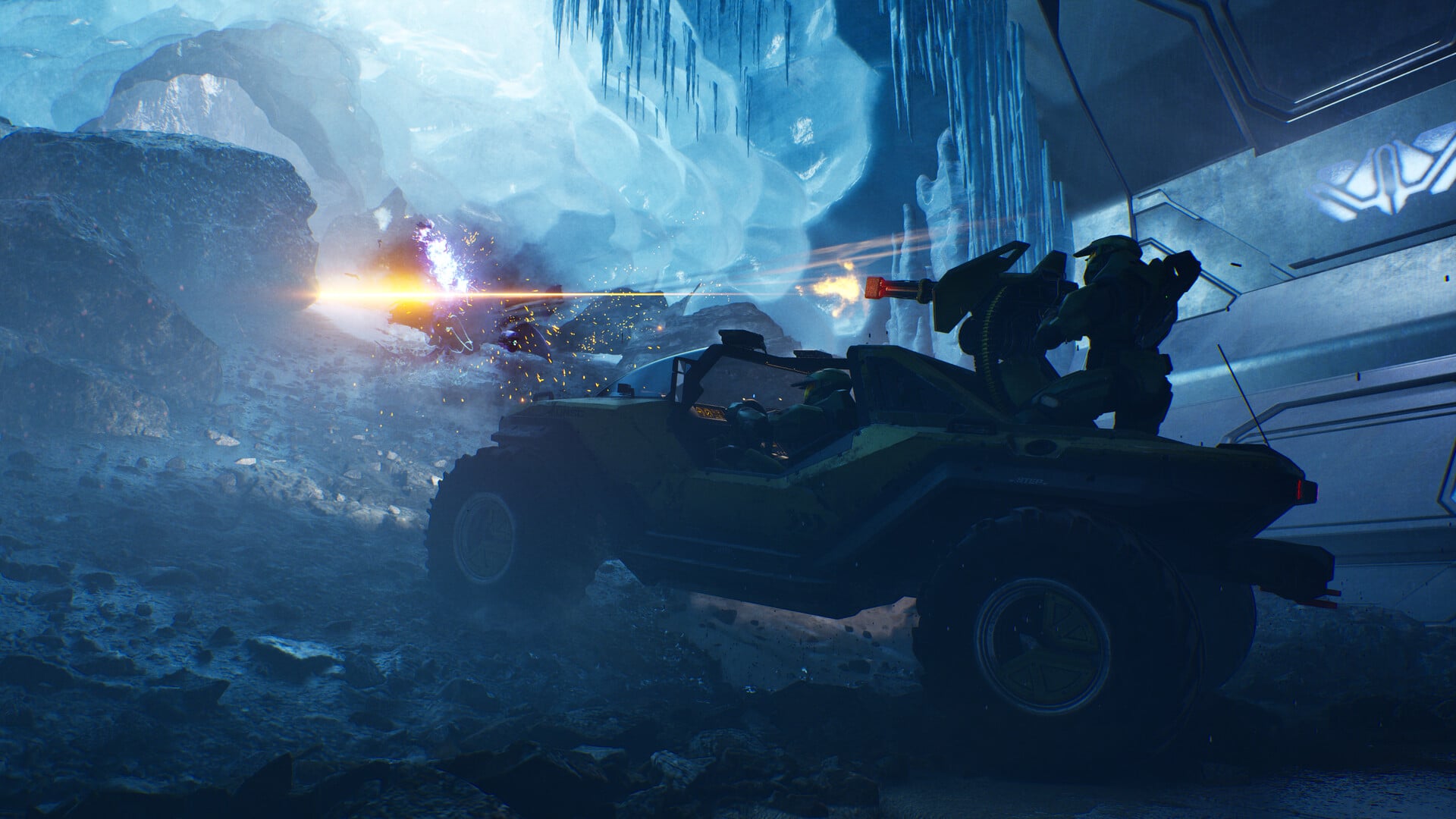
But Halo, you can just…beat. I get back in town from camping and Eric and I pass some drafts back and forth and then we stay up wildly late one night and I get so turnt I’m listening to Drake on YouTube. I am sharing the extended version of my views on the Iceman LP. The last couple battles go on forever, enemies pouring out of corridors as we take turns popping them. “White Elite down, I’m moving forward.” “Gold elite cracked, go get him.” All we have to do is get to that Banshee to complete the level. But we don’t. We keep shooting, not in hopes of loot or XP, but because the shooting is still interesting, the enemies keep yelling shit at us, we have bullets and they have heads so why wouldn’t we. I briefly forget that I am ever going to have to go to bed, ever have to wake up.
Eric: The historical records show Clay has been annoying about Drake since at least 2012. He makes embarrassing apostolic claims on the 6 God’s behalf. He compares a former cast member of Degrassi: The Next Generation to the Beatles. He does this despite the fact that Kendrick Lamar beat the brakes off this man in a rap beef so comprehensively that the Fox corporation allowed KDot to explicitly aver that Drake is a pedophile on live TV at the Super Bowl. Clay’s never really been able to hold his liquor and now he’s gone off like two Voodoo Rangers and the Discord chat dissolves into a truculent slog. If friendly fire was on, Clay would periodically be catching an “accidental” round to the back of the head.
Moments like these litter our 25-year history of Halo like so many Grunt corpses. It’s in these moments when I can turn my attention entirely toward the game while Clay slurs about how Iceman is a meta-text about “the concept of douchebaggery” or some shit. And it’s because of these moments that I can definitively say that Halo: Campaign Evolved “has the sauce.” In the interest of journalism, I interrupt Clay mid-soliloquy and tell him to switch over to one of the prequel missions added to this game as “bonus content.” They aren’t great, but they sort of don’t have to be. At one point we arrive at a cavernous multi-storey battle arena in the heart of a Covenant cruiser. After being unceremoniously murdered half a dozen times it dawns on us that the conceit of this arena is to drop Chief (Singular. Exactly one (1) big boy) into a room with every weapon and power-up in the game, then throw every enemy type and class in the game at us from every direction in rapid overlapping waves. That’s it. It’s Horde mode. This battle is not a new trick in Halo’s repertoire, it’s a forceful reminder that this is a genre that Halo built, and it doesn’t need any new fucking tricks.
So I bumrush a company of emerging Elites with a plasma cannon, annihilating roughly half. Jumping sideways off the ramp, I fire a last arcing neon-green volley in freefall. Before my feet hit the ground I’ve pulled out my battle rifle which I use to activate beast mode on a few Brutes rushing down a ramp on the opposite end of the hall. “Now, go beat your friends to death,” I mutter. Clay thins the herd of Grunts with his pistol as I hop and weave through a hail of Hunter ordnance on my way to an alcove that houses an overshield and a rocket launcher, the only weapon that reliably exterminates Hunters with frontal assaults without having to loop around to their exposed dorsal weak points. I do this because previous deaths have taught me that occupying the turret on the second tier is an optimal way to pick off rank-and-file enemies rushing you from the front, but it leaves you hopelessly exposed to long-range explosive attacks. This is Legendary play. Around the moment when the second Hunter drops its slithering, wormy arm cannons and collapses, the combat begins to sing with the ethereal and familiar voice of a Gregorian hymn. More enemies rush in. I feel held. I feel home.
Simplicity, then. To recognize a good thing when you have it rather than after it’s gone, or almost gone. Most depictions of adult male friendships in media are flattened to a micron-thin sketch of goofy, innocuous brohood; bonhomie, IPAs, and jerkoff jokes. In reality, enduring dude friendships are usually based on a deeper mutual recognition that each of you sees life through a fundamentally similar lens. Maybe what I’m talking about is the sheer accumulation of shared experience and the trust that comes from it. That trust provides a fixed point against which you can measure your life. Halo isn’t my measuring tape. Clay is. Of course this setup can—and does—veer into the polluted precincts of competition, jealousy, and insecurity, but when working properly it more often serves a calming function akin to echolocation, of orienting yourself in space. In some inarticulable way, knowing how Clay is doing contributes a small percentage to my understanding of how I’m doing.
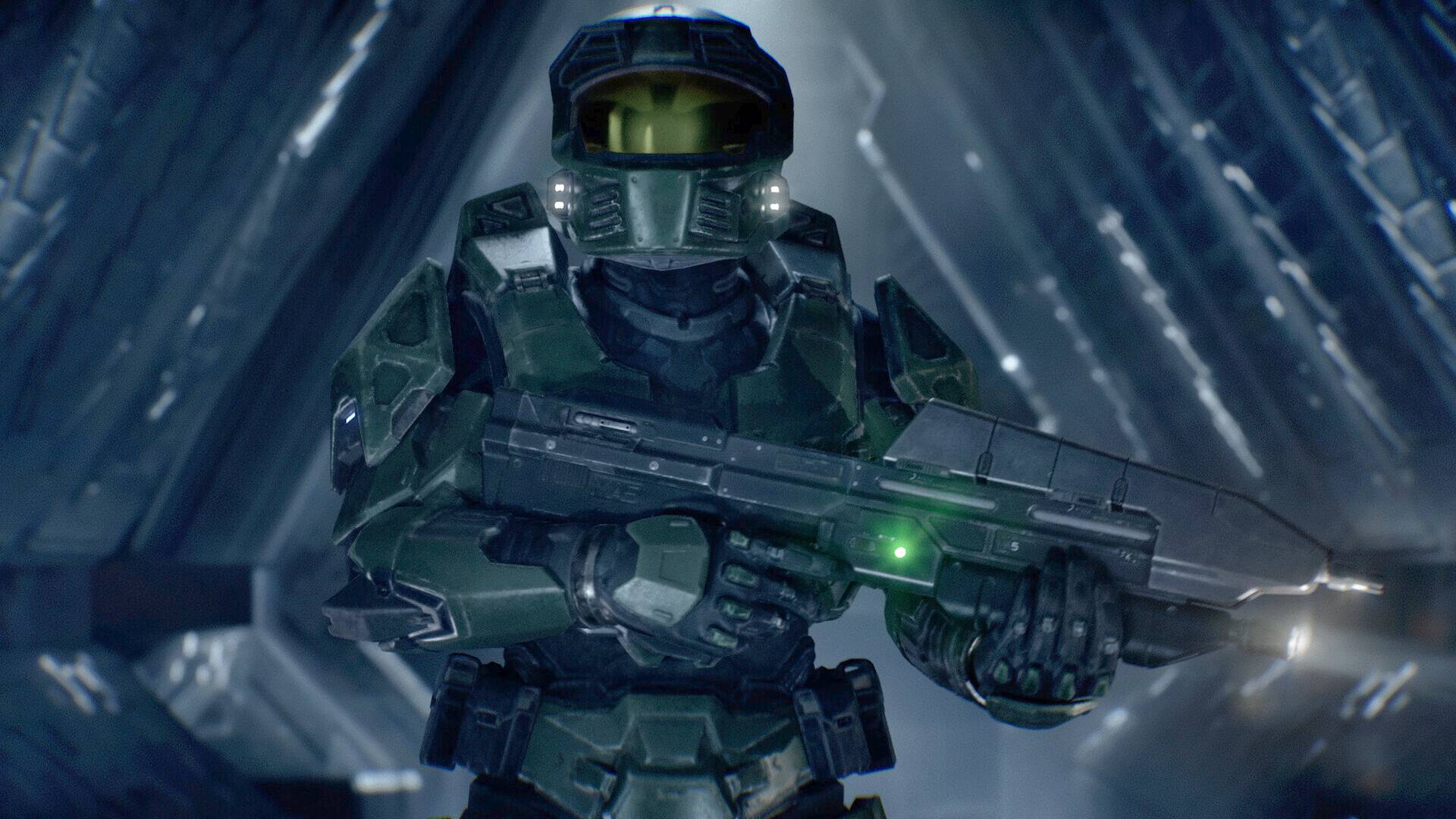
Clayton: We beat the game. We drive the Warthog to the edge of the exploding Halo and I say “do we just get out and run to the end?” and Eric says “I don’t think so” but I’m already running there and we hop on the Pelican and shit is exploding and it’s over. I pause Drake but because I’d muted the game music the end credits roll in a silence I don’t even feel pressured to fill with Eric. We’re a little breathless but sated—the game ratchets up the tension so well in those last few levels, we were sprinting headlong through them. There is a truly terrible, idiotic “post-credits scene” added to the game that should not exist, but even it can’t ruin the experience. We are back on the menu screen. It is 1 in the morning and I am listening to the Halo theme song with my friend Eric. Something is profoundly right.
I play games too aggressively, too streamlined. The thought strikes me like a meteor the next morning, earlier than I’d like, looking for ibuprofen. Play is itself a waste of time—that’s the entire idea—and I resist it violently. That wasn’t always the case. I used to do nothing, I was profligate with time. Today, I play like I work. I check HLTB and apportion time appropriately. I take any shortcut afforded to me. I win joylessly.
To waste time well is a luxury. To waste it with a friend is one marker of a good life. That is something I have lost. Which is why I admit, a few days later, as Eric and I pass back and forth the paragraphs that would eventually turn into this article, that the earlier me—the one who resisted writing this in the first place, the one who couldn’t even make time to beat Halo with his old friend Eric—lied about something intrinsic to the entire project. Not the Halo review. The entire Clay-and-Eric thing. The foundations of our friendship.
When I saw how he was playing in that first session, I quietly nudged the difficulty down to Heroic. I just couldn’t fathom watching him keep playing like that. I mean, when I say Eric is bad at video games, you have no idea what I’m dealing with here. He’s sticking me with plasmas. He’s running the wrong way through linear battlefields. He’s using an SMG. Whatever he’s going through, it’s somehow making him even worse. All that talk earlier about the glories of legendary mode was somewhere between nostalgia and fan fiction—my memories of what it must have been like to play this game in our salad days, in those basements and dorm rooms, our reflexes attuned to the moment. Nostalgia is a longing, an understanding of what’s past and gone. Decades playing Arkham games in the California sun have turned Eric soft, incapable. Un-legendary.
We beat the game on Heroic.
Eric: Unbeknownst to Clay I have turned friendly fire back on. I line the back of that big green helmet up and pistol-whip him with a righteous fury, then start blasting away with my SMG. “Take that, you fuck,” I growl through my headset. Taken by surprise, Clay musters just enough muscle memory to wheel around and toss a frag directly at my feet. A revenge ‘nade. I see his body crumple just before it detonates. Our screens go black.
This is horseplay.