
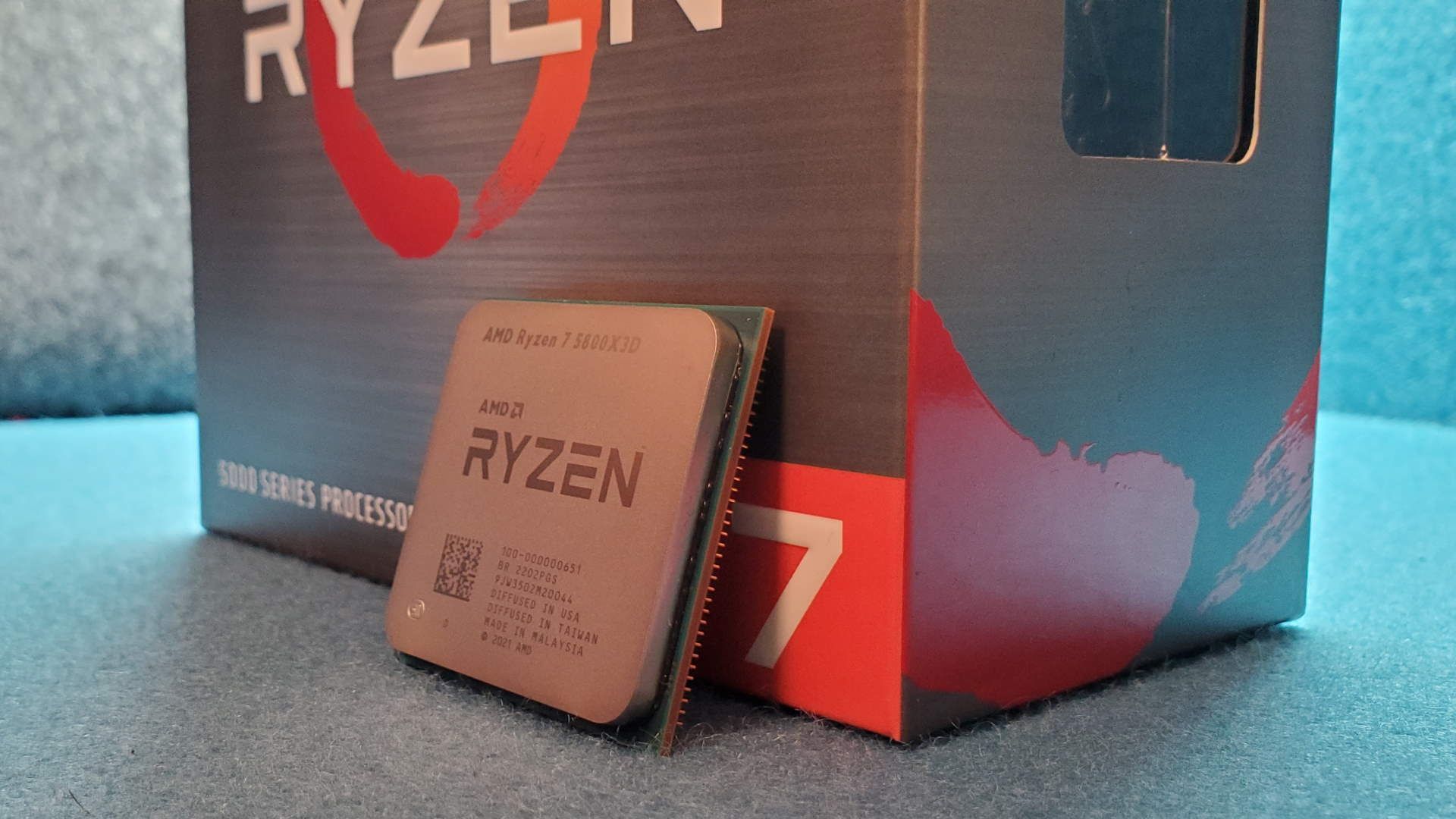
AMD has brought back the Ryzen 7 5800X3D specifically to cater to a DIY market where there is still a ton of AM4 motherboards and DDR4-supporting machines in the market. “We see a lot of users still gaming on like Ryzen 5 2600X or 3700X,” says David McAfee, VP of Ryzen and Radeon at AMD, “where as a drop in replacement to an existing motherboard and build, they’re going to see just a massive, massive jump in gaming performance.”
We’re sat on the 26th floor of a hotel that overlooks the Nangang Exhibition Centre, where the Computex show is still thrumming away below us, and McAfee has just explained that it wasn’t simply a case of bringing the old manufacturing process out of retirement and spinning up the machines again.
The original way it had stacked the 3D V-Cache on top of the Ryzen 5000-series CPU die was no longer in use at TSMC. “We had to kind of re-engineer, re-qualify, and rebuild that product in a way,” says McAfee, “so that it could migrate from that old process that really wasn’t around anymore to the newer process.”


He notes the changes will make practically zero difference to the relative performance of the newer 10th Anniversary dies compared with the original chips, and that it is most definitely not flipping things upside down in the way it stacked the Ryzen 9000-series 3D V-Cache chips. But it was still a process the company had to go through in order to make the new CPUs a reality.
Given the level of commitment necessary to redesign and re-engineer the old chip, I ask him how difficult a conversation it was deciding to bring this classic CPU up to date.
“Very hard, actually,” he says, laughing. ” Very, very hard!”
“The tricky part of this particular product is it’s also a matter of predicting what’s going to happen with memory supply in the market, right? This was also, if you recall, at a time when every major DRAM vendor on the planet is saying, ‘Hey, we’re shutting down all our DDR4, it’s all going DDR5.’ And so there was also a lot of work we did with the ecosystem to understand, around the world, is there enough DDR4, like fresh DDR4 that’s coming in. Is there simply enough memory to make sure that when we put these products out there they’ll sell.
“These were probably the two biggest challenges: making sure the ecosystem could absorb this new DDR4 product that required new DDR4 memory to to absorb it into the market, and then second, is there enough customer demand there to do it? And I think you know one of the best things about the DIY community is we get a lot of feedback from customers, and those opinions on what products they want to see.”
With a defined end-point in sight for DDR4 as a newly manufactured product, and increased capacity for DDR5 and other leading-edge memory products coming online in 2028, I wouldn’t expect AMD to be creating other new DDR4-based products.
Best PC gaming kit 2026