The reveal of Chronicles: Medieval last year had me desperate to learn more, and developer Raw Power Games has finally given us exactly that. During the Summer Game Fest 2026 showcase, a fresh trailer delivered a more in-depth look at the large-scale clashes that will define key moments in your tale. Ahead of the reveal, I attended a presentation from Senior Game Designer Gareth Bourn and Community Lead Clemens Koch to learn about exactly how battles in Chronicles: Medieval go down.
“With our announcement trailer last year, our focus was revealing the vision behind Chronicles: Medieval, explaining what we are building, and what we want players to feel when they step into our world,” Koch recalls. The premise was certainly strong, blending together deep medieval RPG elements akin to those of Kingdom Come Deliverance 2 with the evolving sandbox storytelling of Crusader Kings 3. It’s got diplomacy, politics, trade, ambition, and a world “that functions and breathes regardless of what you do.”
So far, so good, but there’s one massive element we weren’t shown. Koch reveals, “Ever since then we’ve been asked the same question again and again: ‘Can we see battles? What do they look like?’ Well,” he says, “it’s time to find out.” As we learned last year, Chronicles: Medieval mostly leans towards realism, embracing historical figures and religions. The action is designed to feel largely authentic. but with some slight liberties taken in the pursuit of fun.

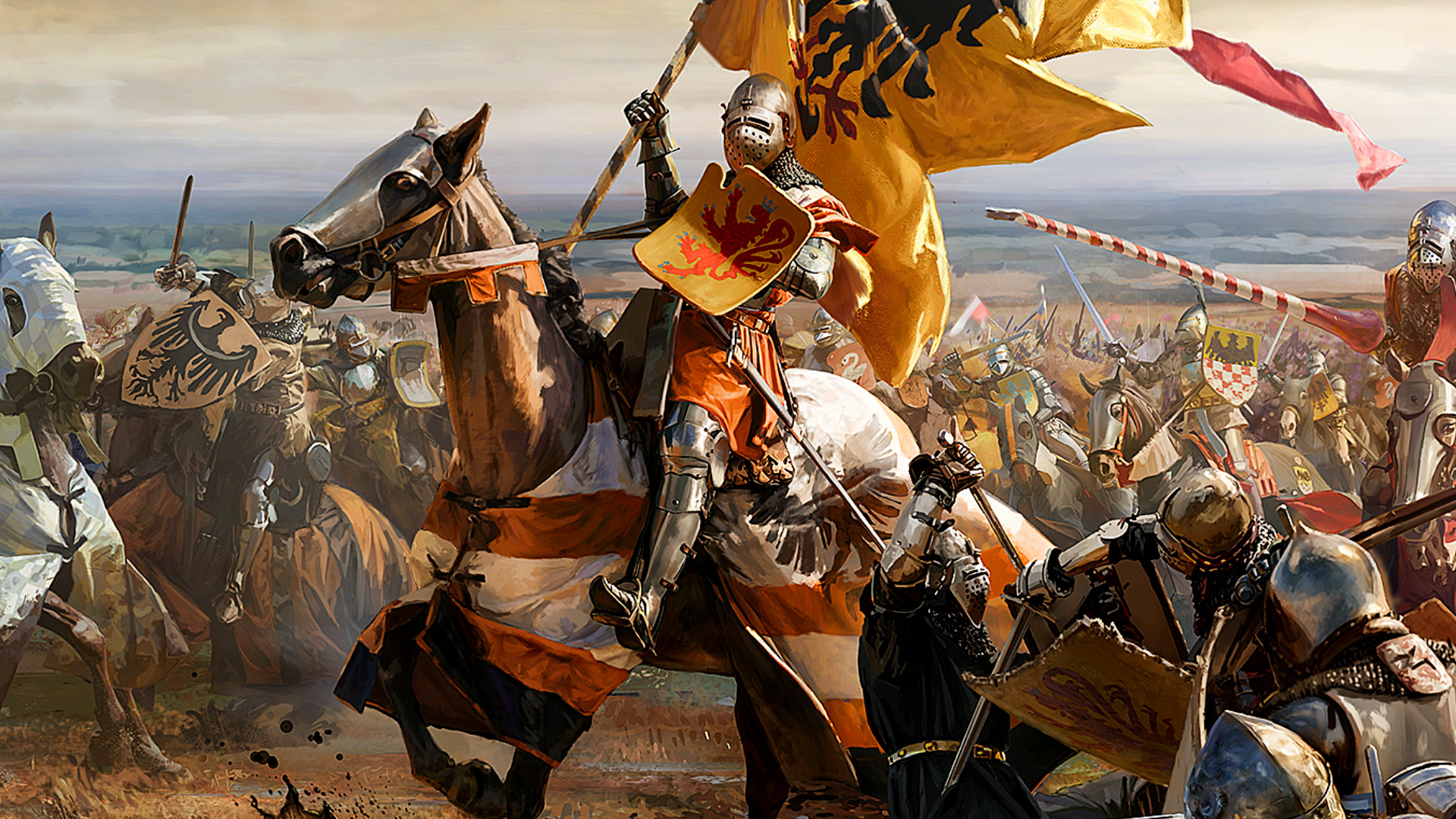
“We take warfare seriously,” Koch stresses. “One of our core pillars is large-scale battles, and we are bringing hundreds of soldiers together.” With that said, Bourn points out that not every fight needs to be huge. “Something that I think is really cool about the battles of the Hundred Years War is that they were not all great big clashes of the utmost importance.”
Chronicles: Medieval aims to run the gamut from smaller affairs between neighbors fighting over scraps of land, to enormous clashes with the fate of kingdoms resting upon them. “You could be in the rolling hills of Burgundy, facing down a handful of brigands, or you could be staring across a muddy field at the King of England himself,” Bourn suggests. “Where you are on the map and who you’re choosing to battle against matters, and each field supports battles of every scale.”
We’re not here to discuss the various political and social machinations that might have led to the raising of steel, however – at least not today. Two armies stare each other down across the dirt and grass, and at first glance you might mistake the initial planning stage as that of a Total War game. There are certainly similarities; Raw Power wants this to feel familiar to RTS fans, but crucially, as the commander, you’re also there to lead your men into the fray, with your own life equally on the line: “20 men or 2,000, the field is yours to command,” Bourn remarks.

Rather than traditional formations, deployment uses what Raw Power is calling ‘battle lines.’ Typically, units will have preferences in how they fight, based on their type and culture. French heavy cavalry will set up in the vanguard, English longbowmen take to the flanks, and the troops of the Holy Roman Empire look to establish a dense main battle of well-drilled men. Crucially, however, you’re free to adjust this: “There’s no prescribed shape any army has to conform to.”
As the leader, you’re able to direct your forces during battle using command mode, which slows time to a crawl and swings the camera out wide – but you can’t just do this across your entire army; the men simply won’t hear you if you aren’t close enough. To ensure everyone knows their role, you can establish initial and standing orders before going into battle, dictating how each unit should behave when it hasn’t been given more specific guidance. You’re able to employ various formations, and to tell squads they should be aggressive, defensive, or adapt to what they think is best in the moment.
Of course, it’s rare that every conflict is a sweeping fight to the death. “Morale breaks before bodies do,” Bourn points out. Units can range across five states of mental fortitude, from inspired down to wavering, and ultimately broken. Reach this lowest level and the unit turns and runs. At this point, they’re counted as lost, “no matter how many men survive that rout – they are deserters.” Morale adjusts on a per-unit basis, not across your army, and is affected by everything from casualties to charges, flanks, and even seeing their compatriots waver.

“This is where you can really earn your keep,” Bourn notes. Your mere presence lifts the spirits of the men around you, and that only furthers as you deliver headshots and vicious executions upon your sworn opponents. “These moments, the kills you make with your own hands, are the only way to lift a unit up into the inspired state,” he explains. “There is no standing order that will do it, no horn call. Only you can, and only by being the sort of lord that men want to die for.”
Chronicles: Medieval is set to launch into early access on Steam in 2026. You can wishlist it now. Raw Power promises a “substantial foundation” on day one, with plans to expand the world, continue building on the core systems, and integrate community feedback as it moves towards the 1.0 release. It also reveals that the new trailer is voiced by Lars Mikkelsen (of The Witcher and House of Cards fame). He’s portraying Johannes Gutenberg in the game, who will act as a narrator for parts of your character’s journey.
Much as the team did last year, Bourn emphasizes during our preview that modding is another of the team’s core pillars. “It’s baked into everything we do. Every time I or any other designer designs a system or a feature, we’re thinking about modding from the very beginning. How can we make this accessible? How can we ensure that this tool can be used by anyone? I spend a lot of time on this – it’s very challenging, and it’s something I relish.”