Weird Weekend
Weird Weekend is our regular Saturday column where we celebrate PC gaming oddities: peculiar games, strange bits of trivia, forgotten history. Pop back every weekend to find out what Jeremy, Josh, Rick and Ted have become obsessed with this time, whether it’s the canon height of Thief’s Garrett or that time someone in the Vatican pirated Football Manager.
There is a place, deep beneath the earth, where the narrative wranglers behind our favourite games come together. Writers who helped deliver the perfect ending for Destiny in The Final Shape, or make sense of Stellaris’ irresistible mix of strategy and story. Who spun up the Tim Curry sass of Baldur’s Gate 3 companion Astarion, and scribbled the funny ambient dialogue that shows up in Borderlands 4 compilation videos.
They all tangle in Fallen London, the marvellous and sprawling text-based RPG from the makers of Sunless Sea. And there, they do their bravest, smartest, most depraved and moving work.

You play Fallen London in your browser, but it helps to abandon your expectations about how slight, forgettable or exploitative browser games can be. Failbetter’s RPG is a near-bottomless brunch of comic and cosmic horror—an interlaced network of choice-driven, literary stories that have been woven together over a decade and a half. It is a regularly updated and living world, riddled with intriguing mysteries and set against the backdrop of a sunken Victorian capital city.
Latest Videos FromPC Gamer
Most Fallen London players are in pursuit of some overarching main quest that swallows up their resources as a gadabout-slash-magnate. These adventures, put together in episodic installments by Failbetter, take you far across the unterzee and eventually up to the cavern roof where the false-stars shift and glitter. They take months and years to see through; Fallen London is a game you might prod at in spare moments on your phone, but gradually becomes a slow-burn and deeply rewarding parallel existence.
In between these major plotlines, however, come Exceptional Stories. Reserved for subscribers, these are bite-sized, entry-level quests that show up every month, as regular as a ratwork watch. They’re not typically written in-house, but rather handed off to freelance contributors, and this fact is crucial. It’s the reason that Exceptional Stories feel like unpredictable entries in an anthology series. They’re self-contained, often introducing new characters whose fates are decided by the story’s end. And they reflect the tastes and personalities of their writers in unique ways.

Take Baudelaire Welch, for instance: the architect of Baldur’s Gate 3’s Dark Urge path, which makes your protagonist responsible for a string of murders they don’t remember. Their contribution to Fallen London has been The Goblin Poet—a potently sinister story in which you follow a cult of BDSM bohemians through the mirror to the Reddest Keep, where they toil to capture the beauty of the Red-Handed Queen, using their own lifeblood as paint.
The Keep itself is viscerally horrible, its very floors made up of taxidermied beasts tied together in a carpet of rodent death. But it’s the attitudes of the infatuated artists that lend the story its lasting unease. Their hapless adoration of the queen is conditional; the moment she reveals the slightest imperfection, they turn on her in misogynistic rage.
“The vision I presented to you—that is who I am,” argues the queen. “Who is not a different person when they turn to bed for the night? When they are in their own company? It is no different than wearing a fine suit! All of you will age and wither: why must I be confined to one skin alone?” Yet the artists reject this argument; their impossible ideals of womanhood ultimately unravel the queen, and free them from a trap of their own mak

Then there’s Tired of London, another missing person case among this year’s Exceptional Stories from Paradox designer Giada Zavarise, which takes the player somewhere utterly different. Channelling the opening hours of Failbetter’s most famous roguelike, Sunless Sea, it carries you north on a steamer to the Tomb-Colonies—where an ingénue seeks to escape the stifling obligations of nobility among the crumbling near-dead.
It climaxes with the kind of grand spectacle a text-driven game can offer without breaking the budget: a last cruise of the mummified living, designed to end in a split hull and a rush of water. “The captain removes the ship’s wheel,” Zavarise writes, “and throws it overboard.” The ship lists and lurches into the black zee as the band plays.
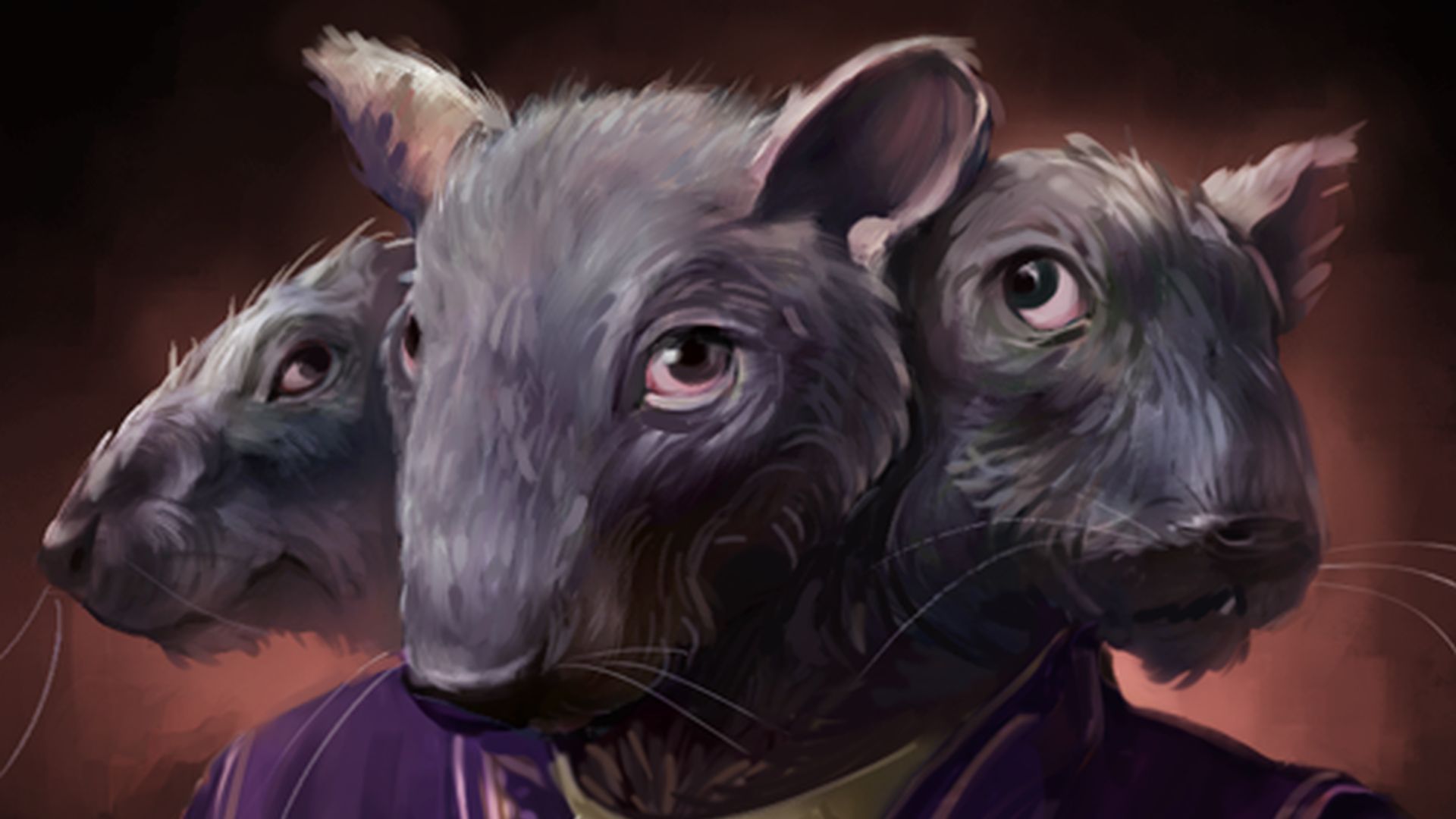
Where Tired of London ends with a half-drowning, Nessa Cannon’s tale begins with one—your own. In Old, New, Drowned & Blue, the Borderlands 4 writer offers a lethal love story, rooted in the deep-zee court of the Fathomking, who appreciates a good yarn as much as any Fallen London subscriber. Dishonored and Destiny scribbler Hazel Monforton, meanwhile, introduces a romanceable rodent with three heads in The Prince of All Rats—the kind of figure you couldn’t imagine kicking about The Tower with Ikora Rey and company.

It’s cool to see AAA writers let loose in a universe that can accommodate their wildest ideas, and empowered to tell a whole tale from start to finish. In this context, their individual voices come through more clearly—rather than becoming muffled in the mix of a much larger product.
But Fallen London’s Exceptional Stories are a home for more esoteric indies, too, and have introduced me to some new favourites. My ears now prick up whenever I hear about the latest story drop from Heather Flowers, a devious designer who likes to muck about with probabilities—both in Fallen London’s dice rolls and in her own projects, such as the heads-or-tails mindfuck of Unfair Flips.
You might remember the name Jim Rossignol from the byline of PC Gamer’s classic Half-Life 2 review—or from the credits of Sir, You Are Being Hunted, the British riff on Stalker that lampooned the country’s fondness for fox hunting and class warfare. His dark whimsy has proved a strong fit for Fallen London; in recent months, he’s contributed stories about a painting that refuses to live in its frame, a malevolent building that follows you around the city, and a new aesthetic movement that treats illness as art. “Oh, let me look at you, my poor darling. Yes, it’s just as I thought! You have the Lily-Tongue Sweats. Fascinating. Beautiful!”

September’s The Poetry of God. A clearly personal work, it concerns a disabled academic who handles dangerous sigils with the same matter-of-fact fearlessness as she does her wheelchair. Yet it’s also something of a Cold War thriller, full of delicious turns of phrase. Grief and yearning are briefly revealed in the eyes of a revolutionary, “like darting things in a hidden pool”.
At one point, you learn that a book-burning censor has been surveilling the academic, but keeping his distance. Here Anthropy writes as if peering down her glasses at the man with disdain: “Perhaps he fears that the small woman in the chair that he has been watching might turn and look back at him.” It’s the story of a powerful person, underestimated.
Before the year is out, Fallen London will serve up another handful of distinct short stories from all corners of the gaming medium. And there’s a bank of them going back a decade at least, beginning with the nascent tales of Nighthawks writer Richard Cobbett. It only remains for the wider world to discover them. These stories are Exceptional in both senses of the word: deeply unusual, and bloody good. It simply doesn’t get bloodier than the Reddest Keep.