
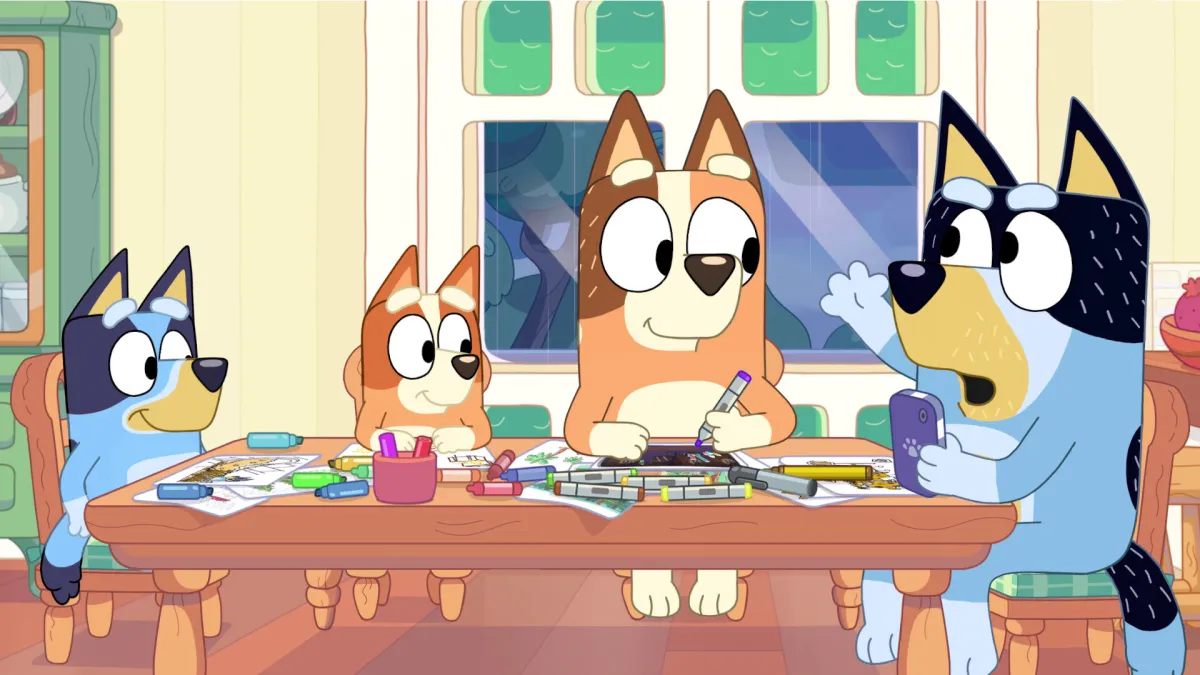
Ahead of the holiday season, we gathered some of our favorite video game recommendations focused on family interaction, spoke with Jackbox Games and Halfbrick (creators of Bluey’s Quest for the Gold Pen) about what it takes to make a game that everyone can enjoy together, and even have tips for new parent gamers hoping to introduce kids to their (and our) favorite hobby.
From its inception, video games were created to encourage social interaction. Tennis for Two in 1958, arguably the first video game, had two players compete in digital tennis against one another. The single-player video game came later, and as much as we love them, some of our best gaming memories are centered around playing with family and friends. And as we get older, we’re making new gaming memories with our own kids.
Making video games is hard. That any game crosses the finish line is a miracle of teamwork and perseverance, and the hardest trick of all is making the final product feel effortless. Arguably, none are more practiced at feeling like effortless joy machines than the games that effectively include players of all ages and skill levels in the experience. And to take it a step further, Jackbox Games is perhaps the best at this sub-genre of video games: inclusive party games that are genuinely for everyone.
Jackbox Games studio creative director Arnie Niekamp sheepishly and humbly agrees when I offer this accolade and also says thank you. “It really matters to us,” Niekamp says. “We really value, first, just inclusivity in general, and are always trying to think of how we can make our games playable by as many people as possible, or how we can expand that.”
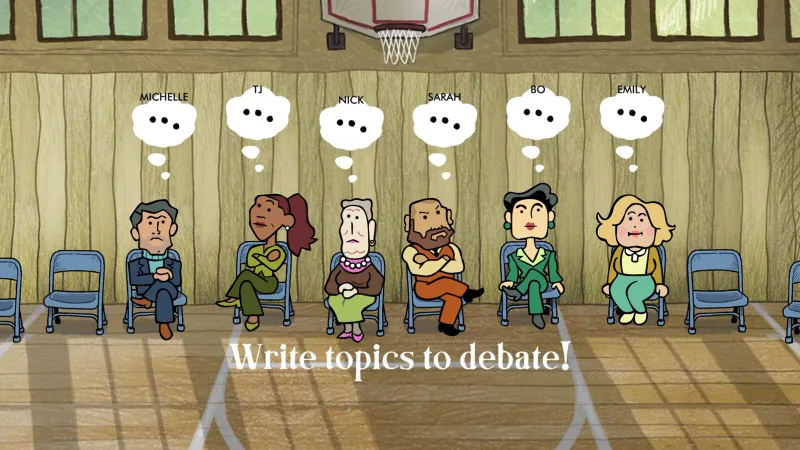
Jackbox Party Pack 12
Games For Literally Everyone
Jackbox Games has released its 12th Party Pack by the time you’re reading this issue, and part of the secret of that ongoing success is that its creators stick with the company for a long time. “The person that came in and started making games as a young single person also ages into having a family, having kids, and having that perspective of, ‘Oh wait, it’s also really fun to play these games with my kids, with my family.’”
Even if a game is primarily focused towards young players, being fun for everyone is “very important” Halfbrick writer Brendan Deboy says when talking about making Bluey’s Quest for the Gold Pen. “Bluey’s humor, relationships and themes give children and parents reasons to enjoy its stories together. We wanted that shared enjoyment to carry into the game.”
Brooke Breit, Jackbox’s game product manager and The Jackbox Party Pack 12’s lead, cites that family element as an important detail to making games for everyone. “We playtest our games constantly throughout production amongst ourselves, and that’s one of the markers of, ‘Are we hitting success within the mechanics? Within how it plays?’” Breit says. “And part of that also involves us playing with our own families as a part of that playtesting process […] All of our kids have a lot of opinions on what makes a really good Jackbox game.”
Breit also points out a metric the team has accidentally discovered over the years that has helped them figure out why a game works for all ages when the creation process happens to be going well. “There’s a little bit of… maybe the younger and older crowd also intersects with the drunk crowd,” Breit says with a thoughtful laugh.
Deboy also discusses the importance of family playtesting saying, “Children of Halfbrick parents playtested the game, with ages ranging from four to 10. Their parents reported what they enjoyed most and where they became stuck.” And avoiding the stickiness is crucial. “We wanted challenges to be satisfying without any single obstacle preventing someone from seeing the rest of the game,” Deboy says. “If something is too difficult, they can leave it, try another activity and return later. Harder challenges were often tucked away in harder-to-find places, helping players encounter easier activities first.”
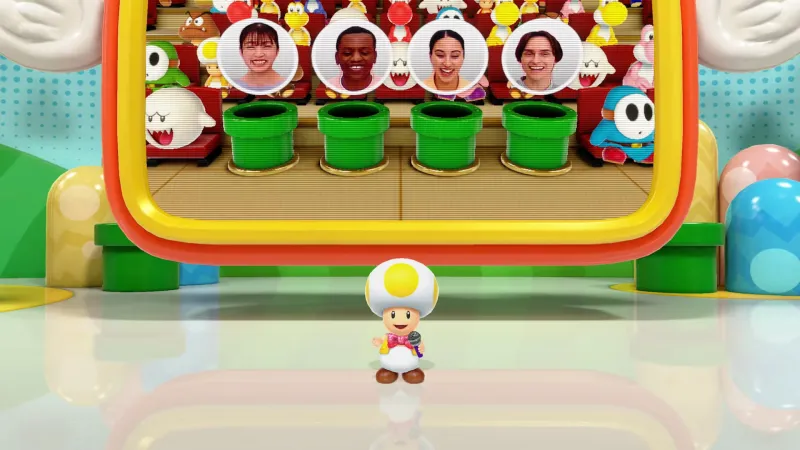
Super Mario Party Jamboree
No Phones (Kind Of)
Jackbox also figured out another secret weapon for great family gaming and gaming with kids: getting away from cell phones. This may be an odd element to cite considering the vast majority of Jackbox games are played collectively on individual phones, but when you’re using your phone as a controller, you’re not using it to check social media.
“You can’t get phones out of people’s hands anyway, so you might as well use it as a tool,” Niekamp says. “Engagement is absolutely a huge part of our design, and we talk a lot about what is on your device,” Breit says. “What is on the game screen? Where do we want people’s focus to be at any given moment? And are we giving opportunity and motivation for people to talk to each other and actually engage with each other?”
Deboy cites another way to encourage engagement as it did with Halfbrick’s Bluey game. “We wanted everyone to be able to finish the game, while giving players of different ages and abilities things to enjoy. That meant providing choices. Some activities test timing and motor skills, while others reward exploration, searching or logical thinking. Players can choose what suits them without having to complete every obstacle.”
When asked what other cooperative and family-focused games are doing right and wrong, Deboy and the Halfbrick team recalled games they played (and got annoyed with) when they were young. “Some of us remembered childhood games where one difficult boss or tricky section stopped us from ever reaching the end,” Deboy says. “You could spend weekend after weekend trying, or replay the opening levels because those were the only ones you could finish. That experience informed our approach.”
Niekamp points out his appreciation for games like Mario Party (which he calls brilliant, but wishes it moved a little faster), but mainly says there just aren’t enough fun co-op family games. “I wish there were more,” Niekamp says. “Especially when your kids are younger, there’s a real sweet spot of like… it’s so great when you start playing stuff together, and finding those things is so incredible and awesome, and then you just start to feel like you run through them pretty fast, and you’re sort of looking for more.”
We agree with Niekamp, and alongside helpful tips for how to introduce young or new players to video games, you can also read on for some of our recommendations (including a different, but similarly fun Bluey video game) for recent games we think are particularly suited to playing with your family.
Recent Recs
Good family games have the potential to become memorable staples in bonding and communication. Here are some recent games we’d recommend for playing together with the people you love and the people who annoy you (but you still love them anyway).