The orchestra built up to a crescendo. Behind them, a montage of every The Legend of Zelda game flowed like a tapestry. As the vocalists belted out that adventurous theme song we all know, the stage behind them glowed green. It was almost like being in the middle of a boss battle, except at the end, Ganon wasn’t defeated. It was just Zelda creator Shigeru Miyamoto’s cue to take the stage.
Maybe you had to be there to truly understand how much anticipation the Nintendo E3 showcase built up back in 2011. The performance, which preceded Nintendo’s announcement of a new console and games, lasted an entire five minutes. The pomp and circumstance ballooned everyone’s expectations for the show, and more particularly, for the future of the Zelda franchise. It was the series’ 25th anniversary, and Nintendo was going to remaster The Legend of Zelda: Ocarina of Time for the Nintendo 3DS. Nintendo also had new hardware to show off.
Years later, we know how the Wii U turned out. Not so great! But at the time, Nintendo was still high on the massive success of the Wii. Nintendo execs talked up the innovation of the console’s second screen, and more importantly — for some hardcore gamers at least — how much more powerful the Wii U would be. To back up these claims, Nintendo set up a Zelda tech demo for the press on the E3 show floor.
Nintendo warned everyone that the tech demo was just that—a demonstration of what the Wii U was capable of. It was not meant to represent or suggest a specific Zelda game Nintendo was developing. The demo wasn’t even a game, exactly. The Wii U’s touchscreen could affect what happens on the screen, but users could only control small flourishes. With a tap, users could alter the time of day, the position of the camera, or pull up the minimap.
Yet here, for the first time, was Zelda in high definition. 1080p. This was a Zelda game that could hang with the big boys — none of that impressionistic nonsense from The Legend of Zelda: Skyward Sword. Fans could gawk at things like shadows, bump mapping, and particle effects. After spending years downplaying the importance of processing power, Nintendo was now eager to prove its new hardware could handle games like the ones found on the PlayStation 3 and Xbox 360.
The Zelda demo was the proof. It was a single encounter, and the whole thing was over in under two minutes. The demo ended before the boss was even defeated. This, somehow, worked in Nintendo’s favor: Everyone was left wanting more.

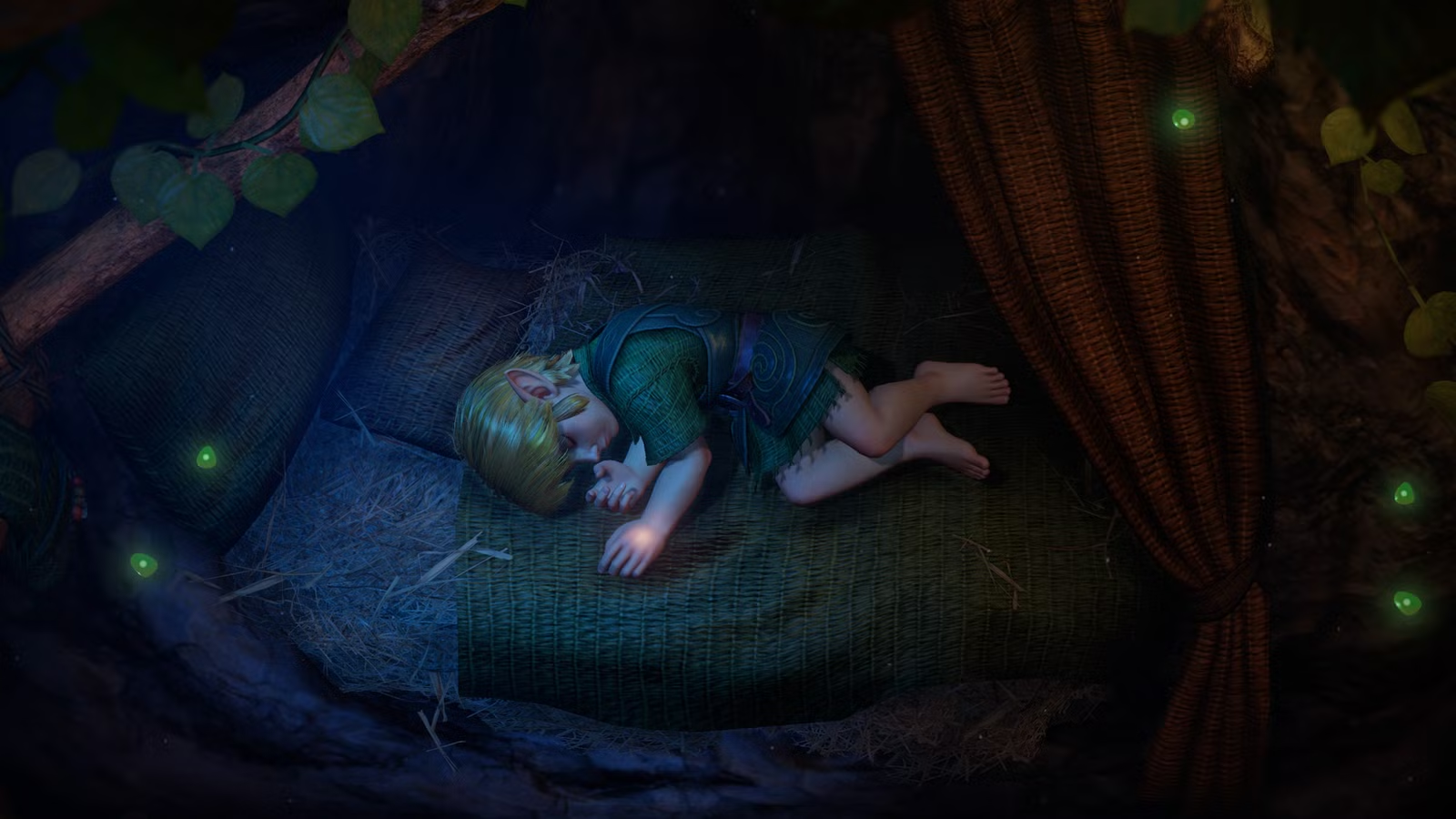
Over a decade later, the influence of that moment can still be felt. Earlier this week, Nintendo confirmed a remake of Ocarina of Time with a clip of Link sleeping. The teaser told fans almost nothing, other than the game’s saturated, Pixar-like art style. Yet that split second of footage was enough to get people to look up the 2011 Zelda demo once more.
“We had to wait 15 years, but Zelda finally looks like this!” one YouTube commenter wrote on IGN’s footage of the demo.
“Pretty much the new remake,” another wrote.
These fans aren’t outliers. Any video of the demo is full of people returning to the footage years later, still pining for an impossibility. It may not be a coincidence that an AI’s idea of the ultimate Zelda game looks suspiciously like the 2011 tech demo.
Nintendo has never made promises about a realistic Zelda game. Arguably, it’s better that the publisher didn’t. The next Zelda game released on the Wii U was none other than Breath of the Wild, a game that was so influential, it’s hard to imagine the current gaming industry without it. In a different timeline, we’d be playing a Zelda series that would prompt debate over reflections and cloth physics.
The Ocarina of Time remake has left many feeling anxious about the game’s direction. For some longtime fans, though, such details don’t matter. As far as they’re concerned, their dream game is finally coming true.
Nintendo just quietly justified the original Switch’s controversial price hike
Fans still have plenty of reasons to pull out the original Nintendo Switch