Silent Hill f proved to the fanbase that the franchise doesn’t need to stick too closely to its roots in order to thrive, and Konami clearly has no intention of letting that forward momentum fizzle out. With Silent Hill: Townfall, they’ve handed over the reins to developer Screen Burn Interactive, giving the Scottish-based studio a chance to flex its muscles and craft an experience that simultaneously feels incredibly authentic to the brand, but also wholly unique.
Townfall kicks off with American Simon Ordell arriving on the docks of St. Amelia, a seaside Scottish town that’s seemingly been abandoned, with a heavy layer of fog taking the place of its past inhabitants. As is typical for a Silent Hill game, there’s a lot of mystery baked into Townfall’s intro. It’s not quite clear why (or how) Ordell has made his way to Scotland, other than him being summoned in order to “put things right.”
Aside from the noticeable lack of townfolk, it doesn’t take long to figure out that something has gone horribly wrong in St. Amelia. Posters and signs strewn around the town square hint at protests and backlash against the Chapman Energy Group, which seems to have a substantial foothold in the region, and there are hints that the city’s healthcare workers have been pushed to their absolute limit by a recent tragedy.

Initially, there’s not a lot to go off of, but Townfall does a stellar job at drip-feeding players just enough hints as to how St. Amelia took a turn for the worse. Rather than relying on an abundance of cutscenes and exposition dumps, the game encourages exploration right from the get-go. In fact, during the opening hours, it’s hard to take a few steps without stumbling across a handwritten note, an email, regulatory notices, or information displays that help to paint a picture of the events that unfolded before Simon’s arrival.
I can’t overstate just how much love and attention have been poured into St. Amelia’s design and layout. Traditionally, video games have always been hit-or-miss when it comes to how they model and mirror the streets and buildings from our everyday life, but in the case of Townfall, the neat rows of compact apartments, abundance of alleys and side streets, and mixed-use zoning perfectly capture the look and feel of a seaside Scottish town.
Making your way through St. Amelia is an intimate experience, and part of that comes down to Townfall’s use of a first-person perspective. Sure, some older Silent Hill games have dipped their toes in the water when it comes to making use of first-person cameras, but Townfall dives in headfirst, and its mechanics are closely entwined with this newfound direction.

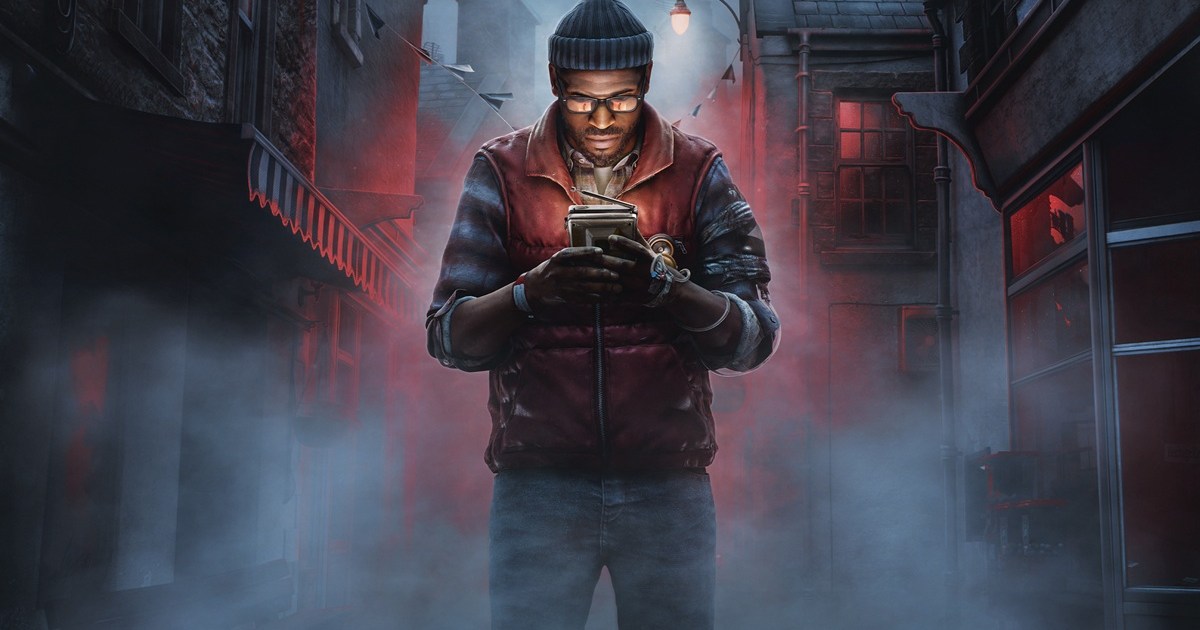
Like other Silent Hill protagonists, Simon is by no means a killing machine, and will have to rely on something other than brute force and raw strength. This is where the CRTV, a handheld TV that also doubles as a radio, comes into play. By tuning into different frequencies, the CRTV will display fuzzy, albeit perfectly serviceable, video that can be used to make progress and avoid danger.
When it comes to threats, the CRTV will play a small audio cue when an enemy is in the area, and by tuning into the right frequency, Simon will be able to get a sense of where an enemy is, even if he doesn’t have it squarely in his line of sight. Each enemy has its own matching frequency, meaning you’ll need to tune into each one and ping-pong back and forth between frequencies if you want to avoid danger.
It makes for an incredibly tense experience, and Screen Burn manages to extract a ton of gameplay out of this one simple mechanic. Aside from getting the lay of the land and figuring out (roughly) where enemies are patrolling, you can use the CRTV to track individual foes for extended periods of time, getting a sense of their movements so you can more easily avoid them. In a few scenarios, I was even able to determine if there were small paths or unlocked doors in the distance, solely based on tracking an enemy’s movements. Outside of combat, you will also be prompted to tune into specific frequencies to shed light on where you should head next, and some video signals will actually provide clues on how to solve environmental puzzles.

It goes without saying that the CRTV ends up being an invaluable tool in Simon’s arsenal, but Townfall also expertly paces its 15-hour campaign, slowly doling out new mechanics and challenges to keep that ever-present feeling of tension from fading away. For instance, once Simon gets ahold of the CRTV, enemies become much more widespread in number, requiring you to carefully keep track of locations and patrol paths on the fly. To balance this out, you’re given access to melee weapons, though these aren’t the silver bullet you might be hoping for. A wooden plank and metal pipe work well as a melee weapon given the circumstances, but they’re prone to breaking after landing (or blocking) too many hits, so you’ll need to pick and choose when to fight, and when to run and hide.
In the game’s second chapter, you’ll briefly leave behind Simon and instead play as Zoe, one of the overburdened and overworked healthcare workers employed by St. Amelia’s local clinic and hospital. Zoe, unlike Simon, can’t use melee weapons, let alone the CRTV, but her playable section also introduces throwable bottles and rocks, which can be used to distract and lure enemies away from your position. While her trusty pager does feature a stripped-down way of tracking nearby enemies, she (and later, Simon) will also have to contend with monstrous enemies that can attack from afar.
Once you switch back to Simon, your arsenal of weapons will expand to include a revolver, but with that comes limited ammo, the risk that you’ll alert nearby enemies to your location, and later down the line, an invincible monstrosity with a one-hit-kill attack that has to be avoided.
Townfall is built around this tug-of-war of pairing new mechanics and weapons with limitations and stronger enemies, and this pattern continues all the way up to the game’s final chapters. It makes for a delightful back-and-forth on an emotional level. You might revel in the moment where you gain access to a powerful, double-barreled shotgun, only to realize that you’ve also stumbled across an entirely new type of otherworldly monster who can flank and ambush you in a moment’s notice.

If there’s one area where Townfall struggles, it’s with some of its level layouts and puzzles. To be clear, most of its brain teasers are enjoyable enough on their own, and by default, the game will highlight key words, numbers, and other important tidbits of info that you should pay attention to as you come across new documents and clues in the environment. That being said, there are a couple of puzzles towards the finale that are a bit too ambiguous for comfort, and I wouldn’t be shocked if more than a few players end up consulting a guide to work through those moments.
Similarly, while most of the game’s locales do a great job of dishing out shortcuts and interconnected routes to make backtracking less of a hassle, a few sections (especially in the Alternate world, Townfall’s take on the franchise’s recurring “Otherworld”) are purposefully labyrinthine in their layout. Coupled with the incredibly dim (and almost pitch-black) lighting and lack of visual landmarks, I imagine some players will get lost a few too many times towards the end.
Silent Hill: Townfall (PS5) Review: Final Verdict
The other day, a friend asked me how Townfall stacks up against some of his favorite Silent Hill games from the PS2-era. Admittedly, I wasn’t really sure how to respond. To be fair, part of that comes down to the simple fact that I’ve only played a couple of Silent Hill games to date. But I think the actual reason I had a tough time answering that question is that, in many ways, Townfall doesn’t adhere too closely to the foundation that Konami forged over two decades ago.
Sure, Screen Burn Interactive has nailed the look and feel, the atmosphere, the constant dread and tension — the Silent Hill “vibes,” if you will. But when it comes to the moment-to-moment gameplay, Townfall confidently forges its own path and has more in common with the likes of Alien: Isolation or Resident Evil Requiem’s Grace Ashcroft sections than it does with Silent Hill 2 or 3. Silent Hill: Townfall offers up one of the most tense and compelling survival horror experiences in recent years, as long as you’re willing to meet it on its own terms.
-
The overarching story and mysteries of St. Amelia keep you engaged throughout
-
Strikes a perfect balance when introducing new gameplay mechanics and enemy encounters
-
Nails the look and feel of a haunted, seaside town
-
Some puzzles and environments are difficult to parse and navigate
-
Requirements for unlocking different endings are obtuse