
I have what some might call it a love/hate relationship with extraction shooters. I love the thrill of their unpredictable battles where I have to contend with both the game’s enemies and hostile players at the same time, the rush of dopamine from finding good loot, and the feeling of despair when I die and go back to the lobby with nothing. I’ve enjoyed games like Dark and Darker and Marathon in the past. But I also find them frustrating, particularly when frequent seasonal wipes every few months send me back to square one just when I had started to gain some momentum.
It’s for that last reason an upcoming extraction “RPG” called Hunger caught my attention. Developer Good Fun Corporation–founded by Max Rea, the former CEO of original Hell Let Loose developer Black Matter–has pledged Hunger won’t have forced gear or character wipes. It will feature permanent, long-term progression systems once it launches in early access, meaning any progress I make will be mine. Forever.
As someone who loves MMORPGs and lasting character progression, that’s a tempting proposition. After a Steam server-slam playtest with Hunger, during which I played for eight hours straight (despite knowing the playtest would soon end and all my progress would disappear), I think I figured out where the game gets its name. I forgot to eat, instead opting for one just one more level, one more expedition, one more quest, until suddenly it was midnight. I only knew Hunger.
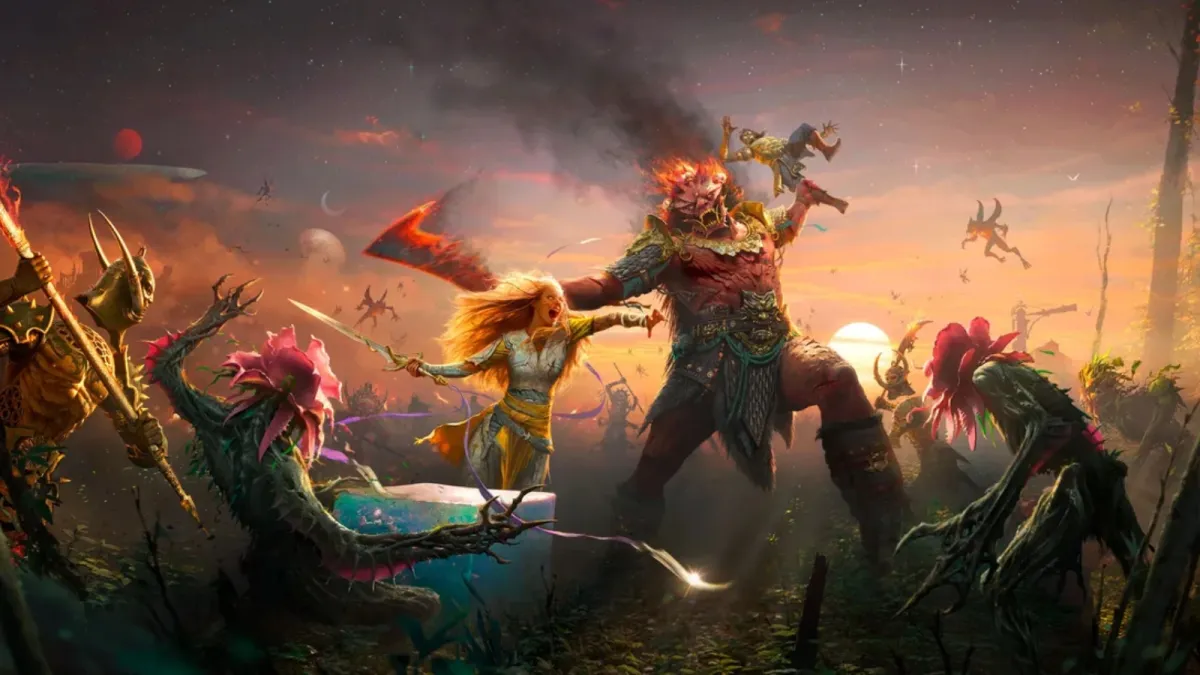
I can confidently say Hunger’s progression systems are a feast for RPG-minded players like me, combining the best elements of MMORPGs with the intense fights with other players extraction shooters are known for. There are six hero-like characters to choose from in Hunger, at least in the playtest. Each brings unique abilities to the table, and level up as in any RPG by earning XP from completing quests, killing monsters out in its post-apocalyptic Napoleonic Wars setting, simply staying alive, and extracting from expeditions.
By level 9, you’ll have unlocked all three of that character’s unique abilities. At level 10, all the way up to 100, you’ll start to earn Mastery points, allowing you to invest in different skill trees that improve your character. These passive upgrades might be as simple as faster revive speeds, finding more ammunition in containers, or the ability to reload a firearm while sprinting. They won’t grant you more raw power in the form of dealing more damage or having more health, however. Depending on where you spend your Mastery points, you can build characters in numerous ways, opting to focus on different playstyles like melee, ranged, crafting, survival, or some combination of them.
What these Mastery skills do isn’t all that important. Instead, knowing that once I’ve leveled up and unlocked them they would be mine to keep–that I had permanently gained some small amount of progress for that specific character–made each point gained feel immensely impactful. Even in a temporary playtest, it made me want to keep playing and investing in my character, eager to complete my build and see that character reach their full potential.
The same can be said for professions, another RPG system that makes Hunger stand out from the extraction-shooter crowd. Like in many MMOs, players can choose two professions to learn for a character, slowly leveling them up with resources found on expeditions and unlocking abilities that allow you to craft consumables, armor, or weapons. Only being able to pick two professions means you won’t be able to do everything. That makes your choice feel like it truly matters, and makes it even more satisfying as you level them up and reap the benefits they can bring.
Building up my coffers with money, consumables, armor, and weapons felt rewarding in a way it often doesn’t in other extraction games where gear wipes happen frequently. Knowing that all the currency and weapons I accumulated were mine to keep made it all more meaningful, as it meant I would have it should I hit a rough patch where I fail to extract multiple times in a row or take a break from the game. If I played my cards right, I would have a nice safety net to fall back on, making every victory all the more lasting since it would be mine to keep, not just for a few months, but potentially years.
In many ways, this is just skimming the surface of Hunger’s systems. Suffice to say, there is plenty here to sink your teeth into, particularly for those who don’t mind slow-but-steady progress. Combined with its early 19th century sword-and-musket fantasy setting, a social hub filled with intriguing characters and questgivers, and the high skill ceiling of both its melee and ranged battles, Hunger had me eager to invest in its world, people, combat, and systems.
Without the fear of losing all my progress to a wipe should life get in the way and I’m not able to play for a few months, I can see myself sinking dozens or even hundreds of hours into Hunger. How Good Fun plans to handle characters becoming potentially too wealthy or powerful in a game with no wipes is still uncertain, but clearly a ton of thought and care has gone into making Hunger something worth investing time in. After the playtest, all I know for sure is that when Hunger launches in Steam Early Access (supposedly before the end of the year), I will be eagerly seated for what Good Fun is serving.