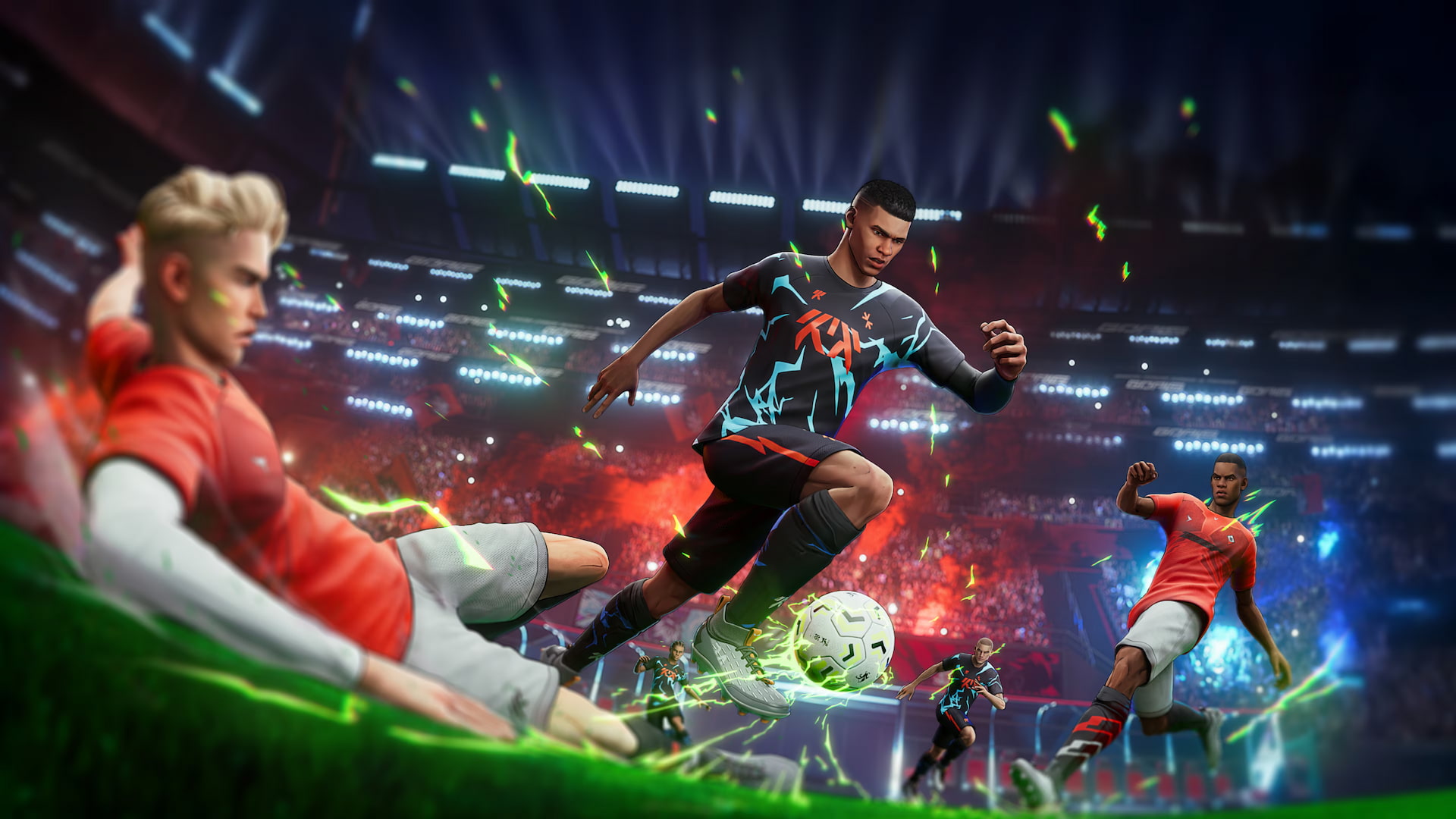
Goals has been highly anticipated by soccer game fans for years now. Promising a focus on gameplay first, there’s been real hope that it can rival the EA Sports FC series as the premier game for lovers of the sport. With sentiment around the FC series being more negative than ever, this is the perfect time for Goals to iterate by doing exactly what EA Sports seemingly refuses to do.
Goals isn’t as complete a package as other soccer games. It’s a reimagining of the familiar Ultimate Team mode, aimed at seasoned veterans. The lack of real-world licenses has allowed the game to build its own niche. Every single player is unique, each with their own overall rating potential. While one 48-rated player might be able to reach 52-rated, another might be able to reach 95.
It’s a great way to make your team, as well as progression, feel a lot more personal. The players you use are unique to you; there will be no teams full of Clàudia Pina. You can keep improving those players, taking them as far as they’ll go, before moving on to another with a higher potential, who will also be unique to your club. There’s no competition to have the best players; you simply need to make the most of what you have. That’ll tie you to players, giving them a real sense of meaning and connection. It’s a great way to make the most of a lack of licenses.

The upgrade system is great too. So much of what FC 26 does pushes you towards the store. Want to upgrade your players? You need to spend FC Points or coins that are hard to get without spending money. Need players for SBCs? The store is the place to go. In Goals, there is a store where you’ll get new players from packs, but you’re rewarded for simply playing the game. As you play matches, you earn XP, which slowly fills XP requirement bars on your active squad. Better players need more XP to upgrade than lower-rated ones, but every one you use earns XP at the same rate. The more you play, the more XP you earn, and the more you can upgrade your team. There’s nothing else to it. No hidden requirements, no restrictions, just a simple time for progression deal.
We’ll need to see how things play out as your squad becomes high-rated and it takes ages to upgrade any of your players, but it’s nice to see a game with a simple grind. Your real-world money will only help give you an increased chance of getting better base-level players. But since the players are unique to you and can’t be sold to others, all you’ll be doing is cheating yourself out of the point of the game.
Goals does other small things well, too. We’ve all been frustrated by the referee blowing for full-time just as you’re on an attack. In Goals, a grid moves across the pitch from the halfway line to the goal line once the 45-minute mark hits. If you enter it with the ball, the area will start to turn from green to red until the whistle blows, giving you a better sense of when the match is going to end. The squad management menu is excellent too, removing all of the unnecessary complexity similar games have added over the years.
However, Goals lags behind the competition in one key area: gameplay. On the game’s menu screen, it says ‘gameplay first,’ but it’s far from the game’s strength. It lacks the fluidity of FC 26, dribbling and passing feel very clunky. It’s more consistent and fun to play than UFL was at launch, but it’s not as good as I hoped.

Tackling is reliable, which is a positive, but shooting mechanics seem unbalanced. Finesse shots are far more reliable than basic shots, and I found myself moving into similar shooting positions for every attack.
Of course, this is a free-to-play game that’ll be updated a lot in the coming months, but there’s a lot of work to be done to make Goals feel like the future of soccer gaming. It’s quick and arcadey, ditching any unnecessary punts for realism, but the players don’t control fluidly enough to make the game as fun as it needs to be.
Goals is a lot more respectful of its players than its competition. Progression, monetization, and clarity are all steps forward for Ultimate Team-like modes. For a soccer game that says it is ‘gameplay first,’ though, there’s a fair amount of work to be done.